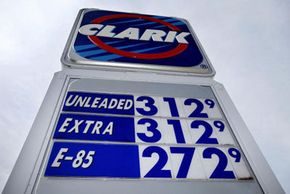
Oil crises are nothing new. We’ve been talking about peak oil consumption recently, but the real panic started in 1973. The Organization of Petroleum Exporting Countries (OPEC) has cut supplies to countries that supported Israel during the Yom Kippur War. Prices have gone up. In 1979 there was an energy crisis. These events have led drivers to consider diesel as a viable alternative to gasoline.
Finally, the tension subsided. Gas prices stabilized. Although demand for diesel has fallen in the US, demand for diesel engines remains strong in Europe due to strict EU emission standards. But the message is clear. Our dependence on oil means we are vulnerable.
Thirty years later, we return to the gas station, dissatisfied with the price of a gallon. Public transportation in the United States is limited. Metros are not everywhere. We need to move. Coupled with concerns about global warming and the environmental damage caused by oil, it’s no wonder that alternative fuel vehicles (AFVs) are gaining traction.
What is considered an alternative fuel? Not oil based. This means that gasoline and diesel are out. These include ethanol, biodiesel, propane, natural gas and electricity from batteries and fuel cells. These fuels usually burn cleaner. They can be more efficient. They seem attractive to people who want to save money and protect the planet.
But here’s the problem. Like oil, alternative fuels are subject to market prices. They are competing for the same energy dollars. How do ethanol and biodiesel prices compare to gas? Will it be cheaper in the long run? Let’s start by analyzing the economics of ethanol.
Ethanol price
Ethanol is often mixed with gasoline. In the US it is found in E10 (10% ethanol) or E85 (85% ethanol). Ethanol prices are closely related to corn prices. Corn is the main ingredient. When corn yields are good, ethanol is cheap. When a drought occurs or the demand for food increases, the price of ethanol rises.
This creates a strange dynamic. Ethanol prices don’t just follow crude oil. They follow corn futures. If corn is expensive, so is ethanol. If corn is cheap, ethanol can be cheaper than gas. But efficiency is important. E85 has less energy per gallon than gasoline. You get fewer miles per gallon. Therefore, even with pump price is lower, refueling may become more common.
The question is not just, “How much does it cost?” The question is, “How much does it cost per mile?” It depends on your car, local corn prices and driving habits.

Ethanol is more than just a buzzword. This is a renewable fuel derived mainly from corn. Think of it as grain alcohol that can power many vehicles. For the United States, the availability of domestic crops in the Midwest provided a strategic advantage in reducing dependence on foreign oil.
However, you won’t find pure ethanol at most gas stations. Instead, it is mixed with gasoline to create a cleaner burning fuel.
Understanding Ethanol Blends
The most common mixture is E10. This blend contains 10 percent ethanol and 90 percent unleaded gasoline. Found in 46 percent of US gasoline, it’s ubiquitous and fits almost every vehicle on the road.
Then there is E85. This is a heavier blend: 85% ethanol and 15% unleaded gasoline. You can’t put it in any car. Flexible Fuel Vehicle (FFV) required. Although the automotive industry is increasing the production of these compatible vehicles, there are still limitations. If your car is not FFV, E85 does not apply.
The Price Puzzle
Ethanol prices are notoriously difficult to predict. Market volatility is high. Although the supply is growing steadily, the demand is fluctuating. The gasoline industry mixes it right into the mix and makes the final price a moving target.
The price of E85 can be considered a discount from regular gasoline. Adding ethanol lowers the cost of the base gasoline it is blended with. In October 2007, the Alternative Fuels for Clean Cities report highlighted this gap. The national average price of E85 is $2.40 per gallon. The average price of regular gasoline is $2.76. There is a clear and tangible saving for drivers who can benefit from this.
Why corn is important
Ethanol prices are closely related to corn prices. It is, after all, an agricultural product.
The price of crude oil affects food costs through logistics costs. In theory, an increase in the price of oil should also increase the price of corn. Surprisingly, this is not always the case. Despite these external pressures, ethanol blends manage to remain cheaper than gasoline.
Government policy also has its own role. Congress taxed ethanol at a lower rate to make it more competitive. The U.S. General Accounting Office noted that motor fuels containing at least 10 percent biomass ethanol are exempt from 5.4 cents of the federal excise tax of 18.4 cents per gallon. This subsidy keeps the price of E85 lower than regular fuel.
Regional differences
Just like regular gasoline, the price of ethanol varies by region.
Prices are generally lower in the upper Midwest. The fuel does not have to travel long distances. It is produced locally and pumped locally. Logistics costs are very low.
Prices are higher in the Rocky Mountains. It costs more to transport ethanol from the production area. The longer the fuel travels, the more the consumer has to pay.
Regarding biodiesel, a different set of rules is followed. To understand the price comparison, the following section must be considered.
Biodiesel Prices
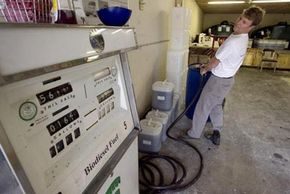
Biodiesel is used in the diesel industry in the same way as gasoline ethanol, but has a distinct chemical lineage. It is obtained from renewable fats or vegetable oils instead of fermentation. The operational advantage? It is burned in a compression ignition engine, whether blended or pure. The inventor of the engine, Rudolf Diesel, originally considered vegetable seed oil as the primary fuel source instead of fossil diesel. History has taken a different direction, but the theoretical basis has remained.
Price formation is mainly determined by raw materials and logistics. Soybean oil and yellow grease (a cooking oil used in French fries and other deep-fried foods) are the main ingredients. Fast food chains recycle these fats over and over until they break down into non-cooking waste. Biodiesel manufacturers buy this used yellow grease and turn it into fuel. The acquisition and processing of these raw materials make up about 80% of the final costs. A federal excise tax reduction of $1 per gallon helps offset this for consumers, but the underlying costs remain tied to the agricultural and waste markets.
Blend ratios dictate the pump price. B20, a 20 percent biodiesel blend, reached about $3.08 a gallon in October 2007. That was 3 cents cheaper than the average price of regular diesel at the time, which was $3.11. B100, pure biodiesel, sat higher at $3.38. This premium reflects the intensive production required to separate and process the fuels without mixing them.
Commercial fleets are switching to biodiesel for economic and operational reasons. Newer diesel engines rarely need modification to run on it. Older engines require retrofits, but the cost is manageable. In Oregon, construction firms using diesel engines with performance retrofits can apply for a tax credit of up to 50 percent. The benefits extend beyond fuel costs. Cleaner emissions and increased efficiency make them attractive to companies that want to reduce their environmental impact while cutting costs.
The production potential is huge. The Center for Sustainability and the Global Environment (SAGE) at the University of Wisconsin estimates that countries can produce up to 51 billion liters per year. This scale shows that biodiesel could impact more than just highway trucks. It is a significant part of the alternative fuels sector and competes with propane, natural gas and electric powerity.
Propane, natural gas, electric power
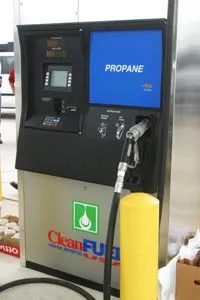
The Propane Paradox: Why Winter Makes It Expensive
You know propane from the white tank clipped to the side of your backyard grill. It’s not really an “alternative” for home heating or cooking in the way people talk about it, but it is the most popular substitute for gasoline and diesel on the road. Unlike biofuels, which are grown and refined, propane is a byproduct. It comes out during natural gas processing and oil refining. Producers actually collect propane and butane (the same stuff in lighter fluid) to keep the liquids from condensing and messing up the machinery.
So, even though it shares a source with gasoline, it has to fight for price relevance. The cost fluctuates based on crude oil prices, competing fuel markets, supply and demand balances, and how far it has to travel to get to you. Seasonality matters most. Winter heating demand spikes, pushing prices up. In the summer, supplies are plentiful and costs drop below gasoline. By winter? Propane often costs more than gas. Take October 2007 as a snapshot: propane sat at $2.75, just one cent under gasoline. It hovers around that line depending on the calendar.
Natural Gas: Methane at a Discount
Natural gas is one of the big three fossil fuels, alongside oil and coal. It’s mostly methane—one carbon atom, four hydrogen atoms. Like oil, it’s pulled from underground wells, processed to strip away byproducts, and then stored by the utility company. This extraction and processing phase accounts for about 75 percent of the final price. The remaining 25 percent? Distribution. Taxes and local regions still cause variations, but natural gas remains one of the cheapest, cleanest-burning alternatives available. Back in October 2007, the national average was $1.77. That’s nearly a dollar less than gasoline at the time.
Electric Cars: The Kilowatt-Hour Math
Electricity pricing for EVs is straightforward. It’s basically what you pay to keep your home lights on. Sure, rates shift by region, season, and time of day, but the baseline is clear. The U.S. national average hovers around 7.5 cents per kilowatt-hour (kWh).
Let’s look at the actual cost per mile. An electric vehicle rated at 3 miles per kWh runs about 3 cents a mile. Compare that to a gas engine getting 18 miles per gallon. If gas is $2.50 a gallon, that car burns through 14 cents per mile. The math favors electrons, even when you account for the slight inefficiencies of charging.
Lots More Information
Related HowStuffWorks Articles
-
How Gas Prices Work
-
How Gasoline Works
-
How Car Engines Work
-
How Electric Cars Work
-
How Electricity Works
More Great Links
-
National Biodiesel Board
-
Ethanol Promotion and Information Council
-
Planet Green
-
TreeHugger.com
Sources
-
“Alternative fuel vehicles.” National Renewable Energy Department. Sept. 2003. http://www.nrel.gov/docs/fy03osti/26066.pdf
-
“Availability and use of alternative fuel.” National Highway Traffic Safety Administration. http://nhtsa.gov/cars/rules/rulings/CAFE/alternativefuels/availability2.htm
-
“Clean alternative fuels: compressed natural gas.” United States Environmental Protection Agency. March 2002. http://eerc.ra.utk.edu/etcfc/docs/EPAFactSheet-cng.pdf
-
“Clean Cities alternative fuel price report.” U.S. Department of Energy. Oct. 2007. http://www.eere.energy.gov/afdc/pdfs/afpr_oct_07.pdf
-
“Comparing energy costs per mile for electric and gasoline-fueled vehicles.” Advanced Vehicle Testing Activity. http://avt.inel.gov/pdf/fsev/costs.pdf
-
“Ethanol factbook: a compilation of information about fuel ethanol.” Clean Fuels Development Coalition. 2003. http://www.cleanfuelsdc.org/pubs/documents/2003EthanolFactBook.pdf
-
“Propane prices.” Energy Information Administration. Jan. 2008. http://www.eia.doe.gov/bookshelf/brochures/propane/index.html
-
Johnston, Matt and Tracy Holloway. “A global comparison of national biodiesel production potentials.” The Center for Sustainability and the Global Environment. Sept. 7, 2007. http://www.sage.wisc.edu/pubs/articles/F-L/Johnston/Johnston_Holloway_EST2007.pdf
-
Radich, Anthony. “Biodiesel performance, costs, and use.” Environmental Information Agency. June 8, 2004. http://www.eia.doe.gov/oiaf/analysispaper/biodiesel/