The future of Ford’s Spanish factory in Valencia is secure. For now.
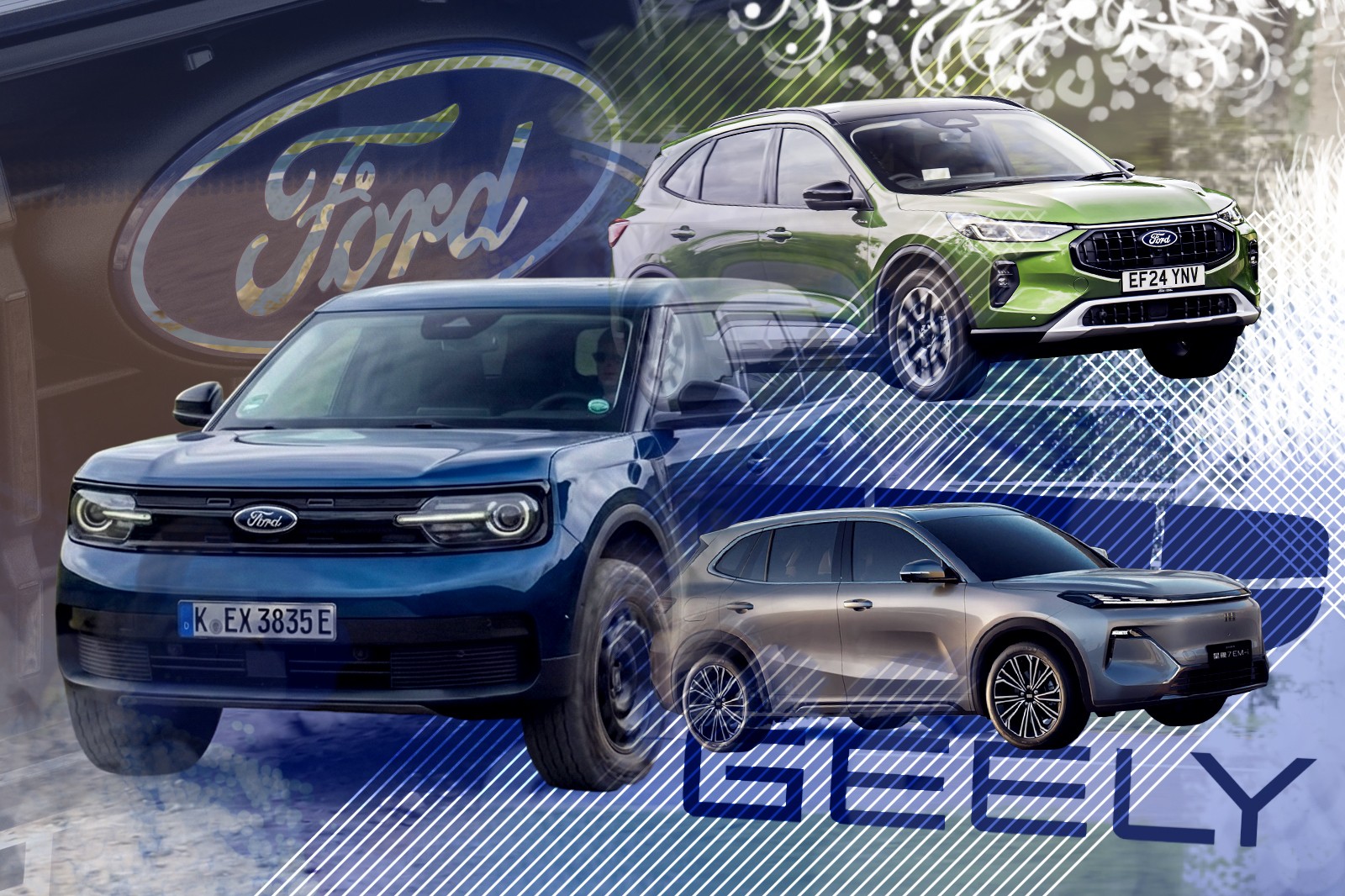
A new partnership between Ford and China’s Geely has been confirmed. The deal involves a joint venture to operate the plant Ford opened half a century ago. Ford will hold a 66% stake. Geely gets 34%.
Completion is slated for next year. When it does, the facility’s capacity could hit 500,000 units annually. Ford of Europe boss Jim Baumbink says this expansion means hiring more staff.
But the real story is the hardware.
A new multi-energy Ford crossover joins the lineup
Right now, the Kuga crossover is the only model rolling off the Valencia lines. By 2029, four new vehicles will join it.
The lineup includes the new European-focused Ford Bronco SUV. It lands in 2028 on the same C2 platform as the current Kuga. Then there’s the new Ford multi-energy crossover.
Baumbick called this third vehicle “a rally-bred crossover in the Csegment.” He was blunt about its design philosophy. It won’t be a rebadged Geely.
“The Ford product will be a completely unique… this is not a reskin… truly unmistakably Ford.”
This distinct engineering is central to the deal. The Bronco and the multi-energy Ford crossover are two of five rally-inspired models Ford plans for Europe by 2029. The other three? Two small electric models built by Renault, plus one more unspecified crossover. That fifth model likely won’t be built in Valencia.
Ford’s German plant keeps producing the Explorer and Capri EVs on the VW MEB platform. The Romanian plant still makes the Puma. The Valencia deal stands on its own.
Why Geely chose Valencia for European production
Geely isn’t just buying access to a factory. It’s planting a flag in Europe.
Two electric Geely SUVs will come out of Valencia. Production starts in 2028 too. This marks the first time Geely-brand models are built in Europe. The company already owns Volvo, Lotus, and LEVC. It knows how to operate abroad.
Geely senior VP Victor Yang put it simply. You can’t be global without being local.
“For us that means localisation and a longterm commitment to integrating our expertise with the worldscale manufacturing heritage of the Valencia plant.”
There’s no specific model names yet. Yang declined to comment on exact SKUs. The strategy, however, is clear. Localize. Commit. Build trust through proximity to the consumer.
What this means for European EV buyers
The market is shifting. Fast.
Ford needs volume in Europe to survive the transition. The multi-energy approach—hybrids, plug-ins, full EVs—is a hedge against policy uncertainty. By sharing platforms and manufacturing overhead with Geely, Ford lowers the cost per unit.
Geely gains scale and a foothold in a region that has historically been tough for Chinese automakers to crack.
Is this enough? The Valencia plant was previously on the chopping block. This deal buys time. It buys space to refine the product mix. It doesn’t solve the broader issue of European consumer reluctance toward higher prices. But it keeps the lights on in Spain.
Five new rally-inspired cars by 2029 sounds ambitious. The multi-energy crossover is the wildcard. Will it actually feel like a Ford, or will it feel like a Geely in a cowboy hat?
Baumbick promises unique engineering. We’ll have to wait and see. Until then, the Valencia machines are just getting started.