


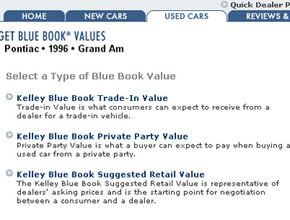
Stop guessing what your car is worth. The first real hurdle in getting a fair price from Kelley Blue Book isn’t picking the model year. It’s choosing the right value type. You hit the next screen and three options stare back at you: trade-in, private party, or retail. Most people click the first one they see. Don’t do that. The difference between these numbers isn’t just a few hundred bucks. It’s the difference between a profitable sale and leaving cash on the table.
Which KBB value type matches your selling method?
The choice depends entirely on who is buying the car. This is the most common mistake people make. They look at the “Retail” price, show it to the dealership, and wonder why the dealer laughed. Here is the breakdown.
Trade-in value is what a dealer will give you. They need to make a profit. They also need to clean the car, fix the dents, and sell it. This number is always the lowest. It’s the floor. If you are rolling over into a new car, this is the number that matters. It might lower your new loan amount, but it’s not cash in your hand.
Private party value is what you can expect from a regular person. No dealer markup. No overhead. This is usually the highest price you can get if you have the time and patience to deal with strangers, test drives, and paperwork. It’s the sweet spot for most sellers. You want this number.
Retail value is the sticker price at a dealership. The “market price.” This is what you pay. It is rarely what you get. Use this only as a benchmark to see if a dealer is lowballing you wildly, or if a private buyer is offering something suspiciously high.
How to select the correct trim and features
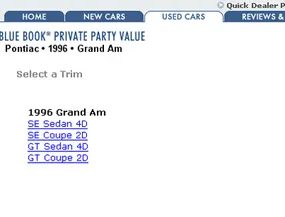
Once you pick the value type, the site asks for the version of the car. This is where most people mess up. “Base model” isn’t a car. It’s a suggestion.
You need to be specific. KBB’s algorithm relies on exact matches. If you have the V6 engine but select the I4, the value drops. If you have the leather interior package but leave it unchecked, the price tanks.
Look at your window sticker if you still have it. Check your registration. If you don’t know, look for the badges on the trunk. “Sport,” “LX,” “SE,” “Limited.” These aren’t just names. They are code for specific equipment lists.
Selecting the wrong trim skews the data. You might think your car is worth $15,000. The system says $12,000. Why? Because you forgot to check the box for the navigation system. Or the sunroof. Small features. Big price tags.
Don’t skip the options section. It takes ten seconds. It saves you from getting lowballed.

How Location and Mileage Dictate Your Trade-In Value
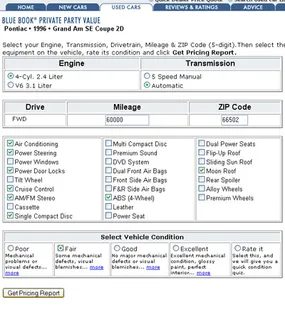
Pick the engine. Pick the transmission. Then type in the mileage.
It’s the part of the process where most people stop thinking. They assume the car is the car. It isn’t. A base model 2.0T isn’t worth the same as a twin-turbo V6, even if they share the same VIN prefix. The drivetrain matters. So does the odometer. But here’s the kicker that trips people up: zip code matters.
Why? Because car values aren’t national. They’re hyper-local. A diesel truck in Wyoming commands a premium that disappears in California. A manual transmission Miata is a niche luxury in some markets and a headache in others. The algorithm needs your zip code to anchor that value in reality.
“Regional market differences can shift the car’s value, so the zip code is important.”
Skip it, and you’re guessing. Enter it, and you’re pricing.
Why Specifics Like Trim and Options Change Everything
Once the location is locked, the system digs into the details. You’re not just selling a “Car.” You’re selling a specific configuration.
- Engine Type : Turbo vs. naturally aspirated. Hybrid vs. gas.
- Transmission : Manual, automatic, CVT. Each has a different buyer pool.
- Mileage : Not just a number. It’s wear. It’s time.
These inputs narrow the dataset. The valuation engine cross-references recent sales in your zip code for that exact spec sheet. It’s not magic. It’s math. And it’s why your neighbor’s identical car sold for $2,000 more last month. Different options. Different location. Different result.
Get the details right. The price follows.

Adjusting for missing or broken factory options
The interface lets you toggle specific factory-installed features. Stick to what came from the dealer or meets OEM standards. Kelley Blue Blue doesn’t account for aftermarket add-ons. If you bolted in a custom stereo or upgraded the exhaust yourself, the algorithm ignores it. That aftermarket gear adds zero to the calculated value here, even if it costs you money.
Broken parts change the math entirely. You have to flag non-functional equipment. Don’t just leave the box unchecked. Check it, then manually deduct the repair cost. Say the AC compressor blew. You mark the car as having AC, but subtract $50 to $100 or more for the fix. This keeps the valuation realistic. Buyers pay for working cars, not projects.


