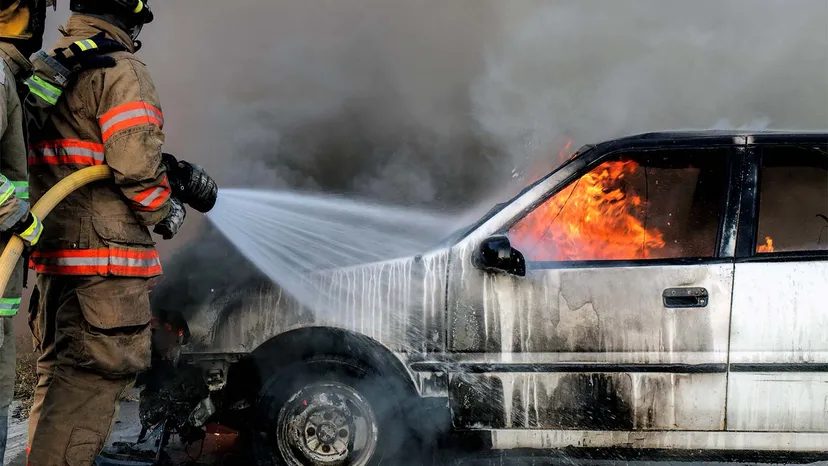
Car fires rarely arise from a single accident. While researchers can trace the initial spark to a specific moment, the reality is often even more confusing. Often it’s a perfect storm of human error, mechanical failure, and chemical sources.
As the flame ignites, the variables grow. Fluid leakage. Heat builds up. Complications occur. Understanding the causes of these symptoms is not just an academic exercise. It might keep you alive.
The first rule is brutal in its simplicity. If your car catches fire, the “why” doesn’t matter. Is your engine overheating? Have you spilled brake fluid? Forget it. Get out. Get away. Your life is the only metric that matters right now. Insurance claims and manufacturer defect investigations can wait until you’re safe. A small fire cannot stay small. It can eats through insulation, ignite fuel lines and turn a sedan into an inferno in minutes.
The National Fire Protection Association (NFPA) estimates that nearly one in eight reported fires are caused by vehicle fires. That’s a significant chunk of risk. Reducing it starts with understanding the root causes. Here are 10 common culprits.
Design errors are fewer than you think
Design errors rarely cause fires by themselves. There is no “on” switch for spontaneous combustion events. The U.S. Fire Administration estimates that less than 1 percent of motor vehicle fires are caused directly by design flaws. Manufacturers often catch these problems before they become major disasters. They issue recalls. fix the problems.
Of course, not all faults cause fires. However, certain defects can significantly increase this chance. Since 2012, major car manufacturers have recalled nearly 10 million vehicles due to fire hazards. This includes traditional gasoline engines and electric models. This risk is not theoretical. This is a documented, recurring problem that regulators and companies are actively working to reduce.
Bad maintenance is the real enemy
While design flaws make headlines, neglect is a silent killer. A vehicle is not a stationary object. It is a complex system with moving parts, fluids and circuits. Neglecting maintenance not only risk a breakdown. There is a risk of fire.
Worn wiring harnesses rubs against the metal frame. Old hoses crack and hot oil drip onto the exhaust manifold. When vents become blocked, heat is trapped in places it shouldn’t be. These were not catastrophic failures that happened overnight. slow accumulations of decay. And they are completely preventable.
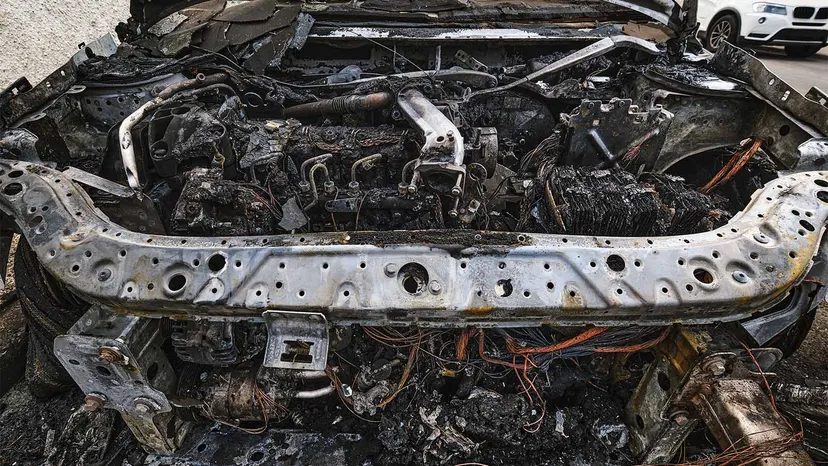
8: Car Crashes
To be clear, human negligence rarely directly causes a fire. You don’t strike a match and throw it in the tank. But carelessness is also important. If you neglect basic maintenance, your car becomes a timer for various malfunctions, and a car fire is just one of them. The United States Fire Administration has identified mechanical failure as the most common cause of car fires.
Carelessness creates the conditions for disaster. Broken seals. Faulty wiring. Leaky gaskets. If these issues are not addressed, they create an environment that is prone to fire. This risk increases in older vehicles. A bad seal can allow flammable liquids to drip onto hot surfaces. Electrical faults cause more than 20% of all car fires.
So open the hood every now and then. Look for leaks. Check the wires for fraying.
“The probability of a car fire is only part of a larger risk.”
8: Car Crashes
Most people think that collisions only cause damage. They don’t always consider the risk of fire. Crashes are more than just bumps. This could be a fuel leak. A severed line. Exposed wires create sparks.
The force of the impact can rupture fuel tanks or the hose to detach. If high-pressure fuel encounters an electrical short or a hot exhaust manifold, it can heat up quickly. Modern cars have safety features like fracture-safe fuel lines and automatic fuel pump shut-offs, but physics doesn’t take technical safety measures into account.
The risks go beyond the accident itself. This is after the fact. If the car becomes undriveable after a collision, the driver may not be able to escape quickly enough. Smoke inhalation, not flames, is the killer. But the flame is still there and waiting.
Old model? They lack the same level of crash protection. The fuel lines are more exposed. Electrical systems are not very durable. Sedans from the 1980s have a higher risk of fire from fender-bender than modern sedans.
Don’t wait for a major wreck to worry. Even a slight impact can damage the fuel line. Look for puddles after a crash. Smell for gasoline. If you suspect a leak, don’t drive. Ask for help. Cars are less valuable than lungs.
Why do cars catch fire after a traffic accident? Usually the cause is damage to the fuel system. Where are the weaknesses? Along the chassis, near the rear fuel tank, under the hood. Which vehicle is more vulnerable? Older cars with rigid, unshielded lines. How do you mitigate this? Regular inspections. If you are involved in a traffic accident, get out of the car. Quickly.
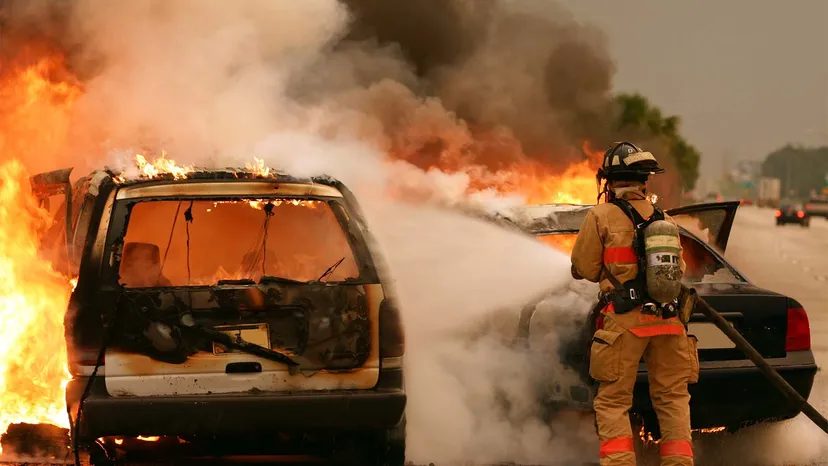
Introducing the Crumple Zone. they fell. They absorb energy. They kept the cottage the same. But they can’t stop everything. When a serious collision occurs, planning cannot control the chaos. Fluid leakage. The hose is broken. The line is broken. Gasoline, oil or coolant is splashed on hot surfaces or electrical components. Heat and fuel meet. The smoke rises. burning.
It happens quickly. You look in the mirror for a moment. Then the flames licked the dashboard. Most drivers don’t see it coming. They were too busy assessing the damage. Ask for help because you are too busy. I’m so busy I’m hoping it’s just a broken headlight. When you smell burning rubber or see smoke coming from under the hood, it’s often too late to drive.
Get out. immediately. Don’t wait to see if it stops. Do not try to wipe it with bottled water. Running. run. Distance is the only real protection. Even if the car explodes, you’re already safe.
7: Arson
Fires are not necessarily harmful. This is intentional. Arson makes up a small but significant part of vehicle fires. Why? Insurance fraud. revenge. Concealment of theft. A damaged car is more likely to be scrapped than one that is still running. A burned out car is even easier. Police and fire investigators were looking for signs of a fire that contradicted the accident pattern. Several combustion centers. Accelerants such as gasoline and lighter fluid. Keep ignition sources away from impact damage.
If your car is found burnt out after an accident, consider that it probably wasn’t an accident. Document everything. photo. Note the location of the vehicle. If there are witnesses, note them down. Don’t touch anything. Leave it to the experts. Arson is a crime. And he was blamed for it.
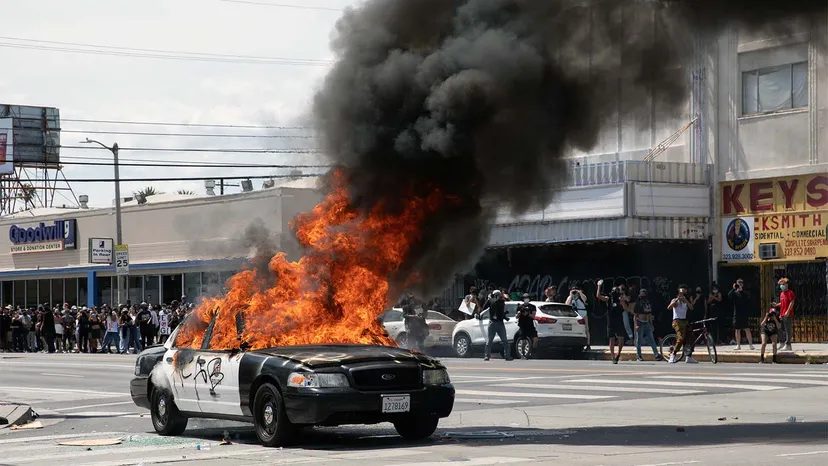
6: Battery Burn Risk in hybrid and electric vehicles
Tesla’s Model S has been called the “safest car ever” by the unofficial media title. In the fall of 2013, the Model S caught fire and its reputation suffered. This is not a myth or a glitch in the matrix. The car was traveling at high speed when it struck debris. The impact punctured the high-voltage battery. Lithium-ion batteries don’t like being punctured. They ignited.
Tesla has long implied that its electric drivetrain was immune to the combustion problems that plague older hybrid cars. The reality is simpler. A battery is just a battery. It will burn if you breached. Since 2013, other Teslas have followed suit. Although still statistically rare, these events defy the “fireproof” narrative.
The Chevrolet Volt isn’t immune either. General Motors issued a recall for about 110,000 Volt models between 2017 and 2022. The reason is hardware and software defect in the battery management system. This is not a minor software patch issue. This is a real fire hazard.
Where do these fires start? About one third of electric vehicle fires start when the vehicle is parked and disconnected from the power grid. This is a very important detail for those who charge at home or at work. It’s not just about protecting the car. You protect your garage, your driveway and your neighbors.
The information most often written about cars is contradictory. Hybrids are lead the pack. Gasoline-only vehicles come in second. Pure electric vehicles are a distant third. Despite doubling the number of gasoline-powered vehicles on the road, they still cause the majority of all car fires. Quantity matters. However, if you own a hybrid vehicle, each vehicle has a higher risk profile than a standard sedan.
5: Catalytic Converter Hotspot
Catalytic converter overheating is a silent fire hazard. These are often overlooked because they are buried under the chassis and are hidden from casual inspection. This is wrong.
A catalytic converter is part of the exhaust system that running along the length of the vehicle. It is one of the hottest parts of the entire vehicle. Typical operating temperatures are 800 to 1,000 degrees Fahrenheit (427 to 538 degrees Celsius). It is designed to withstand this kind of heat. It is designed to melt pollutants into harmless gases.
But what happens if the engine doesn’t work properly?
If the spark plugs wear out or the engine misfires, unburned fuel can enter the exhaust system. The catalytic converter has to work overtime to handle this extra fuel. This extra chemical reaction produces high heat. Temperatures can reach up to 1400 degrees Fahrenheit (760 degrees Celsius).
At this point, the metal housing of the converter is not only hot. This will be the source of the fire. The converter itself does not ignite, but it transfers heat to nearby objects. Dry grass. Oil leaks. wiring harness. Rubber insulation. The car’s chassis is not designed to withstand temperatures hundreds of degrees higher than normal operating limits.
If the converter gets clogged or overloaded, it can turns the underside of your car into a torch. When the surrounding material reaches its auto-ignition point, it doesn’t take much for a fire to start.
4: Engine overheating disaster
When the engine overheats, the cooling system is usually the first to fail. A ruptured hose. A broken water pump. A failed thermostat. The coolant cannot circulate. The metal blocks trap heat.
Most modern engines have sensors. A thermometer or a warning light on the dashboard will warn you. you stop the car. The problem gets fixed. The fire is averted.
But what happens if you miss the warning? What if the sensor doesn’t work? Or did the driver ignore the signal because he was convinced he would get to the next exit?
The metal expands. The seal has burst. Oil is leaking into the hot exhaust manifold. The oil is flammable. The manifold is red hot. Matches meet fuel. The engine room exploded.
This is not just a problem where the engine shuts off. As for secondary sources of ignition. The thread has melted. The plastic cover caught fire. Hydraulic oil sprays out of the dotted line. The entire front of the car becomes a fuel load.
Engine fires often ignite quickly. They rely on fluids to keep the car running. oil. coolant. brake fluid. gear oil. When the plastic starts to melt, it becomes fuel oil. It can spread outside the engine compartment in seconds.
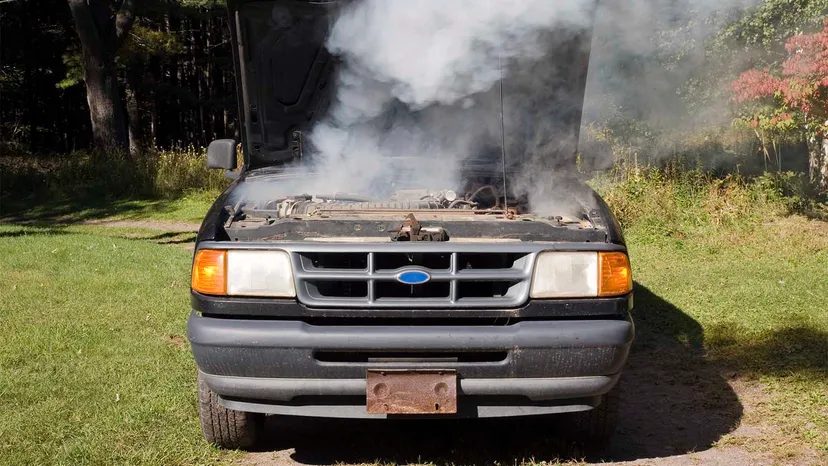
Overheated engines usually do not ignite by themselves. It’s a domino effect. The heat rises. Fluids such as oil and coolant can expand and reach temperatures that destroy seals. They spill. They drip. They spurt through the engine compartment and land on the exhaust manifold and other hot parts. At this point, ignition occurs.
Most drivers notice the meter gradually rising and pull over before things get serious. However, sometimes the underlying cause is more subtle.
Design errors and software fixes
In rare cases, overheating is due to design error rather than wear and tear. For example, approximately 90,000 Ford vehicles equipped with certain EcoBoost powertrains were recalled in late 2012. This problem is so fundamental that a new part is not needed. A software update is required. Engineers modified the car’s computer to set lower and safer engine temperature thresholds.
However, in general, an overheating engine cannot be fixed with a code fix. Requires mechanical attention. A faulty thermostat, faulty water pump or clogged radiator requires a wrench, not Wi-Fi. But when heat turns to flame, it’s usually because something else gave way first.
Flammable cocktail under the hood
The average engine bay is a dangerous area. It’s not just about the heat. It’s fuel. Cars also carry gasoline or diesel, engine oil, transmission fluid, power steering fluid, brake fluid, and even coolant. All of these are circulating during engine operation. They are all flammable.
Leaks are detected when a pipe cracks, a hose breaks or a tank is damaged. And leaks on hot metal mean fire.
It rarely starts dripping without warning, and usually something else fails first. But the possibility is always there. A crash or a damaged part can turn a routine drive into an inferno. The engine compartment is the most likely place to start because it has the highest concentration of hazardous liquids. However, remember that the fuel and brake fluid lines run the entire length of the vehicle. A leak in the rear doesn’t stay there.
Why Electrical Failures Rank Second
Electrical system failure is the second most common cause of car fires. Although it is easy to focus on the large batteries of hybrid and electric cars, the standard lead-acid batteries of gas-powered cars are not innocent bystanders either.
Charging and discharging cycles can cause hydrogen to accumulate in the engine compartment. Hydrogen gas is explosive. Combine this with the power provided by the battery and you have a recipe for disaster. Improper wiring or loose connections can cause sparks. It doesn’t take much to light those sparks. Only leaked liquid or vapor cloud.
The danger is not limited to the hood. The wiring harness winds across the body. They run through channels, into the door, under the carpet and onto the heated seats. A frayed wire hidden under a seat cushion can go undetected for years until it short-circuits. When this happens, the damage it causes can be immediate.
Fuel system leak
Fuel system leaks are still the main suspect in car fire investigations. Gasoline and diesel are volatile. They evaporate easily. When you combine high pressure fuel lines with engine heat and collision friction, the margin for error is small. A cracked line, loose joint, or bad gasket can release a mist of fuel that can ignite with the slightest spark. Whether it’s the alternator belt, ground point or static discharge, the result is the same.
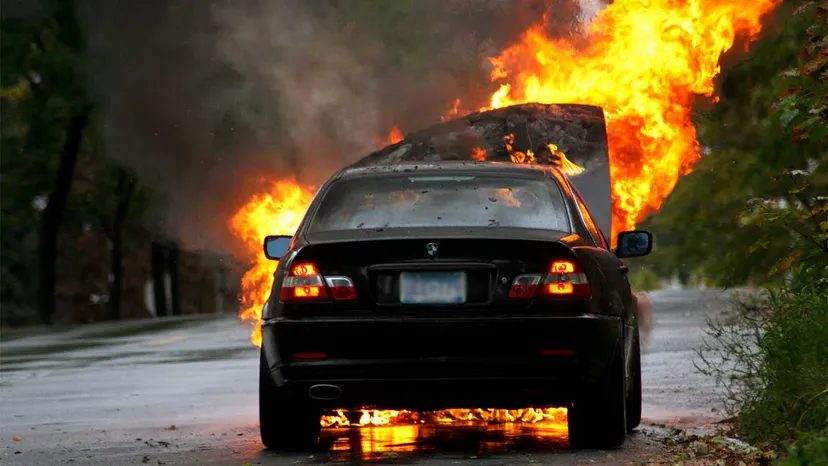
Fuel system leaks are still the most common cause of car fires, and for good reason. There are many dangers here. While many vehicle fluids are corrosive or toxic, gasoline has a unique volatility. It doesn’t just burn; it explodes under the right conditions.
Consider the ignition points. Gasoline vapor can be ignited with a single spark at temperatures down to -45°F (-42.8°C). That’s colder than most winter mornings. When the fuel itself reaches 495°F (257.2°C), it self-ignites without an external spark. This is why a breach can have such serious consequences. Fuel dripping onto hot exhaust parts, plastic bottom covers and even discarded cigarettes can cause rapid combustion. Before you could react, the fire spread.
Prevention boils down to maintenance. Keep the system closed. If you smell gas in or outside your cabin, treat it as an emergency. Find and repair leaks immediately. Ignoring the smell of fuel is a gamble you shouldn’t take.
Frequently asked questions about car fires
What causes car fires?
Collisions are one trigger, but they aren’t the only one. Faulty fuel lines and faulty electrical wiring are common problems. Leaving a lit cigarette unattended can also ignite upholstery and carpets. In rare cases, design errors in vehicle technology can have an effect.
What causes a car to catch fire in an accident?
The most common cause is a leak in the fuel tank. Poorly routed, faulty or severely damaged fuel lines often rupture in a crash. The resulting fuel jet encounters hot engine parts or electrical sparks, causing ignition.
What do you use to put out a car fire?
The standards recommend the use of powder or foam extinguishers. However, the safest way is to evacuate. Get out of the car and call the fire department immediately. Car fires produce intense heat and toxic smoke that can quickly exhaust portable fire extinguishers.
Where do most vehicle fires start?
Fires are usually confined to the engine compartment at first. If left untreated, it can spread from there to the cabin and undercarriage.
Can a car ignite by itself?
Yes, but it is rare in modern vehicles. Most fires are caused by electrical short circuits or mechanical faults. Warning signs include fluid leaks, loose wires, sudden drops in fuel level and unexpected increases in engine temperature. If you find these, investigate them immediately.