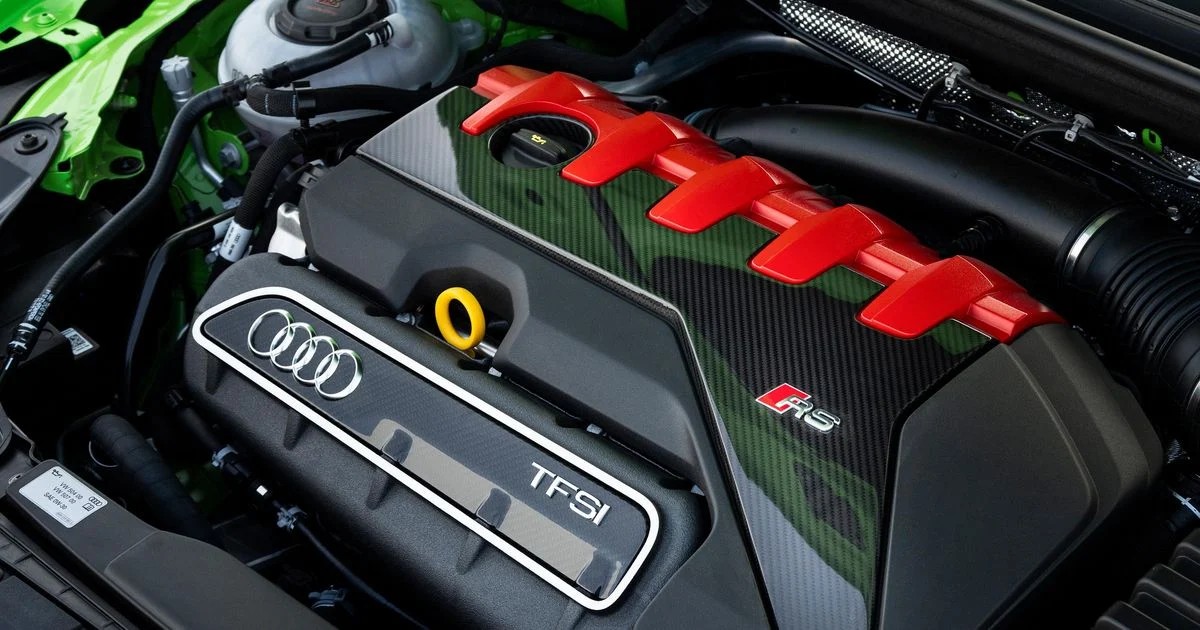
Audi is ending production of its legendary 2.5-liter turbocharged inline five-cylinder engine by mid-2027, primarily due to increasingly strict European emissions standards. The decision marks the end of an era for a motor that has defined performance Audi models for 50 years, from the original Ur-Quattro to the current RS3.
The End of an Era: Euro 7 Compliance
The EA855 engine, as it’s internally known, will be discontinued because it cannot meet the upcoming Euro 7 regulations set to take effect in Europe in late 2026. This means the hand-built engine, currently produced in Győr, Hungary, will cease production alongside the last RS3 models in 2027.
The five-cylinder delivers 294kW (395 horsepower) and 500Nm (369 lb-ft) of torque in the RS3, propelling it from 0 to 100km/h in 3.8 seconds. It also powered the RS Q3 and TT RS, though those models have already been discontinued in Australia.
A Brief Respite for Australian Buyers
Australian regulations lag behind Europe’s, meaning the five-cylinder RS3 could remain on sale locally until mid-2028. Euro 6d standards only came into effect here in late 2025, with full implementation for all new vehicles by July 2028. This gives Audi Australia time to deplete existing stock.
The engine will also appear in the limited-edition Cupra Formentor VZ5 later this year, offering 287kW and a 4.2-second 0-100km/h time. Rumors suggest a final run in the Volkswagen Golf R for its 25th anniversary in 2027.
The Future is Hybrid: Audi’s Shifting Strategy
Audi’s decision isn’t a complete abandonment of internal combustion. The brand has adopted a “technology agnostic” approach, backing away from an earlier all-electric commitment. Marco Schubert, Audi’s global sales boss, confirmed the company will continue producing petrol and diesel engines well into the 2030s.
The first hybrid RS model – the 2026 RS5 Sportback and Avant – debuted at the Australian Formula 1 Grand Prix, featuring a 470kW plug-in hybrid powertrain. This model easily meets Euro 7 regulations, and its CO2 output is low enough to avoid penalties under Australia’s New Vehicle Efficiency Standard (NVES) until 2028.
Legacy and Transition
The five-cylinder engine has a rich history, dating back to the 1976 Audi 100 and the iconic Ur-Quattro, which popularized the brand’s association with the unusual cylinder count. While this chapter closes, Audi is aggressively pursuing hybrid and electric alternatives, positioning itself for a future where emissions standards dominate automotive engineering.
The discontinuation of the five-cylinder is a clear signal of the industry’s shift, but Audi’s commitment to internal combustion, albeit in a modified form, ensures that enthusiasts will still have options for the foreseeable future.