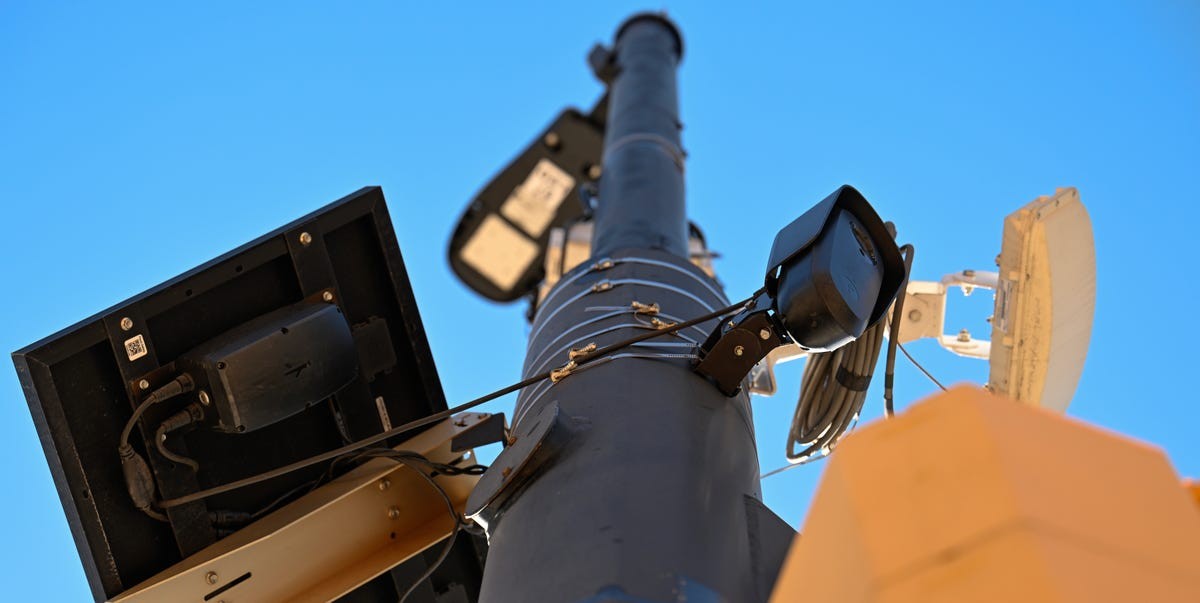
Automated License Plate Readers (ALPRs) are rapidly spreading across the United States, triggering a backlash from privacy advocates and some local governments. These AI-powered cameras, primarily sold by Flock Safety, are no longer simply reading license plates – they’re now tracking vehicles based on identifiers like make, model, color, and even unique features such as roof racks or bumper stickers.
The Rise of ALPR Technology
For years, law enforcement agencies have used basic license plate readers. However, the latest generation of ALPRs incorporates artificial intelligence, significantly increasing their surveillance capabilities. Flock Safety has become the dominant vendor, selling its systems to over 5,000 law enforcement agencies and 1,000 private entities, including Homeowners Associations (HOAs). This expansion has turned many communities into unwitting participants in a vast data-collection network.
Data Sharing Concerns and Community Pushback
The core controversy lies in how this data is shared. Flock Safety claims that cities control access to the information, but multiple local leaders report otherwise. Recent reports show widespread data sharing, including connections to Immigration and Customs Enforcement (ICE) arrests. This has spurred resistance in at least 53 cities across 20 states, with 38 rejecting or deactivating Flock cameras in the last six months.
Law Enforcement Defense vs. Privacy Arguments
Police departments defend ALPRs as a crucial crime-solving tool. One Texas department searched Flock’s network involving over 103,000 vehicles during a homicide investigation. Officials claim these systems have solved countless crimes that would otherwise remain unsolved. However, privacy activists dispute this assertion, citing a lack of independent research proving that ALPRs actually reduce crime rates.
“Each Flock customer has sole authority over if, when, and with whom information is shared,” says Flock Safety; yet cities are increasingly ending partnerships due to real-world data sharing concerns.
The debate highlights a fundamental tension: law enforcement’s desire for expanded surveillance versus citizens’ right to privacy in a digital age. As ALPR technology matures, the question of how to balance these interests remains a central challenge for communities nationwide.
The trend is clear: while law enforcement continues to adopt ALPRs, public awareness and resistance are also growing, raising serious questions about the future of automated surveillance in America.