Autonomous driving technology is not being built from scratch; it’s evolving from existing Advanced Driver Assistance Systems (ADAS). But testing these systems safely and affordably presents a unique challenge. How do manufacturers put self-driving cars through rigorous real-world scenarios without destroying vehicles or risking human injury? The answer lies in a surprisingly simple innovation: giant, crash-friendly pillows on wheels.
The Rise of ADAS and the Need for Realistic Testing
ADAS became widespread around a decade ago, largely driven by safety ratings. Euro NCAP, for example, began awarding higher scores to vehicles equipped with features like Autonomous Emergency Braking (AEB). This created a market demand for these technologies, but also a need for effective testing methods that go beyond computer simulations.
Traditional crash testing is expensive and destructive. Repeatedly smashing full-size vehicles into each other quickly becomes unsustainable. That’s where companies like AB Dynamics and Dynamic Research Inc. (DRI) stepped in with their “Soft Car” solution.
The Soft Car: A Crash-Test Dummy Reimagined
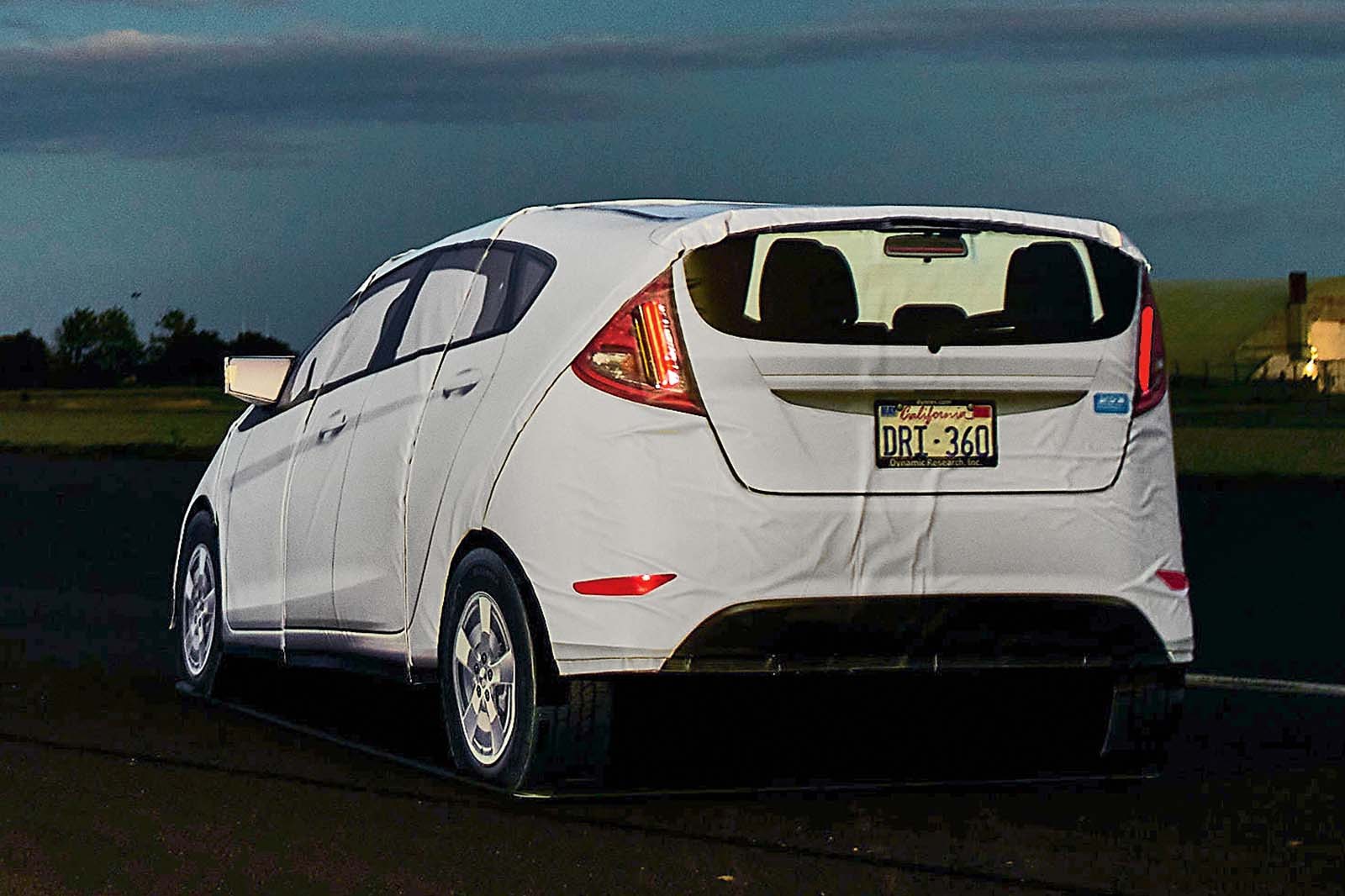
The Soft Car isn’t a high-tech marvel of engineering; it’s intentionally simple. Built from lightweight panels, it resembles a flat-pack furniture project more than a traditional vehicle. Assembly takes around eight minutes, and the car is designed to disassemble on impact, preventing damage to the test vehicle. This ensures that testing can continue without costly repairs or replacements.
The key to its versatility is the “GST platform”—a remote-controlled, battery-powered base that turns the Soft Car into a moving target. This platform can simulate a variety of scenarios, from steady cornering to lane changes, even entire laps around a racetrack. Despite its lightweight construction, the Soft Car can reach speeds of up to 75 mph on the GST platform.
The Evolution: Active Tail Lights and Dynamic Scenarios
Recent advancements in camera-based ADAS require more sophisticated testing. Systems now rely on visual cues like brake lights and indicators to make decisions. To meet this need, AB Dynamics has added an active tail-light system to the Soft Car kit. These rechargeable lights can be controlled remotely or programmed to mimic real-world driving behavior, including custom lighting sequences.
The lights themselves are designed to be damage-resistant, using flexible LEDs and protective casings. A single battery charge lasts an entire testing day, and replacements can be swapped in quickly if needed. Rigorous durability tests have shown the Soft Car equipped with these tail lights can withstand repeated impacts at 62 mph without sustaining damage.
The Soft Car represents a fundamental shift in how autonomous vehicle testing is conducted: it prioritizes efficiency, safety, and cost-effectiveness without sacrificing realism.
The rise of “soft targets” in ADAS testing is not just about saving money; it’s about accelerating the development of safer autonomous systems. By making testing more accessible and less destructive, manufacturers can iterate faster, refine their algorithms, and ultimately bring self-driving cars to market with greater confidence.