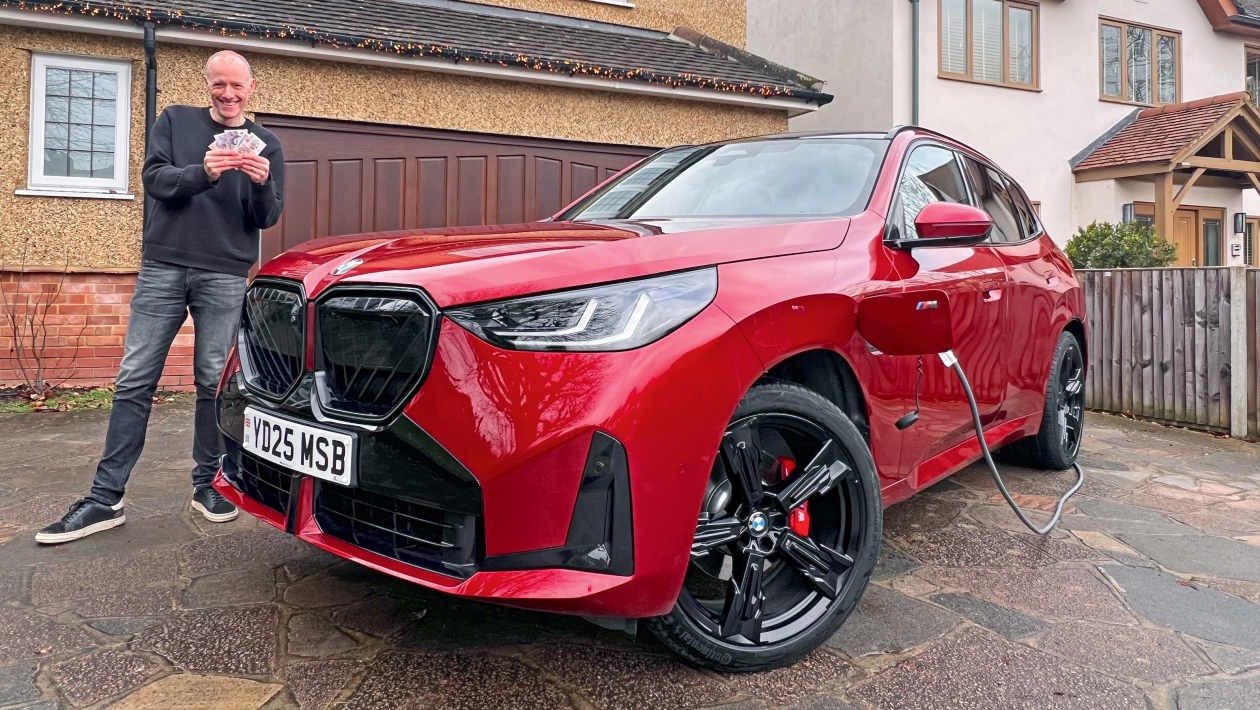
The BMW X3 30e plug-in hybrid demonstrates strong real-world fuel economy, averaging 64 mpg over four months of testing. This significantly surpasses the 48.7 mpg achieved by comparable diesel models, while also reducing tailpipe emissions. Despite a 2.1-tonne weight that affects performance and ride quality on poor road surfaces, the vehicle offers a compelling blend of practicality and efficiency.
Real-World Performance and Data Tracking
BMW’s “My BMW” app tracks driver behavior, revealing that the test vehicle operated on electric power 52% of the time. While this is competitive, it places the driver in the lower half of X3 30e owners in terms of maximizing electric driving. The system actively encourages maximizing electric range, as PHEVs can deliver significantly lower running costs than traditional gasoline or diesel SUVs.
Over 4,418 miles, the vehicle required only three fuel tank fill-ups at a total cost of £185.90. Utilizing a time-of-use electricity tariff (7p per kWh), charging the 19.7 kWh battery costs under £1.50 per full charge, and has been done 38 times during the test period. This results in an estimated running cost of 12p per mile.
Plug-in Hybrid as a Transition Step
Plug-in hybrids like the X3 30e are gaining traction as a stepping stone toward full electric vehicles. In 2025, they were the fastest-growing engine type in the UK, capturing 11% of new car registrations, more than doubling the share of diesel vehicles. The X3’s evolution from the earlier MINI Countryman PHEV, with its tripled electric range, demonstrates this progress.
However, usability has regressed slightly. Accessing eDrive settings requires navigating multiple screens, while older models had a simple physical switch. BMW’s software prioritizes automated operation but lacks transparency and manual control, which some drivers may prefer.
Long-Term Ownership and Cost Analysis
The test vehicle is equipped with several options, pushing the total cost to £59,015 (before additional upgrades). Key options include the M Sport Pro Pack, Comfort Plus Pack, technology upgrades, and cosmetic enhancements such as matt black 21-inch alloys. While the initial investment is high, the long-term running costs are competitive.
The X3 offers adequate interior space, with sufficient rear legroom and a 460-liter boot. However, the hybrid battery reduces underfloor storage capacity. The vehicle’s performance is adequate, with the 295 bhp combined output providing sufficient power for overtaking and highway driving, though the four-cylinder engine can sound strained.
Conclusion
The BMW X3 30e xDrive M Sport delivers on its promise of efficient operation, making it a strong contender in the plug-in hybrid segment. While usability quirks and a high initial cost remain drawbacks, the vehicle’s real-world fuel economy, low emissions, and growing popularity suggest it fills a valuable niche for drivers transitioning to electric mobility.