


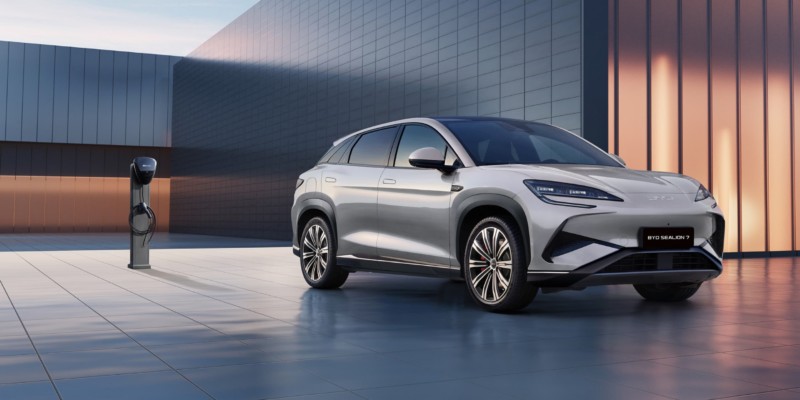
Canada has reversed course on tariffs for Chinese-made electric vehicles, opening a limited import window that will allow up to 24,500 units to enter the country at a 6.1% tariff rate through August 2026. This policy shift follows an earlier move in October 2024 to impose a 100% additional tariff, effectively halting Chinese EV exports.
The shift signals a deliberate strategy to balance economic protectionism with consumer demand for affordable electric vehicles. The Canadian government now plans to expand the quota to 70,000 vehicles by 2030, with Prime Minister Mark Carney suggesting that over half of these imports will be priced under $35,000 CAD (roughly $25,700 USD).
BYD Takes the Lead
BYD, China’s dominant EV manufacturer, has already filed regulatory paperwork with Transport Canada to export vehicles from its Shenzhen and Xi’an factories. Import permits will be granted on a first-come, first-served basis. This move puts BYD in a prime position to capitalize on the renewed market access.
Why the Change?
The policy reversal is driven by both economic realities and political considerations. Prior to the tariffs, Chinese EV exports to Canada surged: 751% growth in 2023, with 41,700 vehicles shipped. Imports jumped from under $100 million CAD in 2022 to $2.2 billion CAD in 2023, primarily driven by Tesla Model Y shipments from China.
The tariffs were clearly effective in stopping the flow of affordable EVs. After their implementation, exports plummeted 92% in Q4 2024. However, the policy also disrupted market forces and potentially limited consumer choice.
Beyond BYD: A Broader Trend
Other Chinese automakers are preparing to follow suit. Chery Automobile is actively recruiting for engineering and regulatory positions targeting the Canadian market. This indicates a broader push by Chinese manufacturers to penetrate North America.
The timing coincides with China’s explosive growth in automobile exports. In 2025, China shipped a record 7.098 million vehicles, up 21.1% year-over-year, including 2.615 million new energy vehicles (a 103.7% increase). This demonstrates China’s growing dominance in global automotive production.
Regulatory Hurdles Remain
Despite the relaxed tariffs, BYD and other Chinese automakers still face rigorous Canadian safety and compliance standards before gaining full market access. These include requirements for motor vehicle safety, battery performance, charging compatibility, and data security.
The long-term impact of this policy shift remains to be seen, but it is clear that Canada is seeking to balance trade relations with its own domestic economic and consumer needs. The renewed import window offers a strategic opportunity for Chinese EV manufacturers while providing Canadian consumers with more affordable options in the rapidly expanding electric vehicle market.


