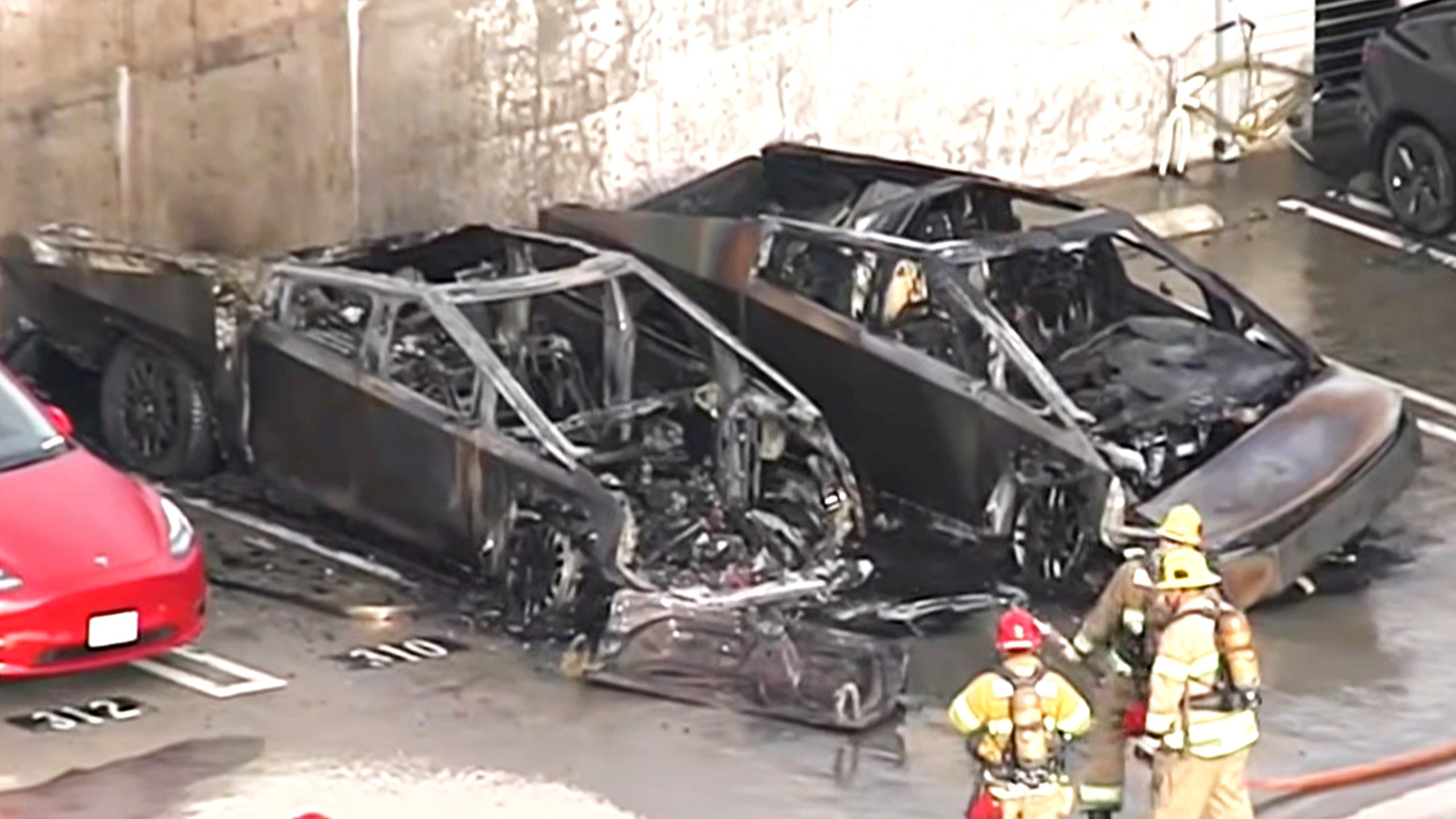
Two Tesla Cybertrucks were destroyed by fire in Santa Monica, California, on Wednesday, raising questions about the cause of the incident. The fires occurred while the vehicles were parked and not connected to a charging source, immediately ruling out a common electrical malfunction as the primary factor.
Incident Details
The Santa Monica Fire Department responded to the scene shortly after 3:15 p.m., but both Cybertrucks were already fully ablaze upon arrival. Only remnants of the stainless steel frames and platforms remain, indicating severe damage. The vehicles were parked side-by-side in a rooftop parking structure, prompting speculation about whether they were placed there by a local Tesla Service Center or belonged to residents of the adjacent Anara Santa Monica apartment complex.
Broader Context
This incident follows a string of Tesla vehicle fires reported earlier in 2025 across the United States and Canada. Those fires were speculated to be linked to public backlash against Elon Musk’s tenure in the White House and his leadership of the Department of Government Efficiency (DOGE). The latest Cybertruck fires, however, appear unrelated to those previous incidents, as there is no indication of deliberate targeting or vandalism.
Investigation Underway
Police are currently investigating the cause of the fires. The fact that neither vehicle was charging when the flames erupted suggests a different type of malfunction or external factor may be at play. The investigation will need to determine if there were any underlying mechanical failures, chemical reactions within the battery systems, or other external causes.
What This Means
The destruction of two Cybertrucks in a single incident raises concerns about the safety of electric vehicle technology, particularly those utilizing advanced battery systems. While EV fires are rare, they often result in total loss due to the difficulty of extinguishing lithium-ion battery fires. The ongoing investigation will be critical in determining the cause of this incident and preventing similar occurrences in the future.