Volkswagen isn’t giving straight answers.
Not yet.
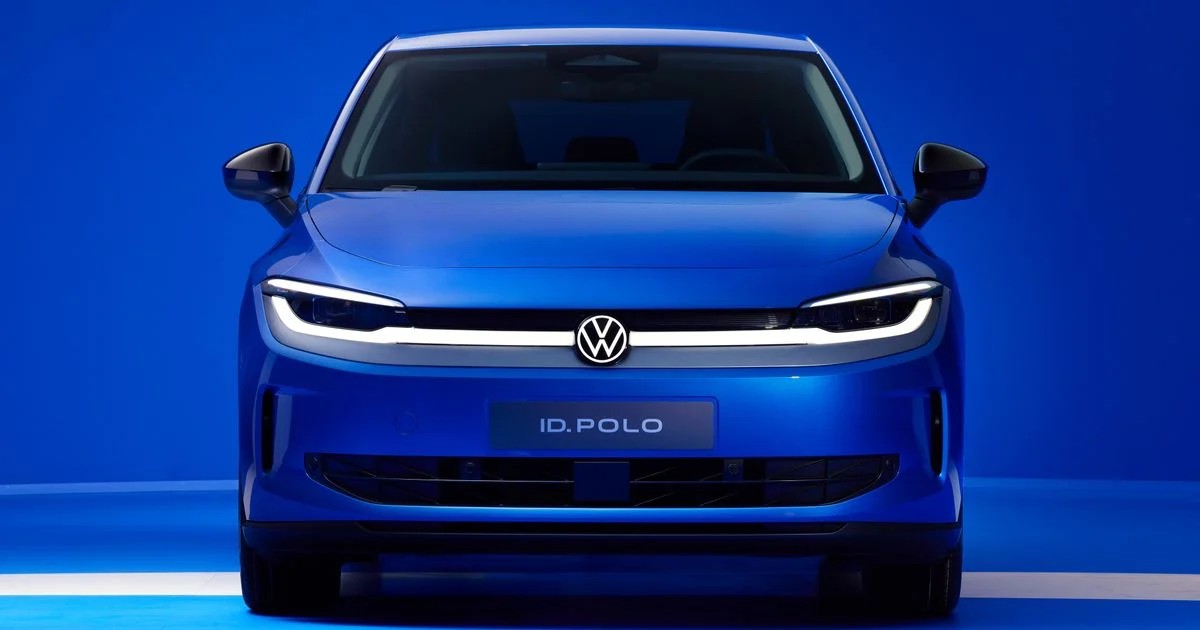
The ID. Polo and the ID.3 Neo might hit Australian shores, but local executives are hedging. They’re looking at the data and blinking. Australia loves SUVs. That simple fact makes the business case for a small electric hatchback look like a bad poker hand.
Piergiorgio Minto, the local brand director, didn’t mince words, but he didn’t offer promises either. He told CarExpert that the market structure here is fundamentally broken for this type of car compared to Europe.
“It’s a question of the segment size.”
Minto admitted Australia leans heavy into the SUV side. The pricing doesn’t track. So VW is looking at its global model list case by case. Will it make sense? Maybe. He noted that electrified models get priority. But priority isn’t the same as automatic entry.
Arjun Nidigillu, head of product, added the other side of the coin.
Price.
He said the market expectation for price points and range is already set. To move volume — and help dealers sell inventory — they have to land on that curve.
“We’re not against non-SUVs,” he clarified. But the current obsession with big vehicles might make it look that way. They’re on the lookout. Just… if the numbers work. Range, pricing, packaging. All of it.
For us to be successful from a volume… we need to fall on that curve.
It makes sense. The numbers for small cars are depressing.
The premium light passenger segment — the space the petrol Polo plays in — dropped 18.4 percent in 2025. Sales hit just 5795 units. Last month, the wider light car segment saw 2083 sales. A decline of 9.0 percent. Even light SUVs are down.
Legacy brands are getting squeezed out. Ford, Hyundai, Kia? They’ve already walked away from this class.
Those that remain — Mazda, Suzuki, Toyota, Volkswagen — are in a trap. They need to meet strict ANCAP safety laws. Safety costs money. But buyers refuse to pay for a small car. So brands jack up prices until the car costs nearly as much as a midsize SUV.
Look at the Toyota Yaris.
Once a $15k bargain. Now it sits near $30k. VW’s Polo followed suit. People would rather buy the SUV. Even if they share parts.
Under $30,00, you’ve got the MG 3 and the Kia Picanto dominating. They keep prices low. They move metal.
So where does that leave the EVs?
The ID. Polo launched last month as VW’s new affordable entry point. In Europe, it starts under €25,000. That converts to about A$40,700. But conversion isn’t reality. In Germany, it’s priced near the T-Cross. Which in Australia starts at $34,900 drive-away? No, plus on-road costs.
The ID. Polo offers a few choices. The higher specs come with a 52kwh NMC battery and 155kw motor. You get roughly 452km of WLTP range. That costs €33.800 (A$55.100). That’s the ID.3 Neo’s ballpark too.
Cheaper Polos get a 37kwh LFP battery. Slower. Smaller. Top range of 329km.
The ID.3 Neo gets a refresh to match the new design language. It looks updated. The interior is fixed.
Base Trend models get a 50kwh battery and rear-wheel drive. 125kw. 416km range. Bigger batteries go up to 79kwh. That gives you 629km of range.
Competition?
The BYD Dolphin starts around $30k drive-away. The MG 4 EV Urban is slightly higher. The regular MG 4 hits $40k drive-away for the larger models.
Meanwhile, the regular petrol Polo in Australia starts at $30,900. The Golf? $37,900 advertised drive-away.
So here’s the catch-22.
You build a cheap electric car for the global market. You try to sell it here. But by the time it lands, the tax structure, the competition from sub-20k ICE cars, and the sheer demand for SUVs conspire to kill the deal.
VW is waiting for a sign. A reason. A curve to fit into.
Do they wait too long? Or is the math simply unfixable?
What do you think? Would you buy the Polo over a budget SUV?