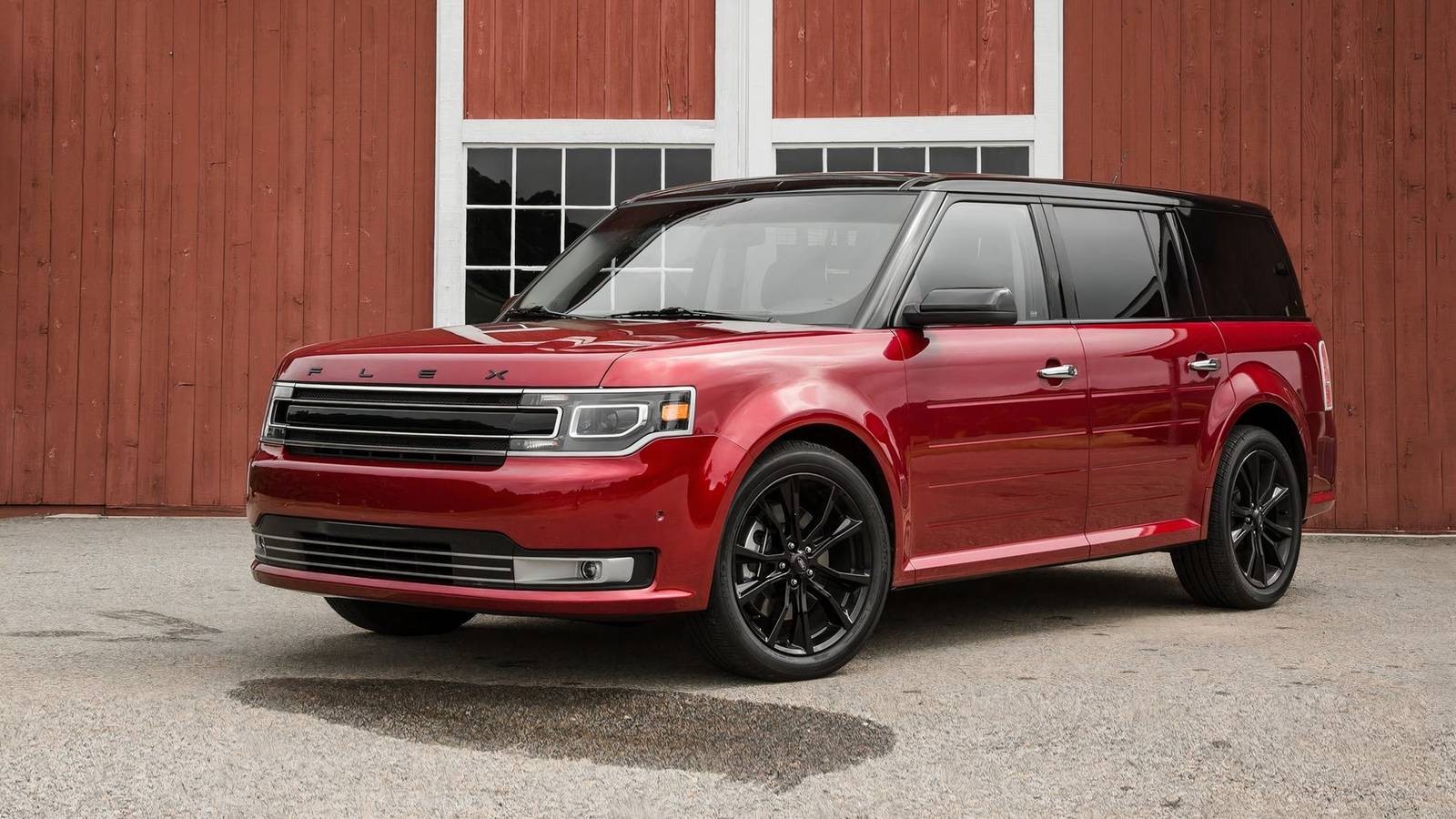
In an automotive landscape dominated by aggressive grilles, rounded edges, and SUVs designed to look like off-road conquerors, the Ford Flex was a radical outlier. It didn’t try to mimic the rugged aesthetic of its peers; instead, it embraced a long, low, and unapologetically rectangular silhouette.
While its polarizing design initially limited its mainstream appeal, the Flex eventually earned a dedicated following. It proved that by ignoring trends and focusing on intelligent engineering and interior utility, a vehicle could find success not through mass-market conformity, but through specialized excellence.
Engineering Substance Beneath a Unique Silhouette
The Ford Flex was far from a mere stylistic experiment. Built on Ford’s D4 architecture —the same foundation used for the Explorer and Taurus—it offered a sophisticated driving experience that traditional, body-on-frame SUVs often lacked.
Unlike many large family haulers that feel top-heavy and cumbersome, the Flex utilized a unibody platform with a fully independent suspension (MacPherson struts in the front and a multi-link setup in the rear). This configuration, combined with a lower center of gravity, resulted in:
– Car-like handling: It felt planted and composed rather than prone to excessive body roll.
– Superior ride quality: The suspension was tuned to absorb road imperfections, making it an ideal long-distance cruiser.
– Versatile drivetrains: Drivers could choose between efficient front-wheel drive or an intelligent all-wheel-drive system designed for traction rather than rock-crawling.
The “Box” Advantage: Function Over Fashion
The very feature that made the Flex look “outdated” to some—its slab-sided, boxy shape—was actually its greatest functional asset. While modern crossover design often sacrifices interior volume for sloping rooflines and aerodynamic styling, the Flex prioritized maximum spatial efficiency.
The vehicle’s massive footprint (over 200 inches long) was utilized to create a cavernous interior that addressed common pain points in the family vehicle segment:
- True Three-Row Usability: The upright roofline ensured that even adults could sit comfortably in the third row, a feat many modern “compact” or “mid-size” three-row SUVs fail to achieve.
- Accessibility: The lower step-in height made it significantly easier for children, elderly passengers, and those with mobility issues to enter and exit compared to high-riding SUVs.
- Massive Cargo Versatility:
- Behind the 3rd row: ~20 cubic feet.
- Behind the 2nd row: ~43 cubic feet.
- Maximum capacity: Up to 83.2 cubic feet with all rear seats folded flat.
A “Sleeper” Performer
Beneath its unassuming exterior, the Flex hid impressive power. For those seeking more than just a grocery getter, the 3.5L EcoBoost V6 transformed the vehicle into a legitimate performance machine.
With the twin-turbocharged engine producing up to 365 horsepower and 350 lb-ft of torque, the Flex could rival much more expensive performance SUVs. This “sleeper” capability—high performance hidden in a practical, unassuming package—became a key reason why enthusiasts eventually gravitated toward the model.
From Niche Product to Cult Icon
The Ford Flex’s journey is a lesson in the difference between market trends and long-term value. From 2009 to 2019, Ford struggled to align the Flex with the consumer obsession with “rugged” styling. Consequently, it never achieved the massive sales figures of its more conventional siblings.
However, as the novelty of identical-looking crossovers wore off, the Flex’s unique identity became its strength. In the used car market, it has transitioned from a misunderstood outlier to a sought-after classic. Owners value it for exactly what it is: a high-performance, incredibly spacious, and comfortable alternative to the sea of indistinguishable SUVs.
The Ford Flex stands as a reminder that true innovation doesn’t always mean following the crowd; sometimes, it means building something so functional and distinct that the crowd eventually finds its way to you.
In summary, the Ford Flex succeeded by prioritizing passenger comfort and interior volume over aesthetic trends, ultimately carving out a permanent niche as a unique, high-performance family hauler.