


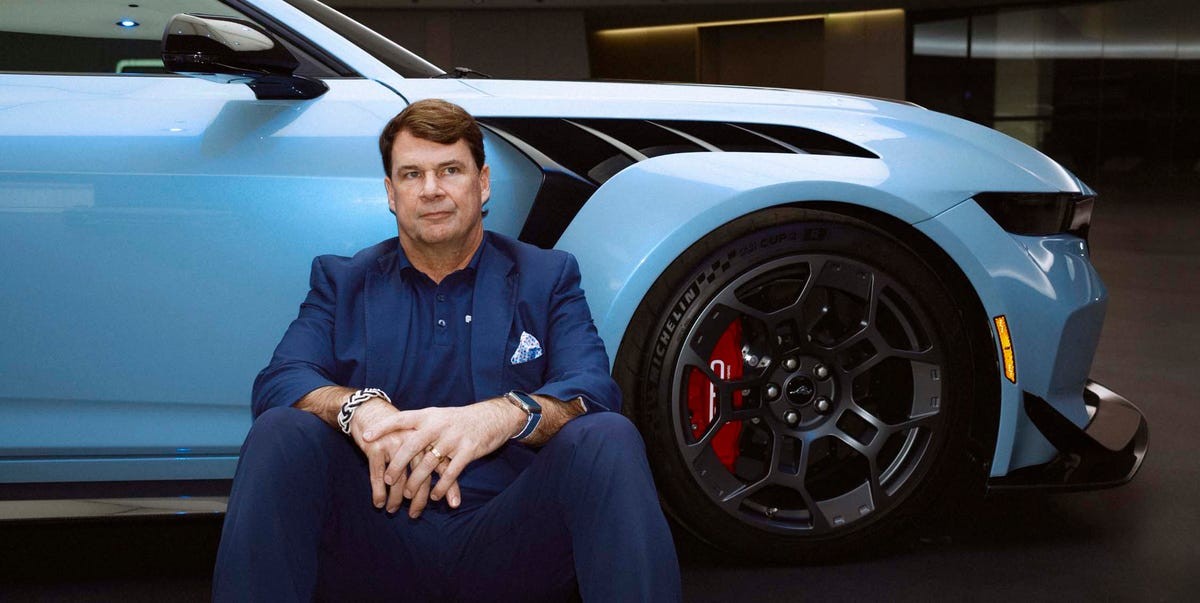
Ford CEO Jim Farley has spent the last five years steering the iconic automaker through a period of unprecedented disruption. As Ford marks its fifth anniversary under his leadership, the company faces tough questions about its electrification strategy, recent setbacks like the cancellation of the F-150 Lightning, and a $19.5 billion write-down. In a candid interview with Car and Driver, Farley reflects on the mistakes made, the lessons learned, and the urgent need to adapt in an industry dominated by aggressive competitors—particularly from China.
The Reality of Ford’s EV Push
Farley acknowledges that Ford’s initial approach to EVs was flawed, partly due to an overconfidence built on post-COVID demand spikes. The pandemic created an artificial market where high-priced vehicles sold easily, leading to miscalculations about what consumers would pay for electric trucks and SUVs.
“COVID totally was a false signal…we hadn’t designed the [electric] cars right.”
The turning point came when Ford engineers dissected a Tesla vehicle, revealing a staggering disparity in wiring harness weight (70 pounds heavier and 1.6 kilometers longer in the Mach-E compared to Tesla). This exposed a deep-seated “prejudice” within Ford’s engineering culture, where legacy approaches hindered innovation.
The Competitive Threat from China
The interview underscores a growing concern: China’s rapid rise in the EV market. Farley admits the industry underestimated the speed at which Chinese automakers like BYD, Great Wall, and Geely would leapfrog established players.
“Anyone in the auto industry who didn’t feel like something was going to happen in China five years ago was fooling themselves…But did we know that the companies and the local brands would get that good that fast? No way.”
Chinese manufacturers have benefited from massive government support and a willingness to prioritize low-cost, high-volume EV production. Their dominance is not just a future threat; BYD already outsells Tesla in volume.
Ford’s Internal Battles
Farley also addresses Ford’s historical internal politics, which he describes as a recurring issue. The company has struggled with infighting and siloed departments, hindering its ability to compete.
“It seems like that [corrosive internal politics] only happens when we’re kind of in stasis…Not when you’re in complete challenge mode.”
The Path Forward: Innovation and Resilience
Farley’s vision for Ford involves embracing software-defined vehicles, investing in lower-emission powertrains, and prioritizing quality, safety, and cost. He stresses the need for a new generation of engineers and leaders who aren’t bound by traditional automotive thinking.
“There’s no playbook…You can’t go and look up, ‘Hey, how do I do an EREV?'”
The company is also grappling with supply chain vulnerabilities, particularly in semiconductors. The CEO believes reshoring manufacturing of critical components is essential for long-term independence.
Conclusion: Ford is in a critical moment. The company must overcome internal obstacles, adapt to the evolving EV landscape, and counter the growing threat from Chinese competitors. Jim Farley’s candid assessment reveals a company willing to confront its mistakes and embrace radical change—but the race to secure its future is far from over.


