


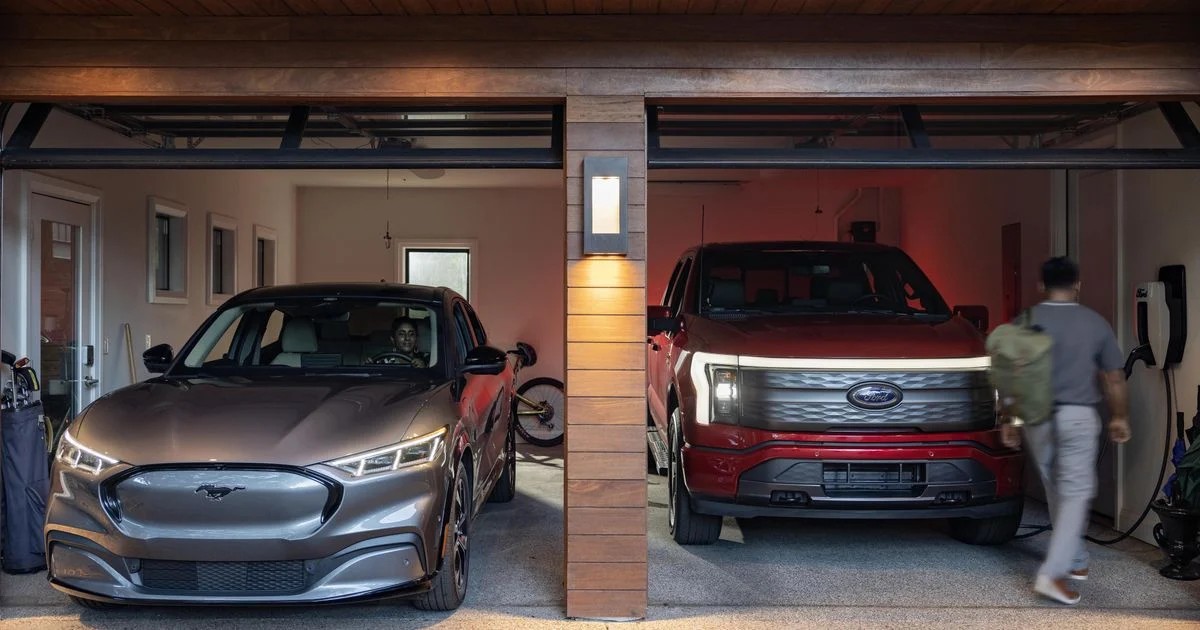
Ford CEO Jim Farley has publicly acknowledged significant missteps in the company’s electric vehicle (EV) rollout, directly praising Tesla for its initial approach and revealing internal biases that hindered Ford’s progress. In a recent interview with Car & Driver, Farley stated he “totally would’ve done it differently,” admitting that Ford lacked critical insights early on.
Tesla’s Influence on Ford’s Realization
Farley recounted a pivotal moment when Ford engineers disassembled a Tesla vehicle, an experience that left them “absolutely flabbergasted.” The analysis revealed Tesla’s superior efficiency in wiring harness design – 70 pounds lighter and 1.6 kilometers shorter than Ford’s initial Mach-E version. This discovery highlighted Ford’s internal “prejudice” toward established supply chains and its reluctance to fully commit to optimized EV architecture.
“We had prejudice. We’d gone to our supply-chain person and said ‘buy another wiring harness’. [Tesla] said ‘let’s design the vehicle for the lowest, smallest battery’. Totally different approach.”
COVID and Market Distortions
The CEO also pointed to COVID-19 as a disruptive factor, falsely signaling high demand that obscured underlying cost issues. The chip crisis further compounded problems, allowing Ford to sell vehicles at inflated prices without addressing fundamental inefficiencies. This temporary success masked the fact that Ford’s EVs were ultimately unprofitable, leading to a US$4.8 billion EBIT loss in 2023.
Strategic Shifts and Future Plans
Facing these financial realities, Ford has scaled back ambitious EV projects, including the cancellation of the F-150 Lightning in favor of an extended-range EV (EREV) with a petrol engine generator. This move reflects a broader shift away from direct competition with established EV leaders like Tesla and General Motors. Instead, Ford is focusing on a new “Universal EV” platform, aimed at affordability and high-volume production.
The first model, a Ranger-sized ute due in 2027, is targeting a base price under US$30,000. It will also feature Level 3 autonomous driving technology, a feature abandoned by other major automakers due to safety and regulatory concerns.
The Rising Threat from China
Farley acknowledged the rapid advancement of the Chinese auto industry, stating that Ford was “shocked” by the quality and innovation of local brands post-COVID. Chinese automakers, backed by government support, quickly surpassed Ford in design, technology (including battery swapping from Nio), and overall EV capabilities. This has left Ford struggling to compete in the world’s largest new-car market.
Ford’s strategic adjustments represent a candid admission of past errors. The company is now prioritizing cost-effectiveness and leveraging partnerships (such as the Volkswagen MEB platform for European models) to regain ground in the evolving EV landscape.


