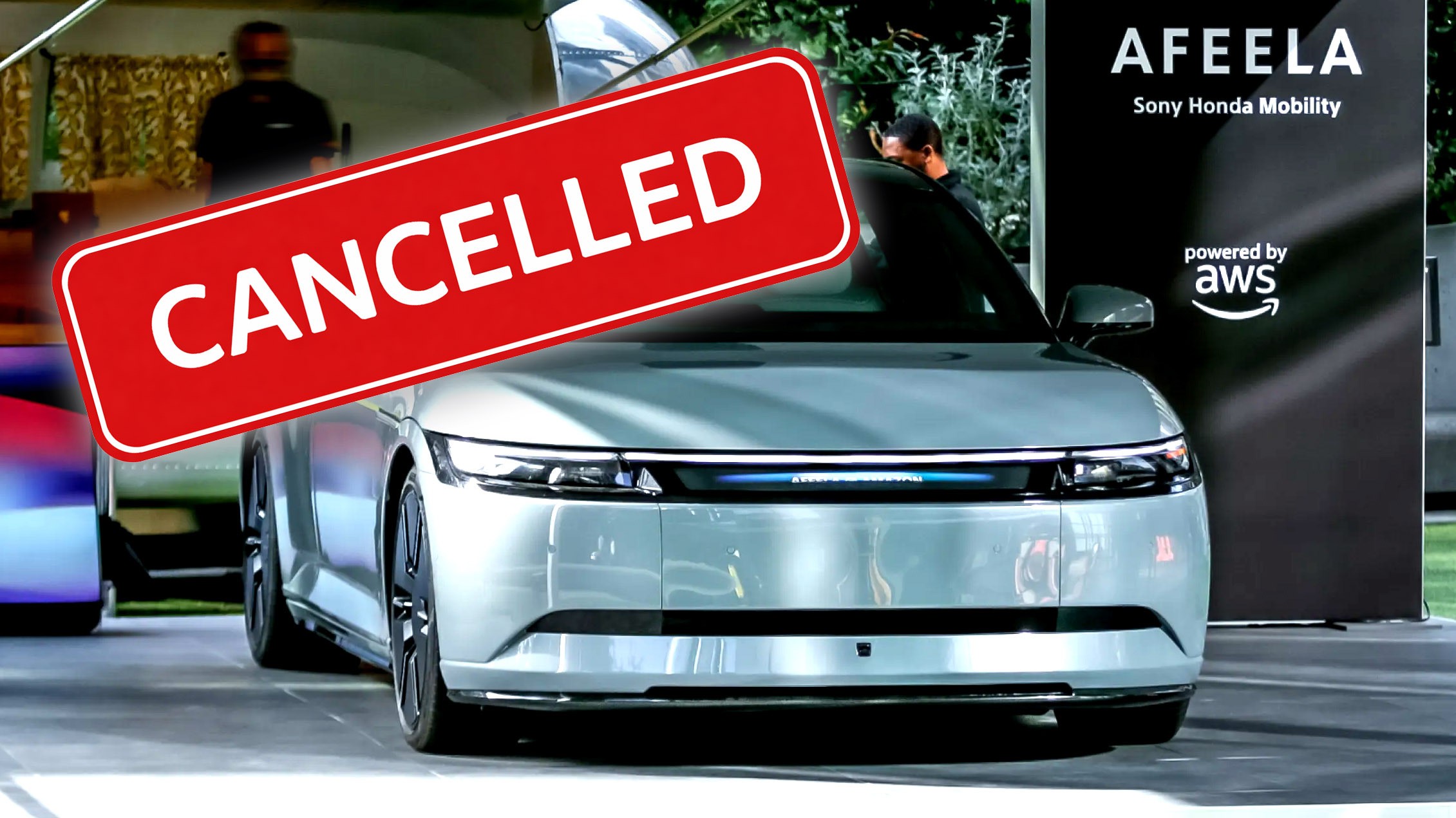
Honda’s abrupt change in EV strategy has effectively killed the Sony Afeela brand before its first vehicle ever reached customers. The joint venture between Sony Honda Mobility (SHM) and Honda, announced in 2022, is now collapsing as Honda retreats from ambitious electrification plans. This decision impacts not only the Afeela 1 sedan, slated for launch this year, but also a planned SUV follow-up for 2028.
The Downfall of a Tech-Automotive Partnership
The collapse stems directly from Honda’s recent decision to pull the plug on multiple key EV programs, including the Honda 0 Saloon, 0 SUV, and Acura RSX crossover. Facing a projected $15.7 billion loss, Honda has withdrawn the necessary technical resources and platforms that Afeela depended on for production. Without Honda’s hardware support, SHM acknowledged it lacks a path to market.
This is a significant reversal for a project that once aimed to disrupt the automotive industry by integrating Sony’s consumer tech expertise with Honda’s manufacturing capabilities. The Afeela brand was intended to redefine the in-car experience, but it now ends without delivering a single production model.
From Prototypes to Refunds
The Afeela project began with the Vision-S prototypes unveiled at CES in 2020 and 2022, evolving into production plans through the SHM partnership. Reservations for the Afeela 1 opened in early 2025 with a $200 refundable deposit, and a price tag of nearly $90,000. The latest prototype, shown at CES 2026, was meant to pave the way for a production SUV by 2028.
However, just weeks after opening the Afeela Studio and Delivery Hub in California, SHM has confirmed that all pre-orders will be refunded. The entire brand is dissolving.
Implications for Sony and the EV Market
This outcome raises questions about Sony’s future involvement in automotive. While the company initially aimed to reshape in-car entertainment and connectivity, it appears reliant on partnerships with established automakers for production. Honda’s retreat underscores the high capital and technical barriers to entry in the EV market.
This failure highlights the risks inherent in ambitious EV projects, especially for companies lacking established automotive infrastructure. The Afeela collapse reinforces the reality that building cars is not just about software and design, but also about reliable supply chains, manufacturing expertise, and sustained investment.
The Afeela’s demise, alongside Honda’s broader EV pullback, illustrates the financial pressures facing legacy automakers as they navigate the transition to electric vehicles. It remains to be seen whether Sony will seek new partnerships or abandon automotive ambitions altogether.