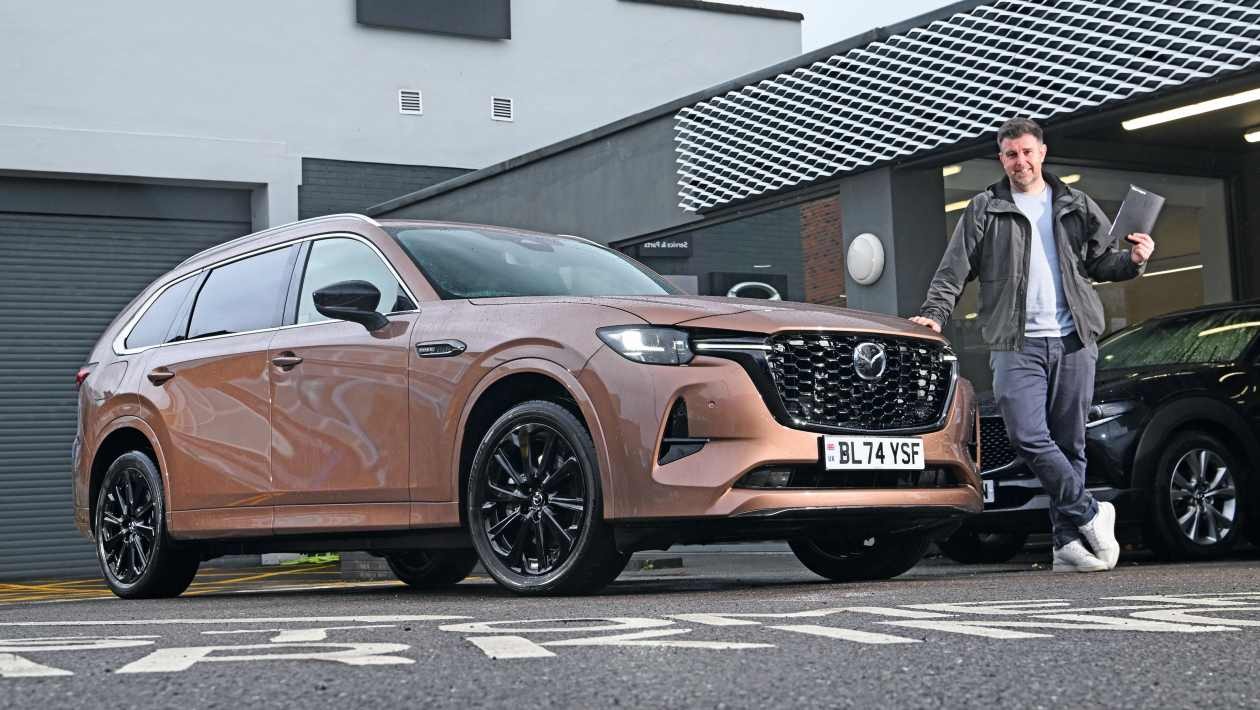
Mazda stands out in today’s automotive landscape by resisting the trend toward minimalist, touchscreen-heavy interiors. The CX-80 Homura Plus, after several months on test, proves this approach delivers real usability. While some may crave more visual flair, the CX-80 prioritizes function over fleeting design trends, and that’s a welcome change for drivers frustrated with overly complex infotainment systems.
First Service Check-Up
The first service milestone arrived after 5,532 miles, well within Mazda’s recommended 12,500-mile or 12-month interval. The check-up at TW White and Sons Mazda in Surrey cost £297 and confirmed the vehicle’s health. This reinforces Mazda’s reputation for reliability, although it’s worth noting that regular maintenance is crucial for any modern vehicle to maintain peak performance.
Interior Design: Black vs. White
The CX-80’s interior offers a stark choice: black or white. The standard black scheme, while classic Mazda, can feel gloomy, particularly in the rear seats. The optional white Nappa leather trim (available on Takumi models) dramatically brightens the cabin, but introduces the inevitable challenge of keeping it clean. This illustrates a broader trend in automotive design where lighter interiors are gaining popularity for their more spacious and modern feel.
The interior is robustly built, but the dark color scheme may deter some buyers who prefer a more premium or modern aesthetic. Mazda’s commitment to usability, however, remains a key differentiator.
The Case for Physical Controls
In an era where many manufacturers hide essential functions within touchscreen menus, the CX-80 retains dedicated buttons for climate control and a rotary dial for the infotainment system. This is a deliberate choice and a significant advantage for drivers who value simplicity and quick access to key features.
The CX-80’s control system feels a generation behind most rivals—in a good way. If you connect your phone to use Apple CarPlay or Android Auto, these work better with touchscreen inputs. The dark on-screen graphics mean there’s no real need for a ‘dark mode’ when driving at night. When you’re using Android Auto, however, the lighter graphics mean you have to manually switch the screen brightness down to avoid being dazzled by your own sat-nav.
Plug-In Hybrid Realities
The CX-80’s plug-in hybrid system delivers a combined 323bhp and 500Nm of torque, but maximizing efficiency requires diligent charging. The 17.8kWh battery offers an official 38-mile electric range, but real-world results can vary significantly.
The test team encountered an issue with the standard charging cable’s limited length (three meters), necessitating the purchase of a longer Tesla cable (£60 used, £207 new) to accommodate the home charger setup. This highlights a common frustration with PHEVs: the need for consistent charging to unlock their full potential.
Space and Practicality
The CX-80 excels in passenger space, with ample legroom in the second row and decent third-row seating for the class. The boot offers 687 liters with the third row down and 258 liters with it up. These figures demonstrate the vehicle’s practicality as a family hauler, but the bulky exterior design (4,995mm long) means maneuverability in tight spaces can be challenging.
Overall Impression
The Mazda CX-80 Homura Plus is a large, roomy seven-seat SUV that prioritizes usability over flashy design. With a price of £56,530 (plus £650 for Melting Copper paint), it competes with premium rivals but maintains a commitment to practical engineering. The appeal lies in Mazda’s refusal to chase trends, resulting in a vehicle that feels refreshingly straightforward in an increasingly complex automotive world.
The CX-80 is a good choice for drivers who value reliability, simplicity, and a no-nonsense approach to driving.