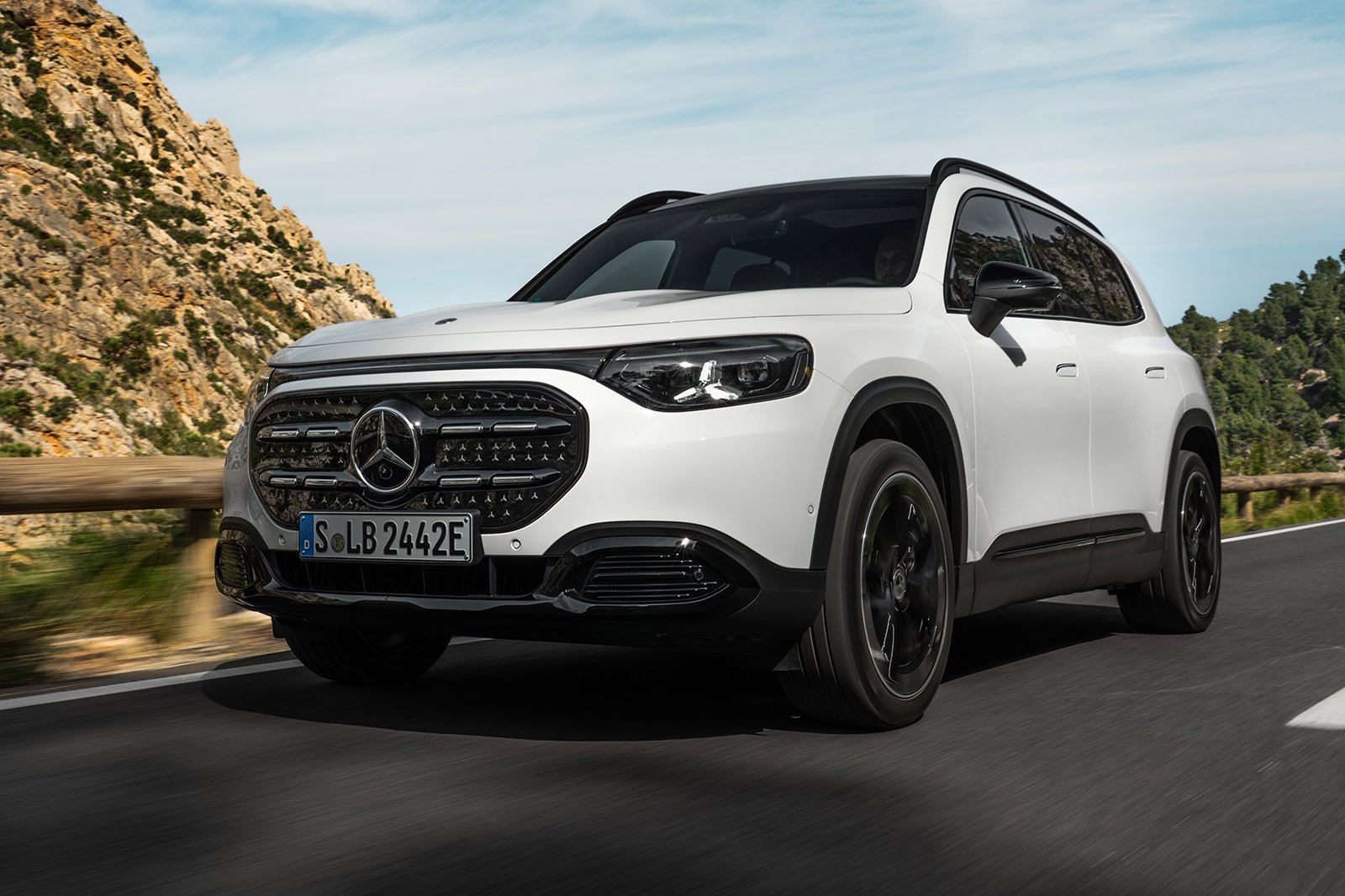
The electric vehicle market has long struggled to find a “middle ground” for families. On one end, you have massive, expensive SUVs like the Volvo EX90 or Kia EV9; on the other, boxy, van-like MPVs such as the Volkswagen ID Buzz. The Mercedes GLB Electric aims to fill this void, offering a compact yet highly functional seven-seat option that prioritizes both usability and driving refinement.
Surprising Versatility and Space Management
While many small SUVs sacrifice passenger comfort to save space, the GLB manages its dimensions remarkably well. It offers a legitimate—if snug—third row that can accommodate three average-height adults. To make the cabin work for different needs, the second-row seats feature a 140mm sliding mechanism, allowing owners to prioritize either rear legroom or cargo capacity.
One of the most clever design choices is the 127-litre “frunk” (front trunk). Because the third row often consumes most of the traditional boot space, this square-sided front compartment provides a vital secondary storage area for bags or small items, ensuring the car remains practical even when fully loaded with passengers.
Interior: Digital Brilliance vs. Material Reality
The cabin is a study in modern contrasts. On one hand, the dashboard is dominated by a high-tech trio of Superscreen displays, offering a seamless digital experience. On the other, the tactile quality of the materials leaves something to be desired.
- The Good: Ample storage, comfortable adjustable seats, and a sleek, metallic aesthetic on the center console.
- The Bad: A reliance on glossy plastics and a lack of premium “heft” in the switchgear.
This highlights a growing tension in the luxury EV market: Mercedes is investing heavily in digital ecosystems, yet some critics argue that true luxury is found in the physical touchpoints and material integrity of the cabin—areas where the GLB feels more mainstream than premium.
Driving Dynamics: Refined and Efficient
Where the GLB truly excels is behind the wheel. Testing across two variants—the single-motor GLB 250+ and the dual-motor GLB 350 4Matic —reveals a vehicle that drives with much more composure than its 2.2-tonne weight suggests.
Performance and Efficiency
The driving experience is characterized by smoothness, quietness, and intuitive handling. Interestingly, opting for the more powerful dual-motor 350 4Matic doesn’t come with a massive efficiency penalty. Thanks to a system that can disconnect the front motor when not needed, the range gap between the two models is remarkably narrow.
- Estimated Real-World Range (GLB 350 4Matic): 275–300 miles
- Estimated Real-World Range (GLB 250+): 300–325 miles
Control and Comfort
Drivers can easily manage energy recovery through manual regeneration controls—either via the drive selector or steering wheel paddles on AMG Line models. Additionally, the availability of adaptive dampers (available on specific trims) allows the car to transition from a supple, absorbent “Comfort” mode to a more contained “Sport” mode, making it equally capable on bumpy city streets or winding mountain roads.
Market Positioning and Outlook
The GLB Electric enters a competitive landscape. The upcoming GLB 200 model is expected to drive the entry price below £45,000, positioning it as a direct rival to the Tesla Model Y Standard Range, but with the added “bonus” of seven-seat practicality.
As Mercedes approaches its 140th anniversary in 2026, the GLB Electric serves as a vital bridge in their lineup. It isn’t just a “filler” model; it is a highly competent, driver-focused EV that addresses a specific, underserved niche of the motoring public.
Conclusion: The Mercedes GLB Electric is a rare breed of EV that successfully balances seven-seat utility with genuine driving pleasure, making it a compelling choice for families who refuse to compromise on performance.