Nissan has quietly revealed a facelift for its Sakura, the electric kei car that has dominated the Japanese EV market for four consecutive years. While a larger product presentation is scheduled for April 14 in Japan, this early reveal highlights Nissan’s strategy to maintain its momentum in the highly competitive micro-EV segment through subtle, aesthetic refinements.
A “Leaf-Inspired” Design Update
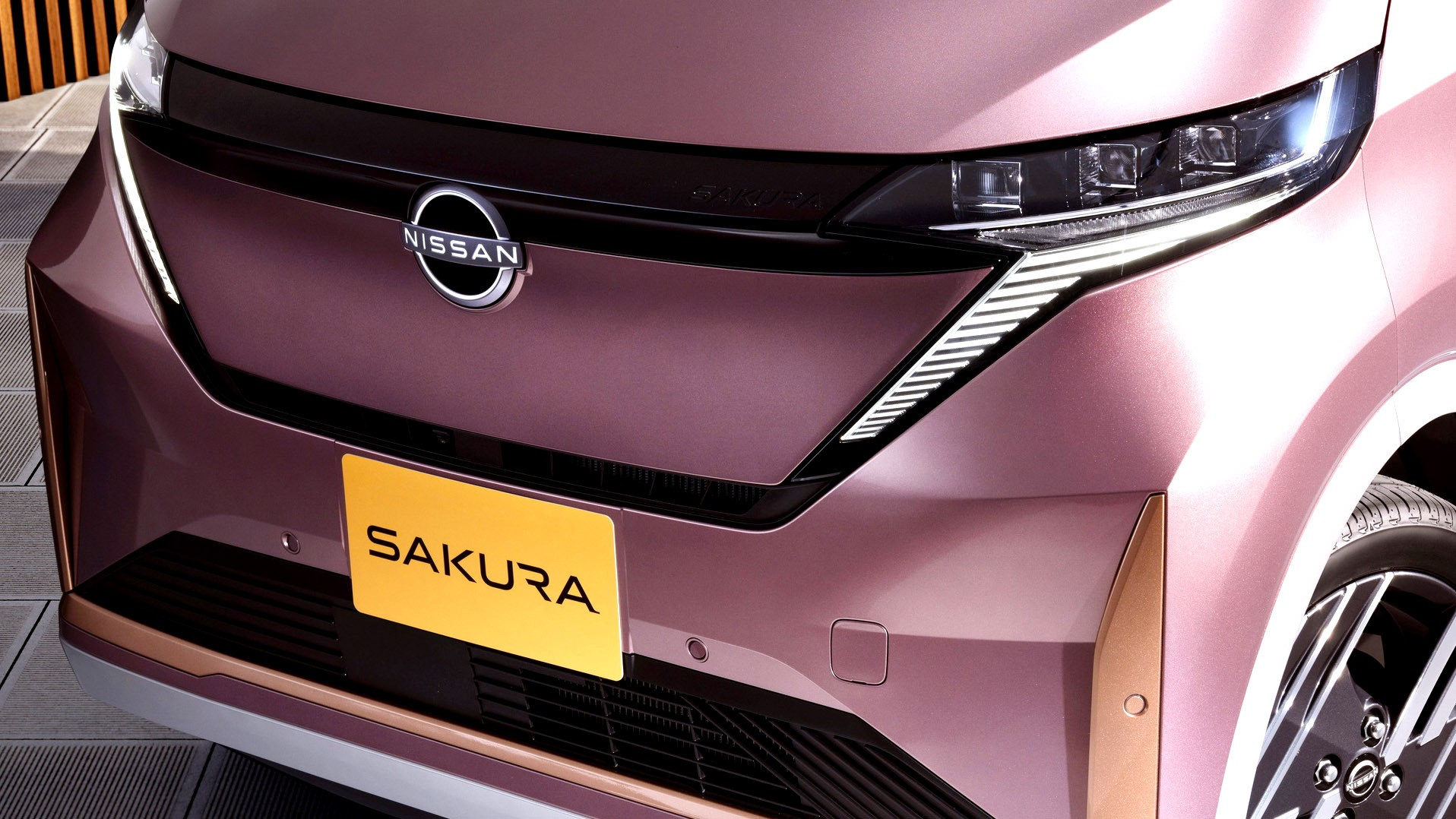
The most significant changes are concentrated on the vehicle’s exterior, specifically at the front. Nissan has redesigned the fascia to incorporate a body-colored grille section, a styling cue borrowed from the larger Nissan Leaf. This change, combined with a revised bumper featuring sharper angles and more pronounced vertical elements, gives the Sakura a more modern and cohesive appearance.
While the front end feels fresh, other areas remain largely consistent with the original 2022 model:
– Lighting: The LED headlight units remain unchanged.
– Profile: The side bodywork and sheet metal retain their original silhouette.
– Rear Design: The rear of the vehicle appears largely untouched, though specific details of the lower bumper have not yet been fully disclosed.
To complement the new look, Nissan is introducing a new color palette, headlined by “Minamono Sakura.” This unique shade is inspired by cherry blossoms floating on water, utilizing a tri-color finish that blends copper and silver accents.
Refined Interior and Practical Tweaks
Inside the cabin, the updates are minor but focused on user convenience. While the core architecture—including the 7-inch digital instrument cluster and 9-inch infotainment system —remains the same, Nissan has addressed small functional needs:
– Enhanced Utility: An additional cup holder has been added to the passenger side.
– Improved Ergonomics: The USB Type-C ports have been relocated lower in the center console for better accessibility.
Performance and Market Context
Technical specifications are expected to remain identical to the current model. The Sakura is powered by a single electric motor producing 63 hp (47 kW) and 195 Nm of torque, supported by a 20 kWh battery. This setup provides a WLTC-rated range of approximately 180 km (112 miles) —a figure typical for the kei car segment, where urban commuting is the primary use case.
This facelift is a strategic move to defend Nissan’s territory. Despite the rise of new competitors, the Sakura remains a powerhouse in its niche:
– Market Dominance: The model recorded over 14,000 sales in 2025, maintaining its status as Japan’s best-selling EV.
– Growing Competition: Nissan faces pressure from domestic rivals like Honda (N-One e: and N-Van e:) and Mitsubishi (eK X EV), as well as the looming arrival of the BYD Racco.
By opting for a facelift rather than a full redesign, Nissan is likely managing costs while ensuring the Sakura remains visually competitive against a wave of new electric entrants in the Japanese market.
The updated Sakura is expected to hit Japanese showrooms in the coming weeks. Current pricing for the model ranges from approximately ¥2,599,300 ($16,300) to ¥3,082,200 ($19,400).
Conclusion
The Nissan Sakura facelift is a targeted update designed to refresh the brand’s most successful electric micro-car without the cost of a total overhaul. By borrowing design elements from the Leaf, Nissan aims to maintain its market leadership amidst increasing competition from both domestic and international EV manufacturers.