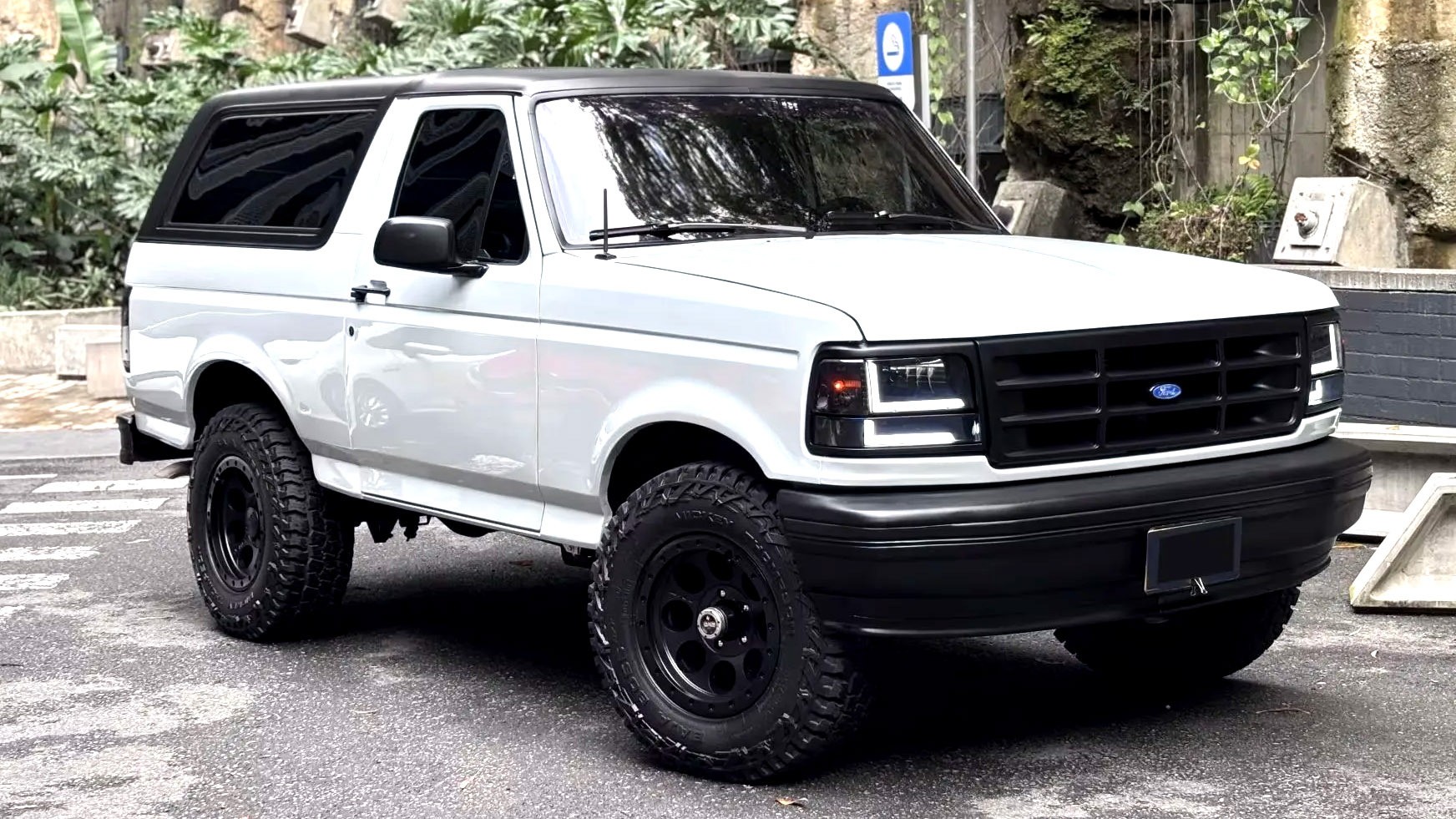
A recently auctioned 1994 Ford Bronco XLT has sparked a debate within the automotive community, highlighting the fine line between restoration and radical transformation. While most “restomod” projects—vehicles that combine classic aesthetics with modern technology—aim to preserve the original soul of a car, this particular Bronco has taken a different path, opting for a contemporary overhaul that mimics the look of a modern factory special edition.
A Contemporary Aesthetic Shift
Unlike typical restorations that focus on returning a vehicle to its showroom glory, this XLT has been heavily modified to look as though it were designed for a modern showcase like the SEMA auto show. The transformation leans heavily into a high-contrast, monochromatic theme:
- Exterior Refinements: The vehicle features a crisp white paint job accented by a matte-black bumper and a blacked-out grille.
- Lighting Upgrades: One of the most striking changes is the addition of darkened headlights equipped with L-shaped Daytime Running Lights (DRLs), a design cue typically found on much newer vehicles.
- Rugged Stance: The classic silhouette is bolstered by aftermarket black wheels wrapped in aggressive mud-terrain tires, complemented by a blacked-out roof and tailgate.
Performance and Interior Updates
While the specific technical specifications remain somewhat elusive, the auction listing confirms that the vehicle is no longer purely a vintage relic.
The original powertrain has been replaced with a new V8 engine, though the exact displacement and horsepower figures have not been disclosed. Inside, the cabin has undergone a functional facelift to bridge the gap between 1990s utility and modern comfort. Notable changes include:
– A redesigned steering wheel.
– A large, modern aftermarket head unit for upgraded infotainment.
– Retrimmed seats and dashboard, though the color palette remains a conservative, muted beige.
The Restomod Dilemma: Innovation vs. Authenticity
This vehicle represents a growing trend in the automotive aftermarket: the push to make vintage icons feel “current.” This approach raises an important question for collectors and enthusiasts: At what point does a classic vehicle lose its historical identity?
For some, these upgrades are essential to making an old vehicle drivable and relevant in a modern context. For purists, however, such drastic changes can feel like they strip away the very character that made the original Bronco a legend.
Whether this Bronco is a successful evolution or a step too far depends entirely on the observer’s definition of a “classic.”
Conclusion
This 1994 Ford Bronco XLT serves as a polarizing example of modern restomodding, trading vintage charm for a contemporary, high-contrast aesthetic and updated V8 performance. It stands as a testament to how much a vehicle can change when the goal shifts from preservation to reinvention.