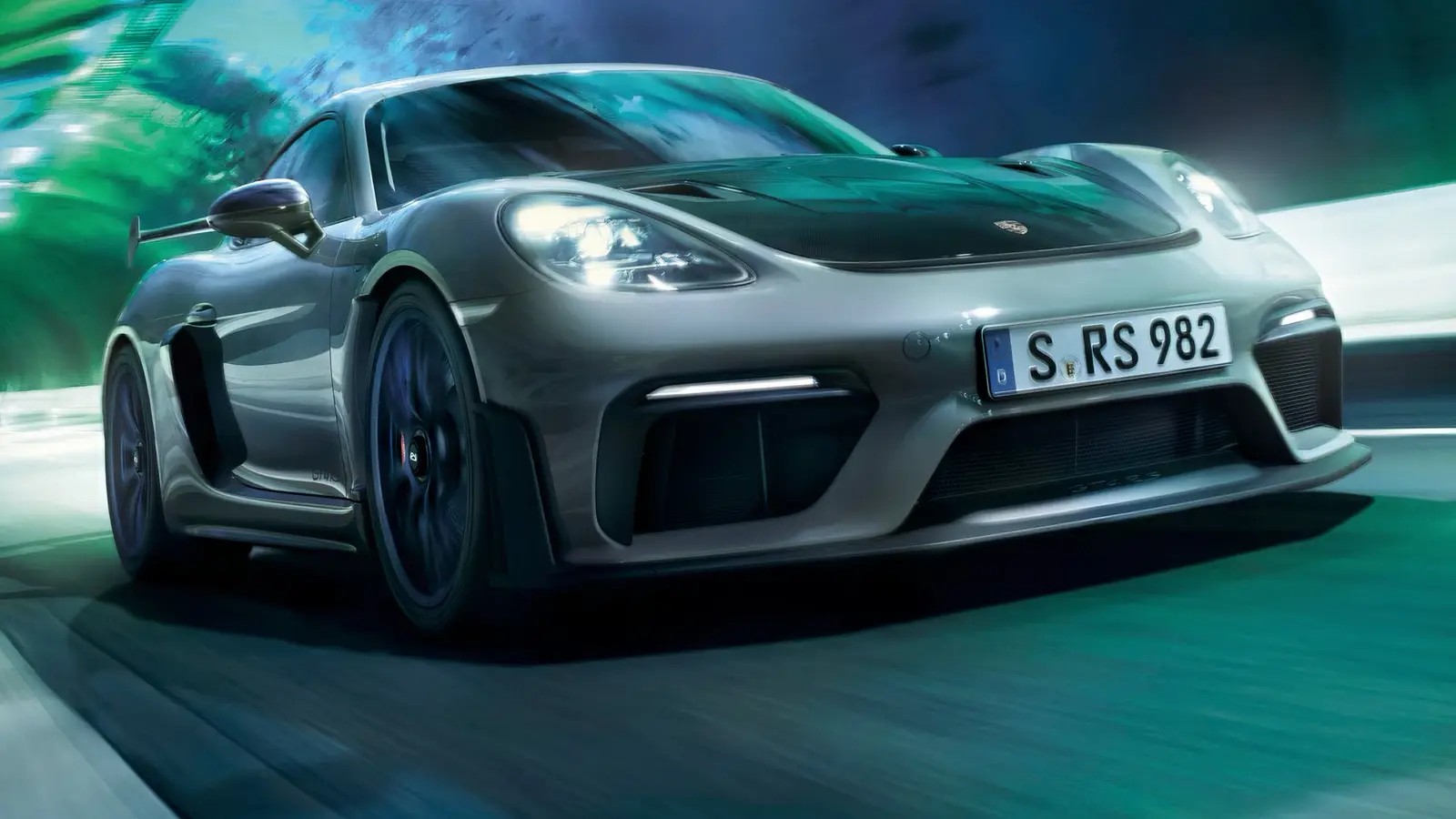
The Porsche 911 is the benchmark, the icon. It’s what many aspire to when thinking of a Porsche. But for those seeking a pure, engaging driving experience, the Porsche 718 Cayman often delivers more for the money, and in some ways, performs better than its more famous sibling. This isn’t about settling; it’s about understanding where the Cayman excels.
The Mid-Engine Advantage
The 911’s rear-engine layout is unique, perfected over decades. But mid-engine placement, as found in the Cayman, is fundamentally superior for balance. Weight distribution is more even, resulting in sharper handling and greater stability. The Cayman isn’t trying to compete with the 911’s corner-exit traction; instead, it provides telepathic steering, incredible grip, and a chassis that makes it one of the greatest driver’s cars on the market.
The Cayman offers a range of engines – turbocharged four-cylinders (300-350 hp) and soulful flat-sixes (394 hp GTS 4.0, 493 hp GT4 RS). All this, with the benefit of a mid-engine setup that transforms handling.
Everyday Practicality
Despite being a sports car, the Cayman is surprisingly livable. The interior is driver-focused, with perfectly positioned controls. Standard features include Apple CarPlay, heated seats, and an eight-speaker audio system.
It’s snug to get into, but offers decent storage for a sports car: 5.2 cubic feet in the front and 9.7 in the rear hatch. On the road, it’s firmer than a 911, but still comfortable enough for daily use. Its smaller size makes it easier to maneuver and park. Fuel economy ranges from 27 MPG (base model) to 24 MPG (high-spec versions).
Lower Costs, Higher Value
The Cayman is initially cheaper than a 911, and even the high-performance GT4 RS can match the price of a mid-range Carrera GTS. This means more driver’s car for less money. Maintenance is also cheaper, saving you over the long term.
Porsche’s reliability is excellent, with the Cayman scoring 86/100 in J.D. Power’s Quality & Reliability ratings. Cars of this caliber aren’t cheap to run, but the Cayman’s German engineering minimizes breakdowns.
Depreciation and Future Collectibility
Depreciation is minimal for both models, but the Cayman currently depreciates at 20.3% over five years. A 911 depreciates less in percentage terms, but due to higher starting prices, it loses more money in absolute terms.
A unique factor: the Cayman may actually increase in value. Pressure to electrify Porsche’s lineup means the current analogue driving experience could become increasingly rare, making these models sought-after collectibles.
On-Track Performance
The Cayman’s handling is exceptional, with impressive grip, balanced weight distribution, and a slight sensation of understeer at the limit. This isn’t a flaw; it provides feedback, allowing the driver to push harder with confidence. The Cayman combines agility, acceleration (with the flat-six), braking, and steering to create a truly engaging driving experience.
The Porsche 718 Cayman isn’t just a cheaper alternative to the 911; it’s a distinct, high-performance sports car that offers a more balanced driving experience and potentially stronger long-term value.
The Cayman is a compelling alternative, providing a world-class driving experience at a more accessible price point. For those prioritizing pure handling and driver engagement, the Cayman is often the better choice.