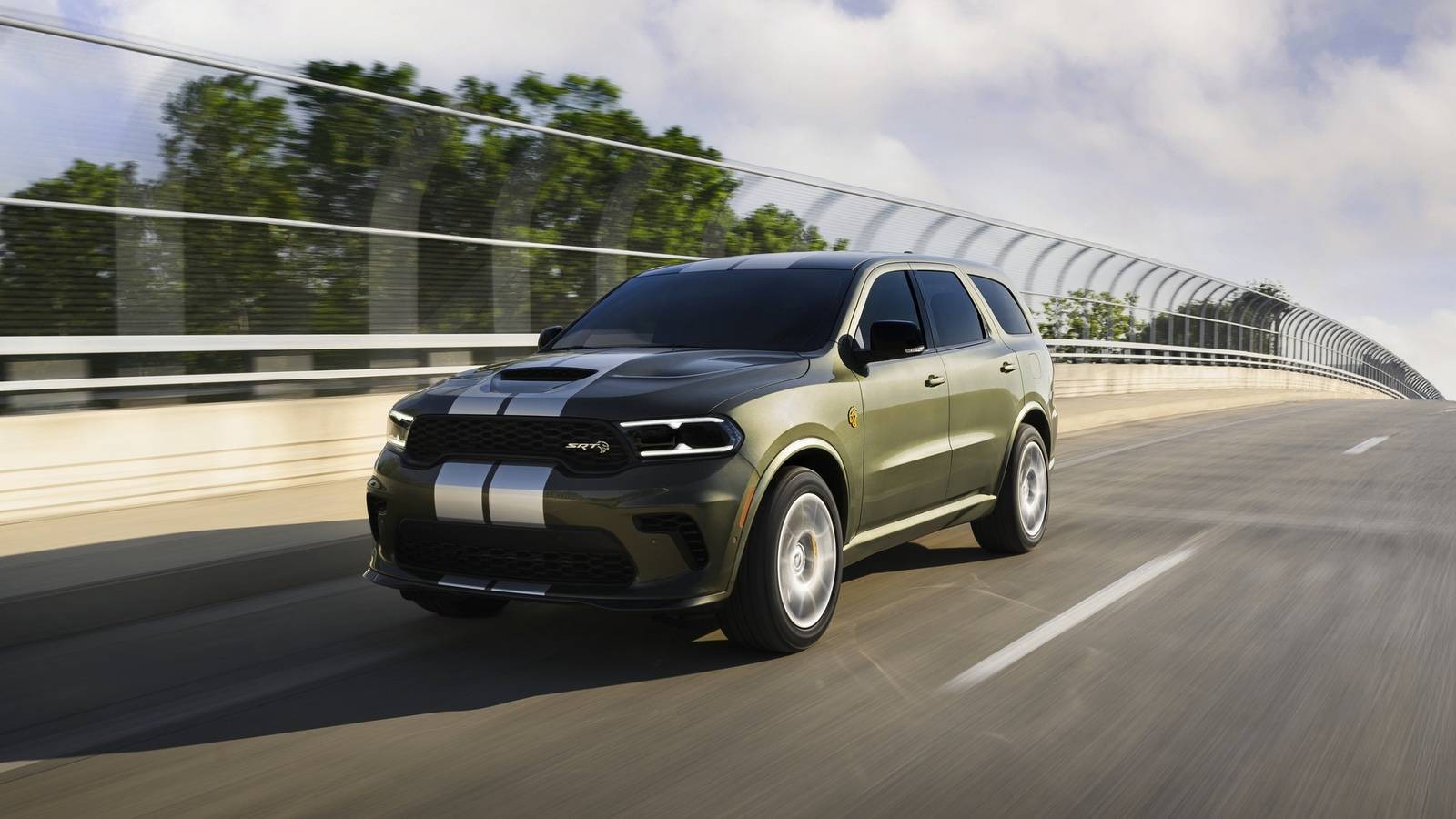
The 2026 Dodge Durango SRT Hellcat is a vehicle that defies every modern rule of automotive engineering and market logic. On paper, it is a contradiction: a three-row family hauler that possesses the raw, unbridled power of a muscle car. While the rest of the industry moves toward silent electric motors and hyper-efficient turbocharged engines, Dodge has doubled down on something much louder, much thirstier, and much more visceral.
A Powerhouse Under the Hood
The heart of the Durango Hellcat is a 6.2-liter supercharged HEMI V8, a masterpiece of brute force that delivers 710 horsepower and 645 lb-ft of torque. This engine transforms a heavy SUV into a performance machine capable of:
– 0–60 mph: 3.5 seconds
– Quarter-mile: 11.5 seconds
– Top speed: 180 mph
– Towing capacity: Up to 8,700 pounds
When you depress the accelerator, the experience is defined by the unmistakable whine of the supercharger and a deep, aggressive exhaust growl. It is an assault on the senses that most modern SUVs—which prioritize quietness and smoothness—have long since abandoned.
Defying Logic in an Era of Efficiency
If we look at the Durango through a purely rational lens, it shouldn’t exist. It faces several significant hurdles that would typically disqualify a vehicle in today’s competitive landscape:
- Aging Architecture: The platform has been in use since 2010, meaning the exterior styling and interior technology lack the sleek, digital-first sophistication of newer rivals.
- Economic Inefficiency: With fuel economy sitting in the low teens and a starting price near $80,000, it is neither a budget-friendly nor an environmentally conscious choice.
- Conflicting Purposes: It attempts to bridge the gap between a utilitarian family vehicle (capable of hauling groceries or towing a boat) and a high-performance beast.
However, these “flaws” are precisely why the vehicle maintains such a cult following. Dodge has realized that there is a specific niche of enthusiasts who value character over competence. They aren’t looking for a sensible appliance; they are looking for an experience.
Market Success Amidst Transition
Despite the industry-wide shift toward electrification, the Durango’s popularity is actually increasing. In 2025, Dodge saw a 37% jump in sales compared to the previous period, moving over 81,000 units—its strongest performance in two decades.
The introduction of specialized versions, such as the highly customizable Jailbreak edition, suggests that Dodge isn’t just coasting on nostalgia; they are actively catering to a market that craves personalization and raw mechanical connection.
The Verdict: Why It Works
The Durango SRT Hellcat is not a “refined” vehicle. It can feel truckish on uneven roads, and its cabin lacks the massive, seamless screens found in luxury competitors. But the engine acts as a great equalizer. The sheer thrill of the acceleration and the visceral feedback of the V8 make the dated interior and thirsty engine easy to forgive.
“A family hauler should not have this much power. Or should it?”
In a segment increasingly defined by “sensible” choices, the Durango Hellcat stands as a defiant reminder of why driving is supposed to be fun. It is a loud, unapologetic, and brilliantly ridiculous machine that succeeds because it refuses to play by the rules.
Conclusion: The 2026 Dodge Durango SRT Hellcat survives and thrives by ignoring modern trends of efficiency and refinement, instead offering a rare, high-octane experience that turns a practical family SUV into an addictive performance icon.