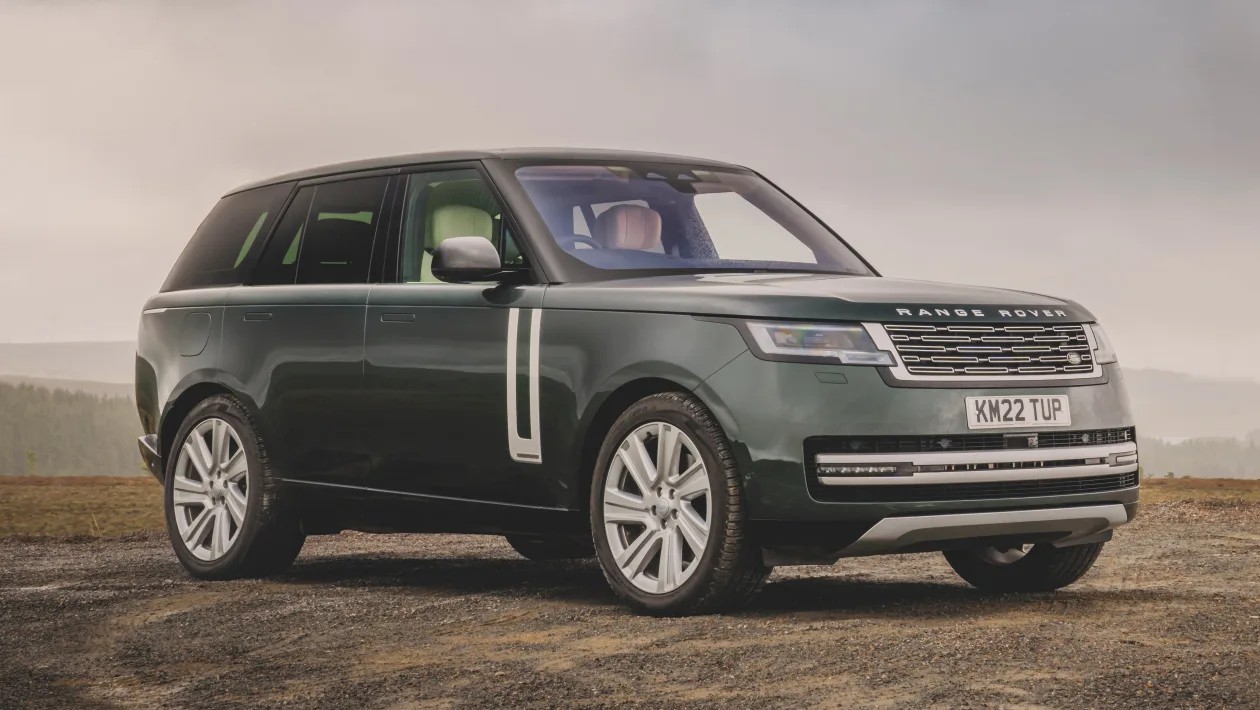
The Range Rover remains the benchmark in luxury SUVs, offering an unparalleled driving experience. While past issues with reliability and theft have shadowed the model, Land Rover has made significant improvements, though dealer quality can still vary. If you’re seeking an ultra-luxurious SUV, the Range Rover deserves top consideration.
A Legacy of Refinement
The original Land Rover was utilitarian; however, the first Range Rover in 1970 redefined the brand. Though early models lacked modern luxuries, they established a standard for on- and off-road capability that rivals continue to chase. Each generation has built upon this foundation, culminating in the fifth-generation model released in 2021: a vehicle far removed from its rugged origins, yet still setting the standard for luxury.
Model History and Engine Options
The current Range Rover (launched October 2021) begins at £94,400. Initial options included:
- Plug-in Hybrids: P440e (434bhp) and P510e (503bhp)
- Petrols: Twin-turbo 4.4L V8 (P530) and mild-hybrid 3.0L straight-six (P400)
- Diesels: 3.0L six-cylinder MHEV (D300, D350)
Later updates introduced the P460e, P550e, and P615 engines. Both standard and long-wheelbase versions are available, with the latter offering five or seven seats. Land Rover is preparing for an all-electric Range Rover, but it has yet to hit the market.
On the Road: Comfort and Capability
The Range Rover delivers surprising agility for its size and weight, aided by standard four-wheel steering. Urban driving is simplified by advanced parking assistance, while the air suspension provides exceptional comfort on motorways and adjustable firmness for spirited driving. The vehicle is capable off-road, though few owners will explore this aspect.
Pricing and Availability
Used Mk5 Range Rovers start around £33,000 for early models, with well-maintained examples exceeding £65,000. Diesel models dominate the used market, followed by petrols and plug-in hybrids.
Trim Levels and Features
All Range Rovers include a comprehensive suite of features:
- Windscreen, steering wheel, and seat heating
- Powered tailgate
- Eight-speed automatic transmission
- Adaptive cruise control
- Panoramic sunroof
- Three-zone climate control
Higher trims (HSE, Autobiography, SV) add features like park assist, upgraded audio, massaging seats, and premium materials. The SV is the most luxurious, but upgrades are primarily cosmetic.
Alternatives
The Bentley Bentayga is the closest competitor in luxury, though it lacks the Range Rover’s off-road prowess. The Aston Martin DBX offers a sportier experience. Audi Q7, BMW X7, and Mercedes GLS offer luxury but don’t match the Range Rover’s cabin refinement. Consider the Audi A8, BMW 7 Series, or Mercedes S-Class if you don’t need an SUV.
What to Watch Out For
- Plug-in Hybrid Range: Expect 50 miles or less in winter.
- Reliability: While improved, the Range Rover remains complex and prone to electronic glitches. Ensure all systems function correctly and software is up-to-date.
- Air Suspension: Monitor for issues, as repairs can be costly.
- Diesel Throttle Bodies: Watch for failures in diesel models.
- Recalls: The Range Rover has been subject to 17 recalls, including issues with crash sensors, exhausts, engine parts, and hybrid battery glitches. Land Rover has also issued security software updates to mitigate theft risks.
Running Costs and Maintenance
Maintenance costs are steep: the first five check-ups total over £5,000. Oil changes alone cost £394. Brake pads and discs can exceed £1,000 at an official dealer. The Range Rover uses a chain-driven engine, eliminating cambelt replacements. Expect 22mpg from V8s, 38mpg from diesels, and 40-70mpg from plug-in hybrids (depending on usage).
Conclusion
The Range Rover remains the gold standard in luxury SUVs. Despite past reliability issues, the latest models are more dependable, while retaining the model’s distinctive refinement and capability. If you prioritize luxury, comfort, and prestige, the Range Rover is a compelling choice—just be prepared for high running costs and potential maintenance challenges.