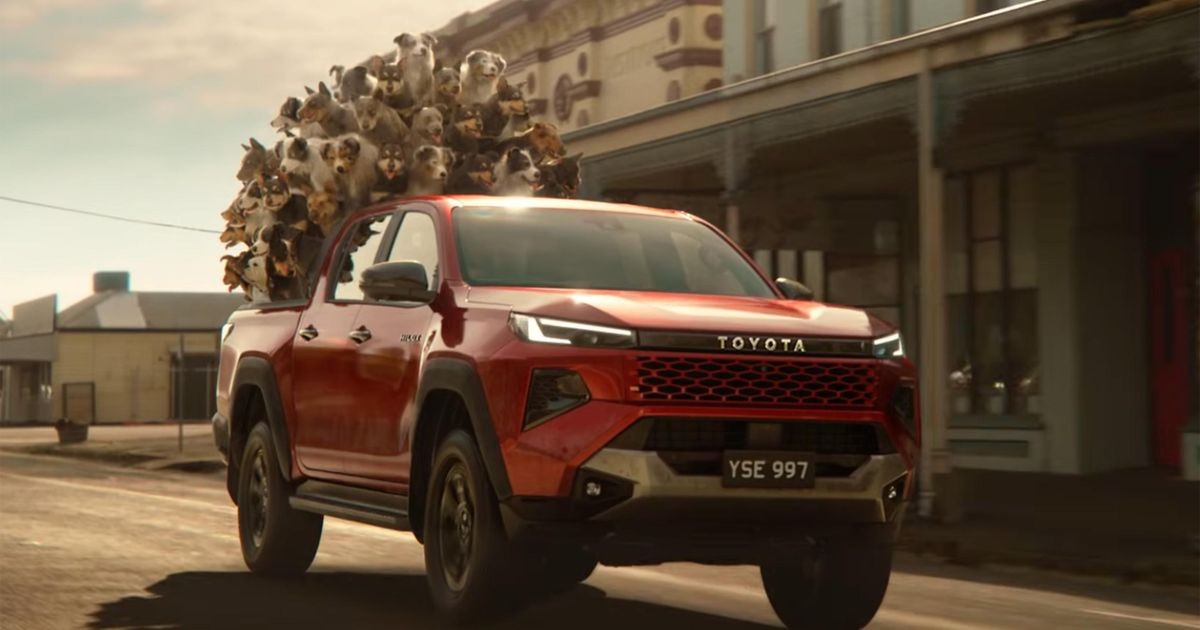
A recent television commercial for the Toyota HiLux ute has been found in breach of Australian advertising codes, forcing Toyota to pull or heavily modify the ad. The commercial, titled “The Pied Piper,” depicted a large pack of dogs unrestrained in the back of a moving vehicle, a practice deemed dangerous and illegal by the Ad Standards Community Panel.
The Controversy: Dogs in the Tray
The advertisement showed dozens of dogs comically overloading the tray of a HiLux Rogue, chasing the vehicle down a dirt road and jumping in without safety restraints. Several viewers filed complaints, arguing the ad promoted unsafe driving behavior and failed to meet basic animal welfare standards. While Toyota claimed the ad was meant to be lighthearted and exaggerated, depicting the vehicle’s perceived loyalty, the panel disagreed.
Code Breaches: FCAI and AANA
The investigation found Toyota violated two key advertising standards:
- FCAI Motor Vehicle Advertising Code 2(c): The commercial displayed illegal driving practices by showing unsecured animals in a vehicle bed – a clear breach of road safety rules.
- AANA Code of Ethics 2.6 (Health and Safety): The ad’s depiction of unrestrained dogs contradicted prevailing community standards regarding animal and passenger safety.
The panel dismissed concerns about violence towards animals, noting the use of trained dogs, static props, and CGI in some scenes. Toyota confirmed no live dogs were filmed unsecured in moving vehicles on public roads, but this did not negate the unsafe portrayal of animal transport.
Toyota’s Response & Next Steps
Toyota defended the commercial by stating it was meant to humorously highlight the HiLux’s perceived appeal, with the nonchalant driver suggesting such events are commonplace for owners. However, this explanation did not satisfy the panel, which ruled that the advertisement must be modified to comply with the advertising standards.
The panel’s determination concluded: “Toyota will modify the advertisement.”
This case underscores the strict oversight of advertising content in Australia, particularly concerning safety and ethical standards. The incident raises questions about how automakers portray vehicle use in commercials, ensuring they don’t unintentionally promote dangerous or illegal behaviors.