


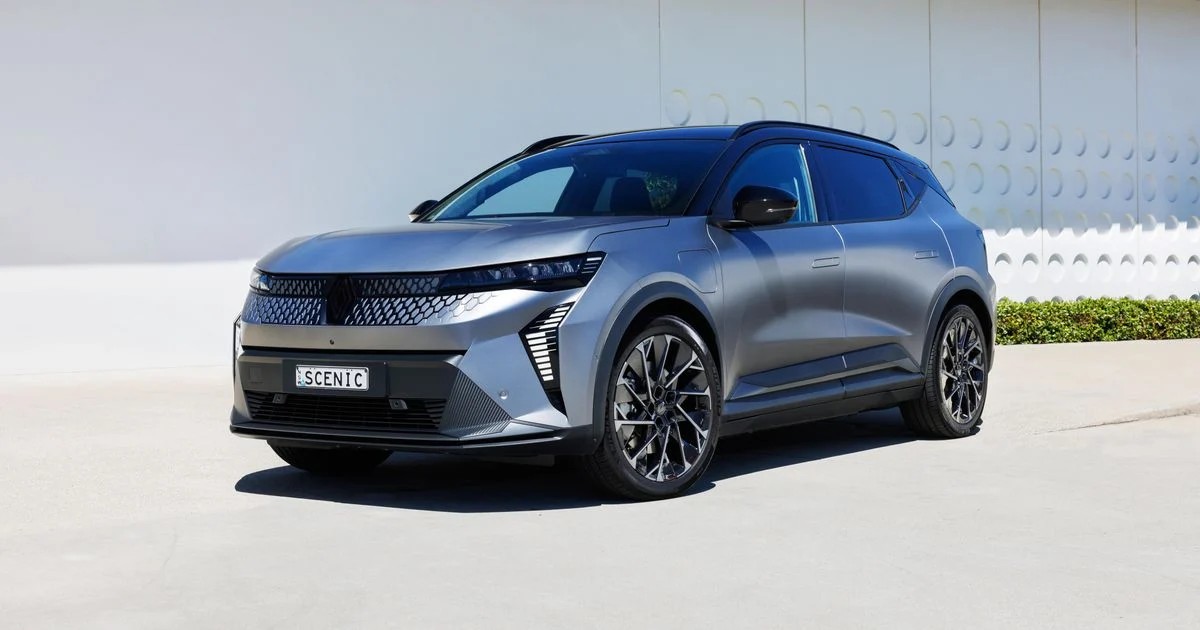
Renault is accelerating its electric vehicle (EV) and hybrid rollout in Australia, driven by the country’s new New Vehicle Efficiency Standard (NVES) regulations. The launch of the Scenic E-Tech electric SUV marks the beginning of a broader expansion, with the brand aiming to leverage EV sales to avoid penalties under the tightening emissions rules.
Navigating New Regulations
The NVES system incentivizes automakers to reduce fleet-wide carbon emissions. Brands exceeding targets generate “credits” that can offset sales of less efficient vehicles or be sold to competitors struggling to comply. Renault sees EVs like the Scenic – priced from $55,990 – as crucial for meeting these targets. The company is confident that the Scenic will help generate credits, thanks to its unique selling points.
Strategic Expansion
While Renault met initial CO2 targets last year, its Australian division has been cautious about introducing new EVs beyond the Kangoo, Megane, and Scenic. However, French executives have committed to six new or refreshed models by the end of 2026, with the Scenic being the first. The strategy includes both fully electric models and hybrids, with a focus on vehicles suited to the Australian market.
Market Considerations
Renault acknowledges that Australia’s preference for medium and large SUVs limits the appeal of smaller EVs like the Renault 4, 5, and Twingo. The company is prioritizing models that cater to local demand, but remains open to bringing smaller EVs if market conditions change. The high-performance Renault 5 Turbo 3E, priced over $300,000, is available but targeted at a niche audience.
Future Models
Potential candidates for the remaining five model launches include the Symbioz small hybrid SUV (a possible Captur replacement), the Geely-based Filante hybrid SUV, an updated Arkana with hybrid tech, and the Dacia Bigster – likely rebadged as a Renault, as was the Duster. An update to the Megane E-Tech is also possible. Renault Australia’s general manager has hinted at “surprises” in the coming months.
Renault’s strategy demonstrates how automakers are adapting to stricter emissions standards by strategically introducing EVs and hybrids, while simultaneously acknowledging the importance of aligning product offerings with regional market preferences. The company is balancing regulatory compliance with practical consumer demand, ensuring a sustainable approach to EV adoption in Australia.


