For decades, the cruiser motorcycle has been defined by a specific set of trade-offs. To get the classic aesthetic—heavy chrome, wide handlebars, and a relaxed, low-slung silhouette—riders usually had to sacrifice agility and high-end performance. Traditionally, cruisers prioritize “character” (low-end torque and heavy V-twin vibrations) over “dynamics” (cornering precision and high-RPM power).
However, a shifting market is challenging this status quo. A new wave of motorcycles is attempting to bridge the gap between laid-back cruising and aggressive sport riding.
The Rise of the “Sporty Cruiser”
The industry is seeing a trend where manufacturers are “borrowing” DNA from sportbikes to revitalize the cruiser segment. We are seeing several notable examples of this evolution:
- CFMoto 450CL-C: Uses components from the track-focused 450SS to provide nimble handling in a neo-retro package.
- Buell Super Cruiser: A muscular machine that hides a superbike-derived chassis and engine beneath its old-school chopper styling.
- Triumph Rocket 3 Storm GT: A powerhouse featuring the world’s largest production motorcycle engine, delivering massive torque and high horsepower.
While these machines are impressive, Harley-Davidson is taking a different approach with its flagship liquid-cooled cruiser: the Sportster S.
The Sportster S: A Radical Departure
The Sportster S is not a traditional cruiser. While it retains the iconic V-twin soul, it is built with a “performance-first” mindset that departs significantly from the heavy, cumbersome cruisers of the past.
🏎️ High-Revving Performance
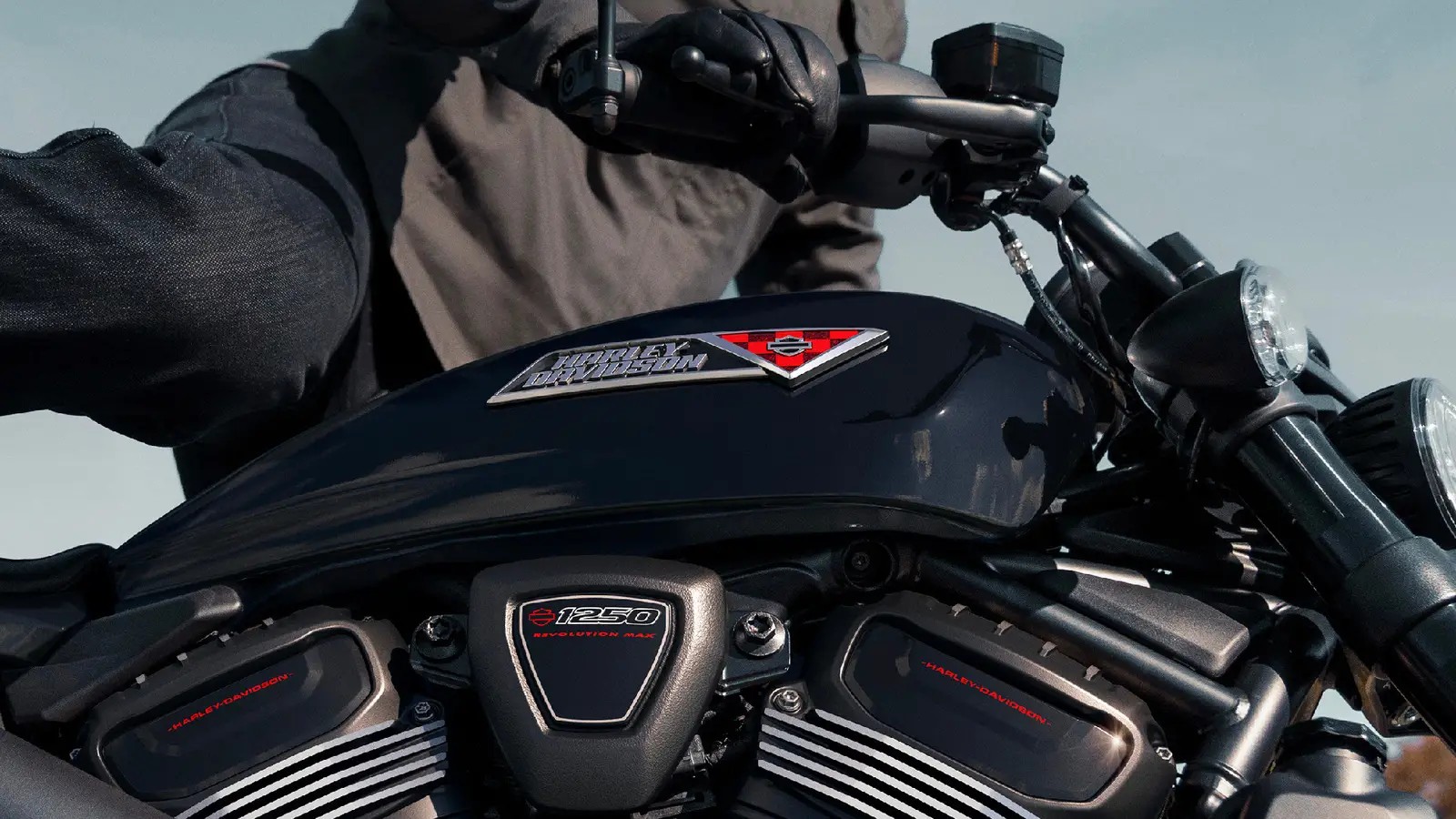
Unlike the traditional air-cooled engines that thrive at low RPMs, the Sportster S features the Revolution Max liquid-cooled V-twin. This engine is designed with a short-stroke architecture, allowing it to rev much higher than a standard Harley.
– Power: 121 horsepower at 7,500 RPM.
– Torque: 93 pound-feet at 6,000 RPM.
– Transmission: A six-speed gearbox paired with a belt final drive.
⚖️ Lightweight Engineering
To achieve sporty handling, weight is the enemy. Harley-Davidson addressed this by using an alloy-steel trellis frame, which allows the engine to act as a stressed member of the chassis. This engineering choice results in a relatively light curb weight of 503 pounds.
The bike is further enhanced by performance-oriented hardware:
– Suspension: Fully adjustable 43mm inverted front forks and a piggyback rear monoshock.
– Braking: Radially-mounted monoblock 4-piston calipers for high-precision stopping power.
– Tires: High-grip Dunlop GT503 tubeless tires on lightweight cast aluminum wheels.
📱 Sophisticated Technology
The Sportster S moves away from “analog” simplicity toward high-tech rider aids. It features a 4-inch TFT display with Bluetooth and navigation, but the real value lies in its electronic safety suite. Utilizing a six-axis IMU, the bike offers cornering-enhanced safety features, including:
– Traction Control and Drag-torque Slip Control.
– Electronic Linked Braking and ABS.
– Wheel Lift Mitigation.
– Assist-and-slipper clutch and by-wire throttle.
Ergonomics: Sporty, Not Social
While the Sportster S maintains some cruiser hallmarks—like a low seat height (30.1 inches) and forward-set footpegs—the riding position is intentionally aggressive. The rider sits with a slight forward lean, a design choice meant to complement the bike’s quick handling.
However, this compact, performance-oriented design comes with a trade-off: the bike is strictly for a solo rider. The aggressive ergonomics and minimal frame leave no room for a passenger, cementing its identity as a driver-focused machine.
Conclusion
The Harley-Davidson Sportster S represents a pivotal shift for one of the industry’s most storied nameplates. By blending a high-revving, liquid-cooled engine with lightweight trellis construction and advanced electronics, Harley-Davidson has successfully transformed the “Sportster” from a traditional cruiser into a legitimate performance machine.
Summary: The Sportster S breaks the traditional cruiser mold by prioritizing power-to-weight ratio and advanced electronics over pure relaxed cruising, offering a high-performance alternative for the modern rider.