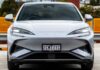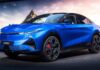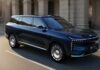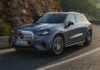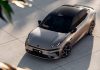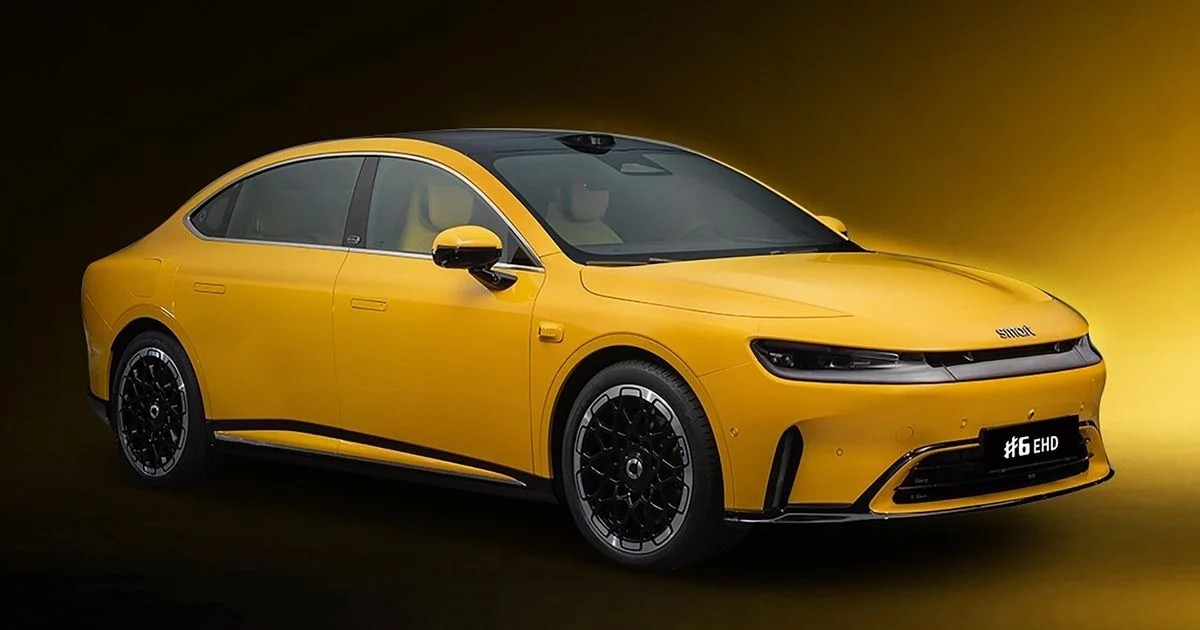
Smart, a brand long synonymous with compact city cars, is making a significant leap in scale. The company has revealed the interior details of the Smart #6, its first-ever sedan, ahead of its official debut at the 2026 Beijing Motor Show.
This move marks a fundamental shift in the brand’s identity. Once a specialist in small, nimble vehicles like the Fortwo, Smart is now aggressively expanding into larger vehicle segments to compete in a more crowded and lucrative global market.
A Premium Cabin Experience
The interior of the Smart #6 emphasizes high-end materials and advanced technology, reflecting the brand’s 50/50 ownership partnership between Mercedes-Benz and Geely.
Key interior features include:
– Dual-Screen Layout: A massive central infotainment display that extends across to the passenger side.
– Premium Materials: Nappa leather upholstery is available in three distinct themes: Grid Yellow, Shadow Black, and Wild Brown.
– Immersive Audio: A high-performance 20-speaker, 2000W Sennheiser sound system, featuring a unique “floating lift” speaker on the dashboard.
– Ambient Lighting: A sophisticated system offering up to 800 lighting points with 256 selectable colors.
– Design Details: Turbine-inspired air vents, a flat-bottom steering wheel, and Mercedes-Benz-style seat controls mounted on the doors.
Size and Specifications
The Smart #6 is a significant departure from the brand’s historical roots. Measuring 4,906mm in length, it sits in a size bracket similar to a Toyota Camry, positioning it as a much larger vehicle than the existing Smart #1 and #3 SUVs.
Powertrain and Performance
At its initial launch in China, the #6 will feature a plug-in hybrid (PHEV) powertrain supplied by Geely.
– Engine: A 1.5-litre turbocharged four-cylinder petrol engine paired with a rear-mounted electric motor.
– Output: A combined total of 320kW.
– Electric Range: A claimed range of up to 285km on electric power alone (CLTC cycle).
While the initial focus is on the hybrid model, reports suggest a fully battery-electric version is also under development, which would place the #6 in direct competition with models like the Mazda 6e.
Market Context: The Challenge of Scaling Up
Smart’s expansion into larger segments is a high-stakes gamble. While the brand is attempting to move upmarket, it faces notable hurdles:
- Sales Disparity: In China, the entry-level Smart #1 remains the brand’s powerhouse, reportedly accounting for two-thirds of total sales.
- Segment Friction: The current flagship, the mid-size Smart #5, has reportedly struggled with slower sales and has required significant discounting to move inventory.
- Brand Identity: Moving from “small car specialist” to “sedan and SUV manufacturer” requires a delicate balance to avoid alienating loyal customers while attracting new ones.
Despite this expansion, Smart is not abandoning its roots; a successor to the electric Fortwo, likely to be named the Smart #2, has recently been spotted undergoing testing.
The Smart #6 represents a pivotal moment for the brand as it attempts to transition from a niche city-car maker to a broader automotive player, testing whether its premium positioning can translate to larger vehicle segments.
The Smart #6 is expected to go on sale in China in mid-2026, following its full presentation at the Beijing Motor Show.