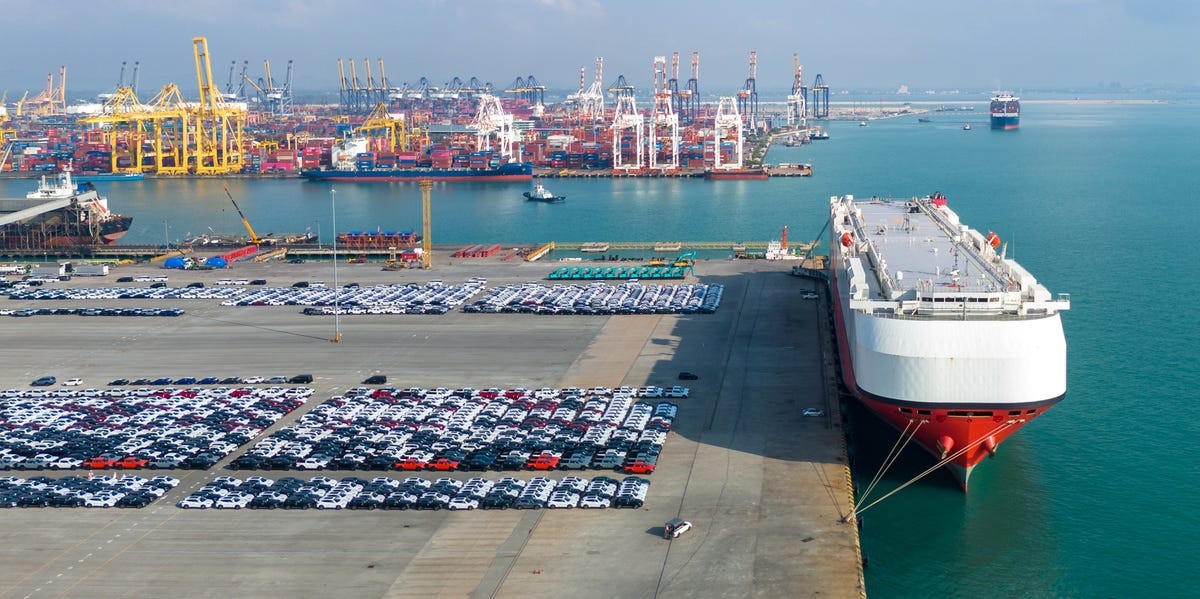
Automotive News reports that tariffs imposed by the Trump administration have cost automakers at least $35.4 billion since 2025, revealing the true economic impact of the trade policies. This is not just a financial hit; it represents instability in a global industry deeply reliant on interconnected supply chains.
Toyota Bears the Biggest Burden
The analysis shows Toyota has been hit hardest, with projected tariff-related costs reaching $9.1 billion through March 2026. The three Detroit automakers—General Motors, Ford, and Stellantis—faced $6.5 billion in tariffs in 2025 alone. Major players like BMW, Honda, Hyundai-Kia, and Mercedes-Benz also reported or project losses exceeding $1 billion due to these trade barriers.
Why Tariffs Fail to Deliver on Promises
The tariffs were intended to encourage U.S. manufacturing, but the constant changes and uncertainty have stifled investment. The automotive supply chain is a complex web of international production and component sourcing, making it difficult for automakers to commit to long-term shifts in production.
Current tariffs include 15% on vehicles from the EU, Japan, and South Korea, 25% on non-U.S. parts from Canada and Mexico, and a 50% tax on steel and aluminum. The Biden administration’s 100% tariff on China-built EVs adds further pressure.
The Problem with Instability
Automakers cannot simply snap their fingers and move factories. Building new U.S. facilities takes years, and companies like Audi are only considering expansion. The lack of clarity on future tariff adjustments has forced automakers to operate in a state of perpetual uncertainty.
“While automakers would probably hope to see the tariffs removed, many would likely just be content to see some stability as they sort out their future production plans.”
The tariffs have not spurred a massive return of manufacturing to the U.S. Instead, they have created financial strain and operational chaos. The policy’s instability outweighs any potential benefits, making it a net negative for the automotive industry.
This situation demonstrates the limitations of protectionist trade policies in a globalized economy. The tariffs are not just costing automakers billions; they are disrupting supply chains and hindering long-term strategic planning.