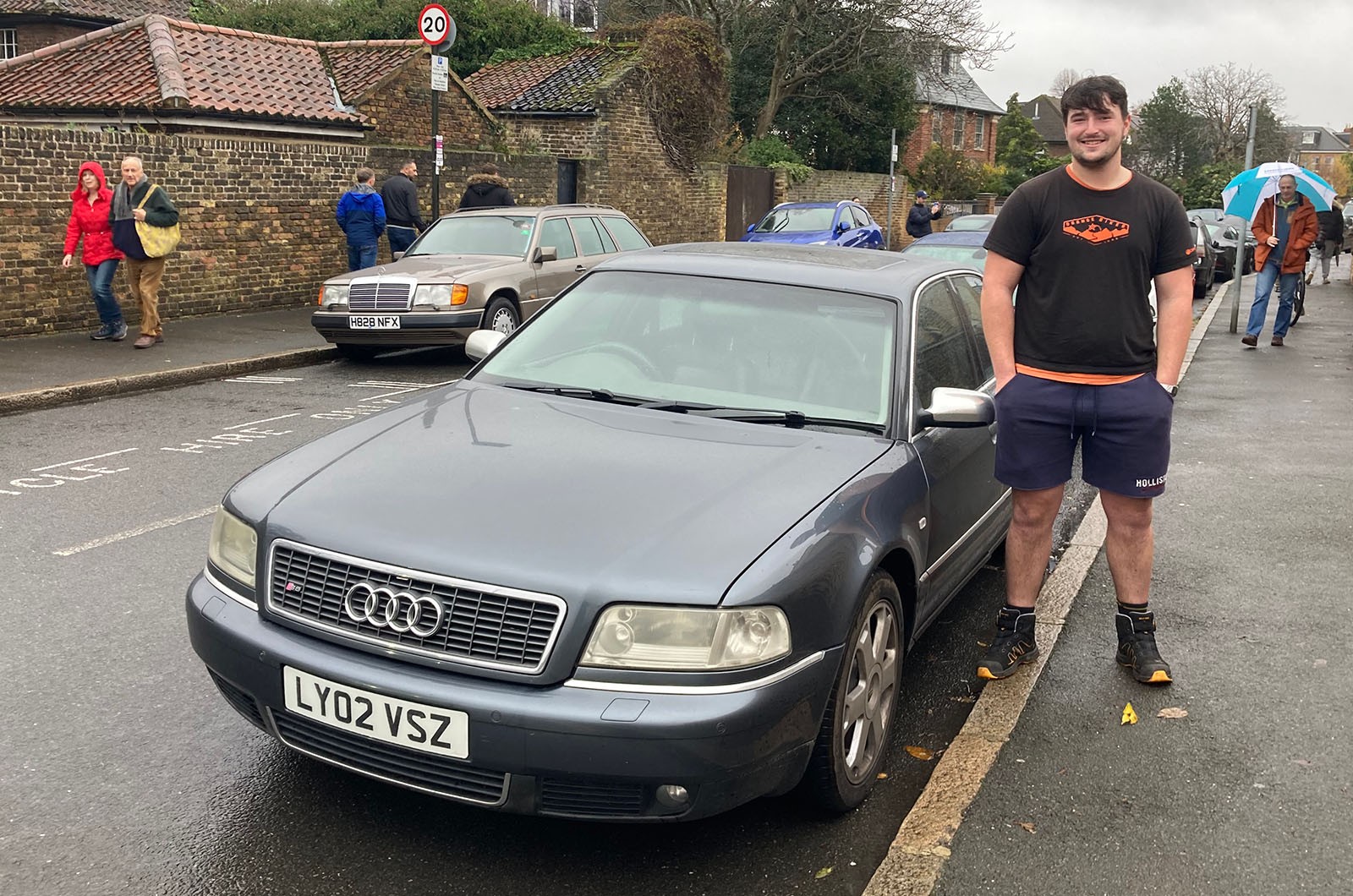
For most young drivers, the first car is a practical necessity: a small, fuel-efficient hatchback like a Vauxhall Corsa designed for low insurance and easy parking. However, Cameron Peters took a radically different path. At age 19, he bypassed the standard entry-level options to purchase a 2002 Audi S8, a high-performance luxury saloon boasting 355bhp and a V8 engine.
The Logic Behind the Luxury
While a performance sedan might seem like an impractical choice for a teenager, Peters argues that the decision was driven by comfort and unexpected cost-efficiencies.
- Insurance Costs: Contrary to the assumption that high-performance cars are prohibitively expensive for young drivers, Peters reported his initial insurance premium at £1,600—a figure he found reasonable—which has since dropped to £700.
- The ULEZ Loophole: Perhaps most surprisingly, despite being a 23-year-old vehicle classified as Euro 3 for emissions, the car is exempt from London’s Ultra Low Emission Zone (ULEZ) charges.
Context: Understanding the ULEZ Exemption
Typically, petrol cars must meet Euro 4 standards (introduced in 2005) to avoid ULEZ charges. However, exemption is determined by specific Nitrogen Oxide (NOx) emission levels rather than the Euro classification alone. Because this specific S8 meets the required NOx standards, it remains compliant, offering a rare loophole for owners of older, high-specification vehicles.
The Price of Performance: Maintenance and DIY Repairs
Owning a high-performance vehicle from a previous era comes with technical challenges that require more than just a mechanic—they require significant mechanical skill.
Peters recently faced a major mechanical failure involving the car’s five-speed Tiptronic gearbox. Rather than facing the potentially bankrupting costs of professional garage repairs, he performed the work himself on his own driveway.
The Gearbox Issue
The repair involved removing both the engine and the 160kg gearbox to address a failed bearing in the clutch pack. This is a documented issue among older S8 models.
A critical takeaway for owners of similar vehicles is the myth of “sealed-for-life” components. While Audi marketed the gearbox as requiring no maintenance, Peters notes that the reality is different:
* The gearbox typically begins to show issues around the 100,000-mile mark.
* To prevent bearing failure, owners should perform oil changes every 60,000 miles rather than relying on the lifetime oil claim.
Upgrades and Refinements
During the extensive engine-out procedure, Peters didn’t just repair the car; he optimized it. He replaced the original shock absorbers with Bilstein components to sharpen the handling and renewed the front subframe to ensure the chassis remained robust.
Conclusion
Choosing an older luxury powerhouse over a modern hatchback offers a unique blend of performance and unexpected tax advantages, provided the owner is prepared for the specialized maintenance and hands-on mechanical work required to keep a V8 running.