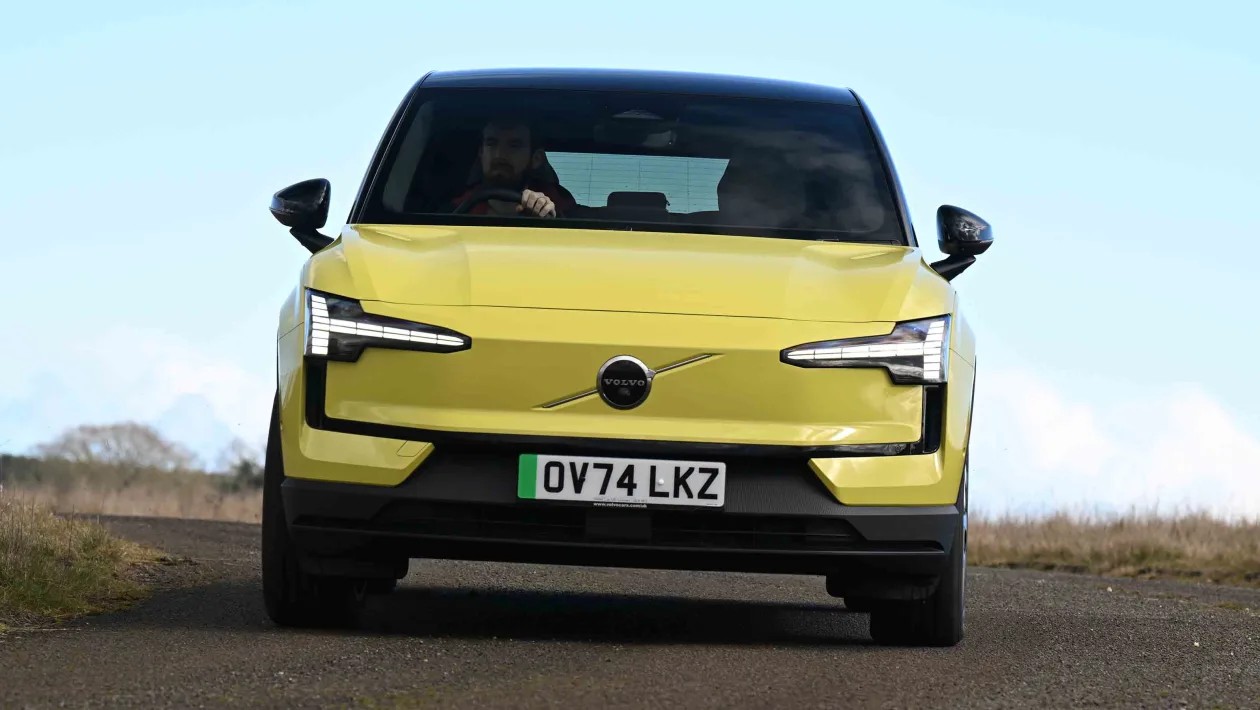
A major safety recall for the Volvo EX30 is facing significant delays, leaving thousands of drivers in the UK with unresolved battery risks. Despite the recall being announced over four months ago, supply chain struggles have meant that fewer than 10 vehicles have actually received the necessary repairs.
The Core Safety Risk
The recall affects specific high-performance and long-range variants of the EX30. Volvo has identified a potential defect where the battery can overheat when charged to high levels, creating a risk of fire in extreme scenarios.
To mitigate this danger, Volvo has issued a global recall affecting 40,323 vehicles manufactured between 2024 and 2026. The specific models involved are:
– Single Motor Extended Range
– Twin Motor Performance
These models utilize a unique 69kWh battery pack that is not shared with other vehicles, such as the Smart #1 or #3.
A Slow Recovery Process
The issue first came to light in December 2025, when Volvo began sending direct warning messages to affected customers. While the company initially aimed to inspect and replace battery modules “as soon as possible,” the reality of global logistics has slowed progress to a crawl.
Of the approximately 10,300 affected EX30s in the UK, the repair rate is currently negligible. Volvo insiders report that the scarcity of replacement modules is the primary hurdle. While the manufacturer states they are “working tirelessly” to source parts and expect repair rates to increase in the coming weeks, the gap between the announcement and the actual fix remains substantial.
Guidance for Owners
Until the battery modules are replaced, Volvo has issued specific operational instructions to ensure driver safety:
- Charge Limit: Affected owners must not charge their vehicles beyond 70% capacity.
- Monitoring: Owners should remain vigilant for any warning messages regarding battery temperature or charging issues.
- Communication: Volvo will contact customers directly as soon as parts become available to schedule repairs.
Note: Owners of other EX30 variants not listed above can continue to use their vehicles as normal without restriction.
Why This Matters
This situation highlights a growing tension in the rapidly expanding electric vehicle (EV) market: the gap between software-driven safety warnings and hardware-driven solutions. While Volvo can instantly alert a driver via a digital dashboard, fixing a physical hardware defect requires a complex, global movement of heavy components. For consumers, this creates a period of “limbo” where a vehicle is technically safe to drive under strict conditions, but remains fundamentally compromised until the physical supply chain catches up with the digital warning.
Summary: A critical battery fire recall for over 10,000 Volvo EX30s in the UK is stalled by a shortage of replacement parts, forcing owners to limit charging to 70% until repairs can be completed.