The survival of the Saab Automobile Museum is, in itself, a miracle of automotive preservation. In September 2011, the Swedish Enforcement Authority seized the entire collection, intending to auction off the cars individually to satisfy the debts of the bankrupt Saab Automobile AB. The prospect of dispersing this unique heritage was averted only through a massive intervention. The city of Trollhättan, defense conglomerate Saab AB, and the Wallenberg Memorial Trust invested millions of dollars to keep the collection intact.
This rescue mission ensured that future generations could witness the innovative—and often eccentric—history of one of the industry’s most respected underdogs. While the Saab 900 is the brand’s most recognizable icon, the museum houses a far more diverse array of engineering experiments. From aviation-inspired sedans to twin-engine rally monsters, these vehicles illustrate Saab’s willingness to break conventional rules.
The Aviation Heritage: Saab 92 (1950)
The story begins with the Saab 92, the company’s first series-produced automobile, launched in 1950. Born from an aerospace manufacturer, the 92 was fundamentally different from its contemporaries. It featured a front-wheel-drive layout and a surprisingly aerodynamic body—a design philosophy directly inherited from Saab’s aircraft production.
The powertrain was equally unconventional: a two-cylinder, two-stroke engine delivering just 25 horsepower to the front wheels via a three-speed manual transmission with a free-wheeling function. Despite its modest output, the 92 was technologically cutting-edge. Its core design philosophy remained so robust that it evolved continuously until 1980, serving as the foundation for nearly four decades of Saab production.
The Sports Car That Never Was: Sonett (1956)
Saab’s ambition to enter the sports car market emerged quickly, but regulatory hurdles changed its trajectory. In 1956, engine developer Rolf Mellde, along with friends and fellow engineers, hand-built the first Sonett in a barn. The company initially planned to produce 2,000 units and race them across Europe.
However, new racing regulations allowed manufacturers to compete with modified production cars rather than dedicated racing prototypes. Saab, prioritizing cost-efficiency, canceled the Sonett project to focus on modifying existing models for competition. Only six Sonetts were ever built. The blue example in the museum is the fifth of these rare machines, powered by a tuned three-cylinder two-stroke engine producing 57 horsepower. Saab had even planned a less powerful variant for touring enthusiasts, but the project was scrapped before reaching that stage.
The Twin-Engine Monster: Monstret (1959)
Perhaps the most audacious experiment in the museum is the Monstret (“The Monster”), a 1959 prototype born from Saab’s desire for rally dominance. Engineers faced a power deficit with their standard three-cylinder engines, so they devised a radical solution: they fused two three-cylinder engines together to create a six-cylinder straight-six engine.
This 138-horsepower powerhouse was installed transversally in a standard-looking Saab 93 chassis. To put this in perspective, the regular 93 sold to the public in 1959 produced only 33 horsepower. The Monstret was more than four times as powerful as the car it resembled.
Despite its engineering brilliance, the Monstret never raced. Saab overlooked competition regulations during development, and no series was willing to homologate such a bonkers prototype. The car remained a test mule, but it left an indelible mark on the company’s culture and earned its fearsome nickname from the test drivers who experienced its raw power.
The Plastic Coupe: Sonett II (1966)
In 1966, Saab returned to the sports car segment with the Sonett II, its first coupe. The engineering approach mirrored the original Sonett: take an existing chassis, install a high-performance engine, and cover it with a lightweight plastic body.
The early Sonett II models utilized a 60-horsepower three-cylinder engine sourced from the Monte Carlo 850. Saab produced 258 units in this configuration before transitioning to a V4 engine in 1967. This vehicle highlights Saab’s pragmatic approach to design—utilizing available technology and materials to create a distinct, lightweight sports car that stood out in a market dominated by steel-bodied rivals.
The Electric Pioneer: 99 Van (1976)
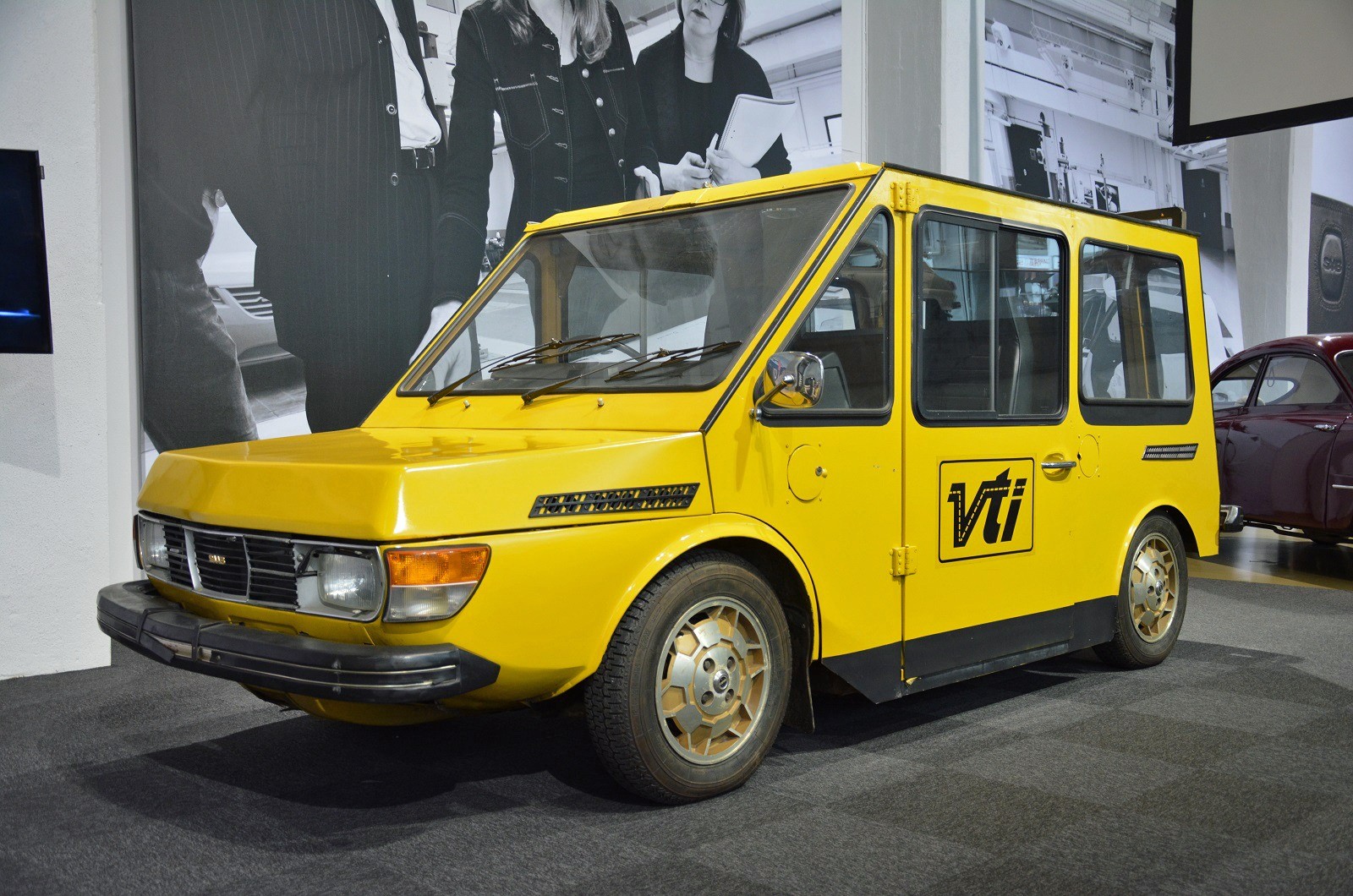
The museum’s collection also includes forward-thinking concepts that anticipated modern trends, such as the 1976 electric 99 van. This vehicle demonstrates Saab’s long-standing interest in alternative propulsion systems, decades before electric vehicles became mainstream. It serves as a reminder that Saab’s innovation was not limited to internal combustion engines but extended to exploring sustainable mobility solutions early in the automotive industry’s history.
Conclusion
The Saab Automobile Museum is more than a collection of cars; it is a testament to engineering resilience and unconventional thinking. From the aviation-inspired 92 to the twin-engine Monstret, these vehicles illustrate a brand that refused to follow the crowd, prioritizing innovation and distinctiveness over convention.