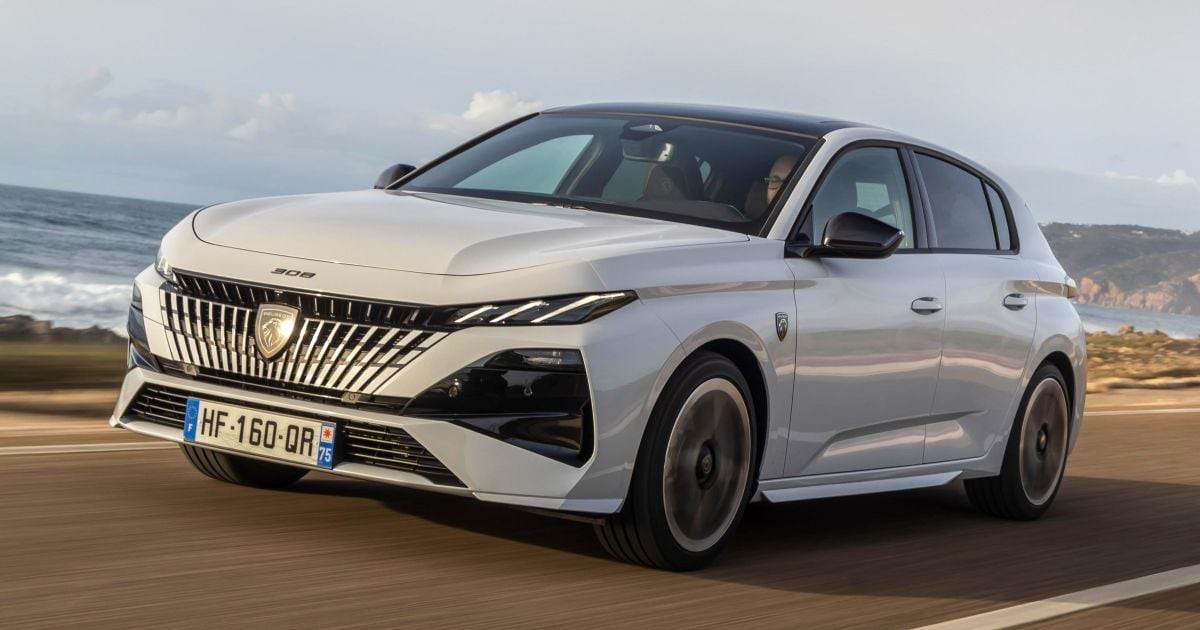
Peugeot remains committed to the traditional C-segment family car, despite the growing dominance of SUVs. The 2026 Peugeot 308 receives subtle updates, and the French automaker believes it can still attract buyers in a competitive landscape.
The 308 hasn’t been a sales leader in Australia, and Peugeot has already streamlined its lineup. This review examines how the minor revisions affect the car, particularly the hybrid powertrain options unlikely to be offered locally. The updates focus on refining an already solid platform rather than a complete overhaul.
Pricing and Availability
Pricing for the revised 308 will be announced closer to its release in the first half of 2026. Previously, the sole GT specification cost $48,990 before on-roads. Expect only a slight increase, if any, for the new model.
The lineup has been drastically cut. The plug-in hybrid (PHEV), all-electric (EV), and wagon versions have been discontinued, leaving only the hybrid hatchback as the likely survivor. This simplification reflects a strategic shift rather than consumer demand.
Interior and Technology
The interior receives minimal changes, with sharpened 3D graphics on the 10-inch digital instrument cluster being the primary update. The controversial iCockpit layout remains—a small steering wheel positioned low, with the instrument cluster high above. This design can be divisive, as it may not suit all drivers, particularly those with extreme heights.
While the cabin is generally well-made, some functions remain buried in the 10-inch infotainment touchscreen. Simple controls like seat and steering wheel heating require multiple taps, which is less intuitive than physical buttons. Rear passenger space is adequate but not class-leading, falling short of competitors like the Skoda Octavia. Despite this, interior material quality and design contribute to a pleasant driving experience.
The hybrid hatchback offers 412 liters of boot space, expanding to 1323 liters with the rear seats folded down. This makes it the most spacious variant in the 308 family.
Powertrain and Performance
Peugeot has increased battery capacity in the PHEV and EV models, allowing for greater electric range. However, the Australian market is unlikely to receive these variants. The hybrid model pairs a 1.2-liter turbocharged three-cylinder petrol engine with a 21kW electric motor and a small 0.9kWh battery.
Despite being labeled a “Hybrid,” this version functions more as a 48-volt mild-hybrid, lacking full electric driving capability. The powertrain delivers adequate performance, with the electric motor adding torque for a lively driving experience.
The hybrid variant is the lightest model, weighing 1382kg—253kg less than the PHEV and 287kg less than the EV. This weight reduction contributes to improved agility.
Driving Experience
The hybrid powertrain strikes a balance between comfort and engagement. While not the most thrilling, it offers a refined driving experience with fluid handling and good body control. The dual-clutch transmission can be hesitant, occasionally pausing before downshifting or holding gears longer than necessary.
Despite this, the 308 Hybrid remains enjoyable to drive. The small steering wheel enhances the sense of agility, and the suspension effectively absorbs road imperfections. The car is quiet at high speeds, masking external noise well.
The hybrid powertrain sounds more natural than the forced engine note in the PHEV, and the steering feels more organic compared to the artificially heavy setup in the E-308 Sport mode.
Exterior Design and Features
The facelifted 308 features a more dramatic grille with a full-width light strip and an illuminated Peugeot emblem, marking the first such design element in the company’s portfolio. The GT trim includes 18-inch alloy wheels, twin 10-inch digital screens, wireless Android Auto and Apple CarPlay, dual-zone climate control, and matrix LED headlights.
Additional features include Peugeot’s “3-claw” LED daytime running lamps, eight-color ambient lighting, heated front seats, and a suite of safety features such as automatic post-collision braking and lane-keeping assist.
Safety and Reliability
The pre-facelift 308 received a four-star ANCAP safety rating in 2022, with weaknesses in vulnerable road user protection. The updated model includes additional safety features like speed limit recognition and driver attention warning.
Peugeot offers a five-year, unlimited-distance warranty with complimentary roadside assistance. Service plans cost between $1100 and $1950 for three, four, or five years.
Verdict
The Peugeot 308 Hybrid faces challenges in a market favoring SUVs and offering limited model options. Despite this, it remains a smart, well-built, and enjoyable car to drive. If Peugeot can convince buyers of its charms, the 308 has the potential to stand out in a crowded segment.