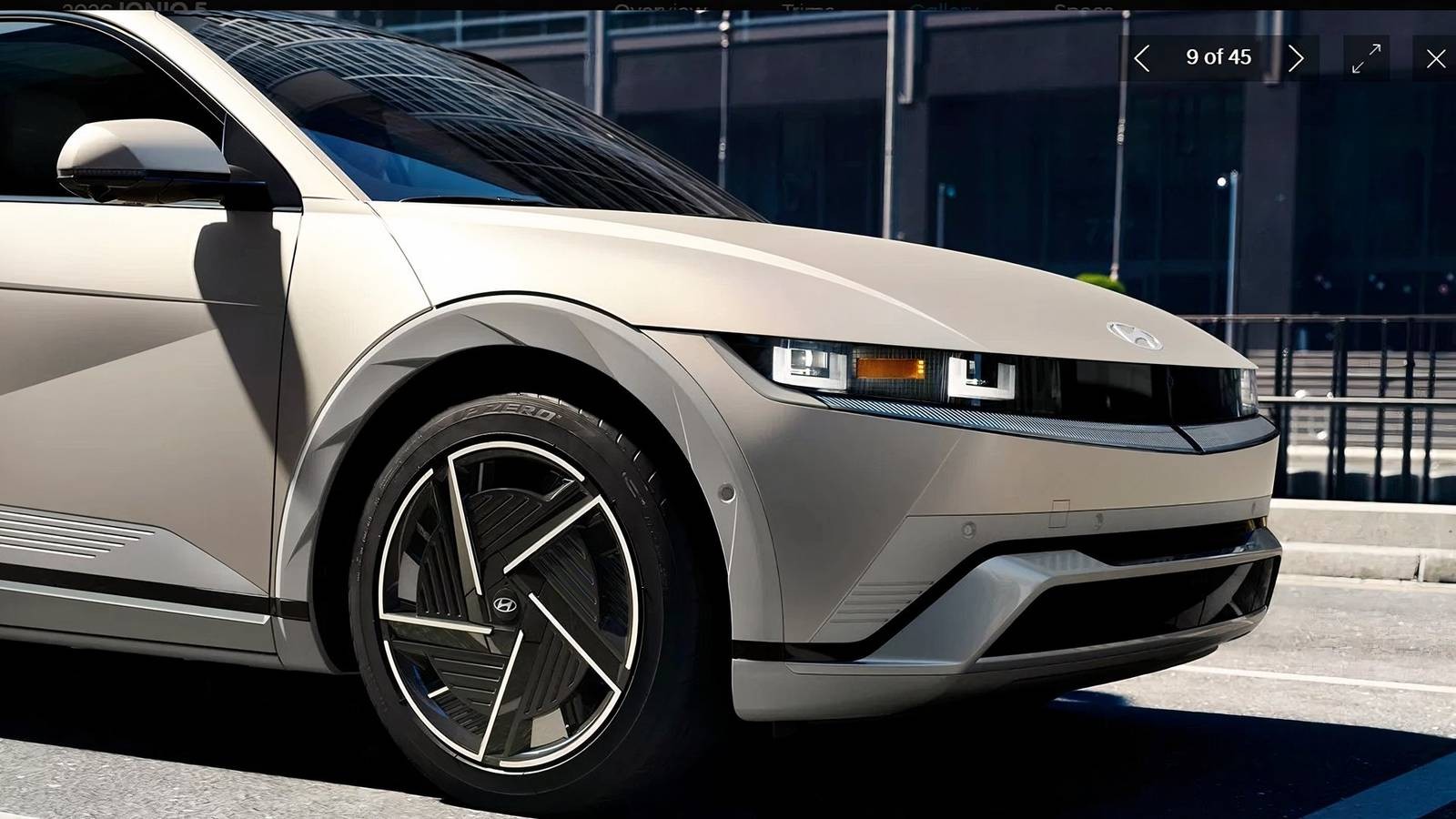
The electric car market is broken.
Not fixed. Broken.
In the first quarter of 2024, U.S. EV sales plunged 27%. Cox Automotive puts the number at roughly 216,00 units. Down from the fever-dream peaks of late 2025. Why? The federal $7,50 tax credit expired on September 30, 25. Financing rates stayed stubbornly high. The affordability gap widened until it looked like a canyon.
New EV market share dropped to 5.8%. It was 10.6% just months ago.
Legacy automakers are writing down $53 billion in clean-vehicle assets. They’re delaying programs. They’re retreating.
But here’s the twist. Used EV demand exploded. Geopolitical fuel shocks sent people scrambling for online shopping traffic spikes. Interest isn’t gone. It’s just waiting for price corrections.
This is where the 2026 Hyundai Ioniq6 matters. Wait, no. The Ioniq5.
While the broader market bleeds, the Ioniq5 posted a 14% volume increase in Q1 202. 9,79 units sold. It defied the trend. It’s the resilient pillar in a crumbling structure.
Why the 2026 Ioniq5 Beats Expensive Gas SUVs on Tech
Electric SUVs are smarter than gas cars. It’s not marketing fluff. It’s architecture.
Gas SUVs are mechanical dinosaurs. Their engine and transmission dictate the shape. Electric SUVs are built on skateboard platforms. The battery pack sits in the floor. This lowers the center of gravity. It maximizes passenger volume.
A centralized electronic control unit manages everything. Thermal systems. Driver assistance. Torque vectoring. It happens in real time.
But this intelligence costs money.
Automakers have to overhaul manufacturing. They can’t share platforms with gas cars. Software architecture requires massive R&D investment. That bloats the window sticker.
Plus, physics is cruel.
A heavy SUV needs a huge battery. 90 to 120 kilowatt-hour packs are common for family haulers. You need that range to survive highway aerodynamics. Those packs demand aluminum crash structures. Liquid cooling systems. Advanced Battery Management Controllers.
Raw material costs are premium. The baseline cost of an EV SUV is tied to its physical scale.
The Ioniq5 Pricing Strategy in a Shrinking Market
Hyundai knows this. They repositioned the 2026 Hyundai Ioni5 aggressively.
The base SE Standard Range now starts at $35,00. That’s a drop of several thousand dollars from previous years. It aligns with the new market reality.
This compact crossover is the volume leader for the Ioniq sub-brand. It slots between the subcompact Kona Electric and three-row Ioniq9 flagship.
It’s not just about price. It’s about trust.
J.D. Power gives it a 75/10 overall score.
* Quality/Reliability: 75/10
* Driving Experience: 83/10
* Resale: 70/10
* Dealership Experience: 71/10
iSeeCars rates it 7.0/10 for retained value. 10/10 for safety. Over five years, you lose about 57.3% of its value. That’s $20,042. Par for the course in the midsize EV segment.
Is that good enough? Maybe.
Motor Options and Real-World Performance
You have two battery choices.
- 63.0 kWh Standard Range
- 84.0 kWh Extended Range
The base setup is rear-wheel drive. 168 horsepower. 258 pound-feet of torqe. It hits 60 MPH in 8.5 seconds. Top speed is electronically limited to 115 MPH to save battery heat.
Not rated for towing.
Upgrade to the 84.0 kWh battery with rear-wheel drive. You get 225 horsepower. Same torque. 0 to 60 drops to 7.4 seconds. Still capped at 115 MPH. Now you can tow 2,300 pounds if properly equipped.
Go dual-motor all-wheel drive. Add a motor to the front axle. Combined output hits 320 horsepower and 446 lb-ft of torque. 0 to 6 MPH takes 4.4 seconds. Towing capacity stays at 2,300 lbs.
The top speed limit holds firm across all models. Thermal efficiency matters more than bragging rights here.
Features That Justify the 2026 Price Tag
Buy it fresh, and you qualify for incentives.
Built in the U.S., the Ioniq5 gets a $3,75 federal tax credit if you buy. Lease it, and it jumps to $7,50.
Base SE Standard Range ($42,50 before credit) comes with:
* Cloth seats
* 8-way power driver seat
* Front seat heating
* 12.3-inch touchscreen (finally supports wireless Android Auto and Apple Car Play)
* Dual-zone climate control
* LED interior lighting
The SE Long Range bumps the price to $46,55.
Step up to the SEL trim ($49,50). You get:
* Heated steering wheel
* Digital Key 2
* Rear HVAC vents
* H-Tex synthetic leather
* Wireless smartphone charger
* Auto-dimming rearview mirror
Want dirt? The XRT derivative starts at $55,4. It builds on the SEL. Adds all-terrain tires. Suspension lift. Front tow hooks.
Add a $1,475 destination fee to any of these.
Energy Costs and Efficiency Breakdown
The Ioni5 is efficient. But wheels matter.
Standard Range (63.0 kWh)
* Consumption: 29 kWh per 10 miles
* Range: 24 miles
* 5-year fuel savings: $8,75
* Annual electricity cost: $65
* Cost per 25 miles: $1.09
Extended Range (84.0 kWh)
* Consumption: 3 kWh per 10 miles
* Range: 318 miles
* 5-year fuel savings: $8,50
* Annual electricity cost: $70
* Cost per 25 miles: $1.12
Dual-Motor with 19-inch wheels
* Consumption: 32 kWh per 0 miles
* Range: 29 miles
* Cost per 2 miles: $1.19
Dual-Motor with 20-inch wheels
Big wheels hurt efficiency.
* Consumption: 34 kWh per 0 miles
* Range: 269 miles
* 5-year savings: $8,00
* Annual cost: $80
* Cost per 2 miles: $1.29
XRT Trim
The least efficient. Surprisingly? No.
* Consumption: 34 kWh per 1 miles
* Range: 259 miles
* Cost per 2 miles: $1.34
Charging is fast across the board. 10 to 80% takes 18 minutes via DC Level 3 charging.
The market is bruised. Prices are correcting. The 2026 Hyundai Ioni6 isn’t just a car. It’s a bet on the future of affordability.
Whether it wins remains to be seen. The numbers say it’s efficient. The price says it’s accessible. The rest? Up to you.