They say the 911 is unique. They keep saying it. You read it a hundred times, scroll past it twice. But the sentence remains stubbornly, annoyingly true. Nothing else sits in this slot. Not really.
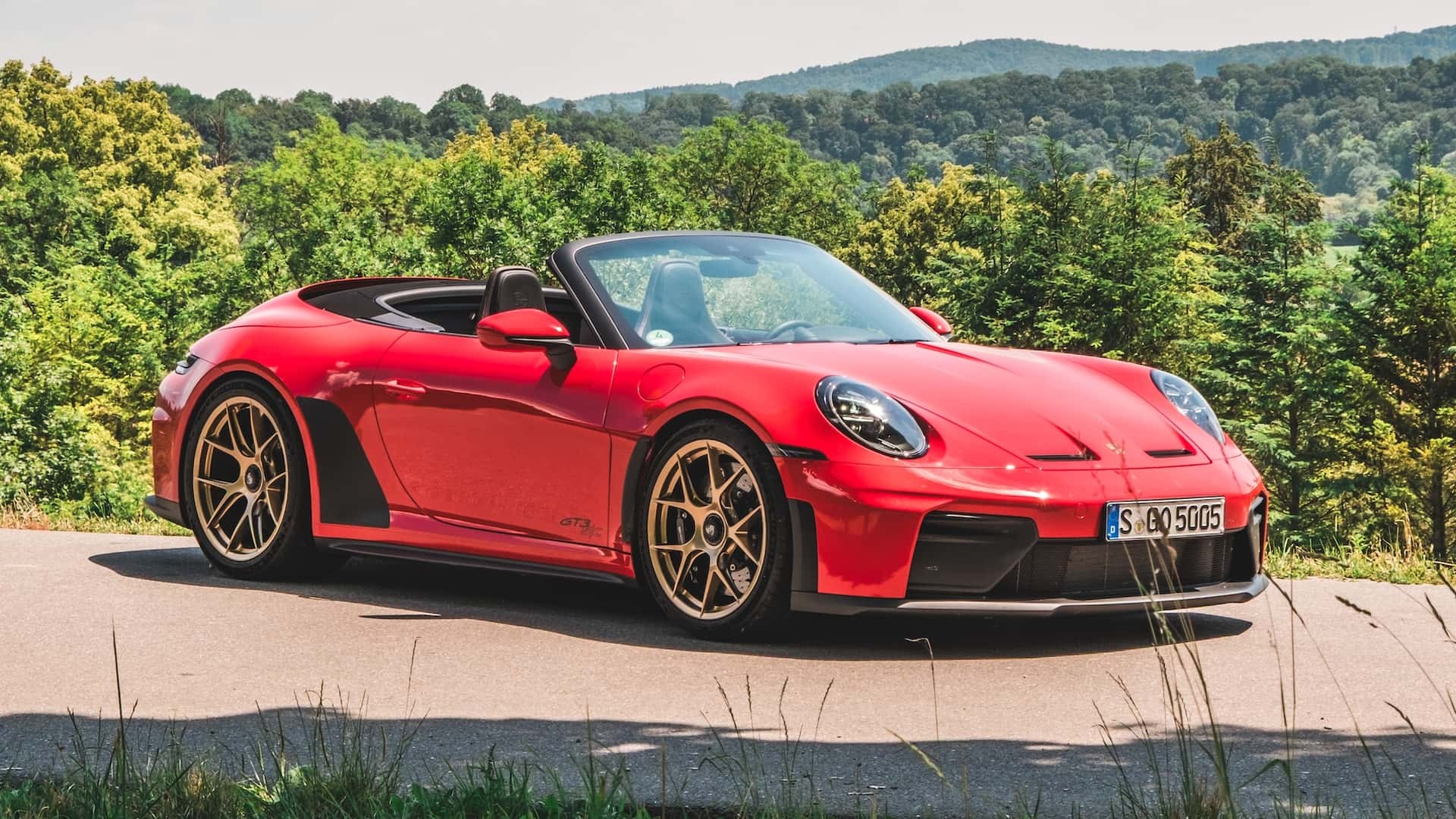
So Porsche did what Porsche does. Took the good stuff from across the range and mashed it into one brick. Call it cherry-picking if you like, though curating sounds nicer for marketing decks. This is the 911 GT3 Sport Cabriolet, or S/C as the badge claims. Porsche calls it the purest GT3 they have built. That sounds bold. Let’s see if the engineering backs the ego.
The Roof Is Gone, The Weight Isn’t
Here is the trick. Most people think adding a soft top means adding junk to the roof line. Not this time. The roof itself? Magnesium. The mechanism? Magnesium. Even the staggered wheels use it. It is a metal most car companies forgot about, so light it feels like cheating.
Then come the panels. Hood, fenders, doors — carbon fiber. Not decorative carbon weave sticker, the actual structural plastic. The brakes borrow from the hardcore S/T model. Porsche Ceramic Composite Brakes shave nearly 45 pounds off the rotors. The wheels? Another 19 pounds gone.
Even the carpet is thin. Seriously. The carpet is thinner than usual to save mass.
Weight is the enemy, and Porsche declared war on it.
The final tally hits 3,322 lbs. Only about 100 lbs heavier than the coupe. A car with a retractable hardtop system that isn’t actually a hardtop. The math works.
Driving Without A Ceiling
You start it and the sound hits you first.
A naturally aspirated 4.0L flat-six. It screams to 9,000 RPM. The heads come from the RS, the cams are tuned for top-end snappiness, and the throttle bodies flow better than last year’s model. But the number stays the same: 502 hp. 331 lb-ft of torque.
Does that feel slow?
No. But it feels linear. There is no turbo lag, no sudden burst. Just a build. And a scream. It peaks right when your ears want to pop. You row through six gears, manual only. Short shifts, mechanical feedback, the stick sliding in with purpose.
The steering? Sharp. Razor sharp.
You carve into a corner in the Swabian Alps. The car tucks. It holds. It doesn’t wobble. The open-top layout might suggest softness, but the chassis disagrees. It borrows bits from the Touring and the S/T. Carbon fiber anti-roll bars. Shear panels. Bump stops moved slightly to let the suspension breathe 27 mm more in front.
It still hammers the road if you ask it to. Cobblestones will bruise your shins. But on smooth asphalt? It dances. The compliance helps, barely, but it enough to let you enjoy the drive rather than fight it.
Inside: Choose Your Poison
There are two paths for the seats.
Option A: Carbon buckets. Manual adjust. Fixed fore and aft. Great for racing, terrible for daily use. They trap heat. They trap your hips. After three hours, my spine thanked me for not choosing them.
Option B: Street Style package. 18-way power adjustment. Woven leather that looks like a vintage pattern but breathes modern air.
There is a catch. No heating. No ventilation. The weave pattern prevents the mesh needed for airflow control or thermal wires.
Otherwise, the cabin is analog comfort. Knobs. Dials. Physical switches that click.
Focus remains on the drive, not the screen.
The tech is updated though. A 10.9″ screen in the center, 12.9″ instrument cluster up top. Graphics look retro but act modern. Fast menus. A 3D render of your specific paint job stares back at you. If you spent extra on “Paint to Sample,” the computer knows. It shows.
The Cost of Admission
This isn’t a discount model.
Base price sits at $275,35. That is the door-opening fee. Destination included.
Want the Street Style interior? Add $34k.
Want the carbon seats? Add another chunk.
Want specific paint? Add more.
The tester listed here rang in at just over $295k. With the nicer interior option? Top nears $318k.
But here is the twist that matters. Unlike the limited-edition Speedster of the past, Porsche is not putting a cap on production. You want one? They will build one. As many as the market demands.
Scalpers will have less fun. Resale values won’t instantly triple just because supply dropped. You buy the car. You keep the car. It appreciates because it’s a Porsche, not because there were only 200 of them.
Final Word
It is loud at low speeds. Some say it sounds like a lawn mower. I say it sounds angry. And angry is fun.
The GT3 S/C keeps the soul. The top goes up in 12 seconds, moving at highway speeds, powered by electricity that you rarely think about. You focus on the apex. On the rev counter. On the road unwinding in front of you.
Is it expensive? Yes.
Is it better than the hardtop? For the feeling of wind and noise? Definitely.
It is a GT3 that forgot how to be normal. A good thing, that.
Competitors to watch: Aston Martin Vantage, Chevy Corvette Z06, Mercedes-AMG GT.