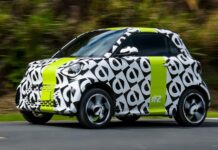
The Audi A2 is back. After years of silence, the brand is reviving a name that defined early 2000s automotive oddity. New images of the Audi A2 e-tron have dropped. They show a car shedding its camouflage to reveal a design that borrows heavily from the original while standing firmly in 2025.
This isn’t just a nostalgia play. Massimo Fracella, Audi’s new design boss, has put his stamp on this model. It marks a significant shift for the brand. It’s one of the first major releases under his creative direction. The goal is clear: lower the entry barrier for electric Audi ownership without sacrificing the badge’s prestige.
Retro silhouette meets modern aerodynamics
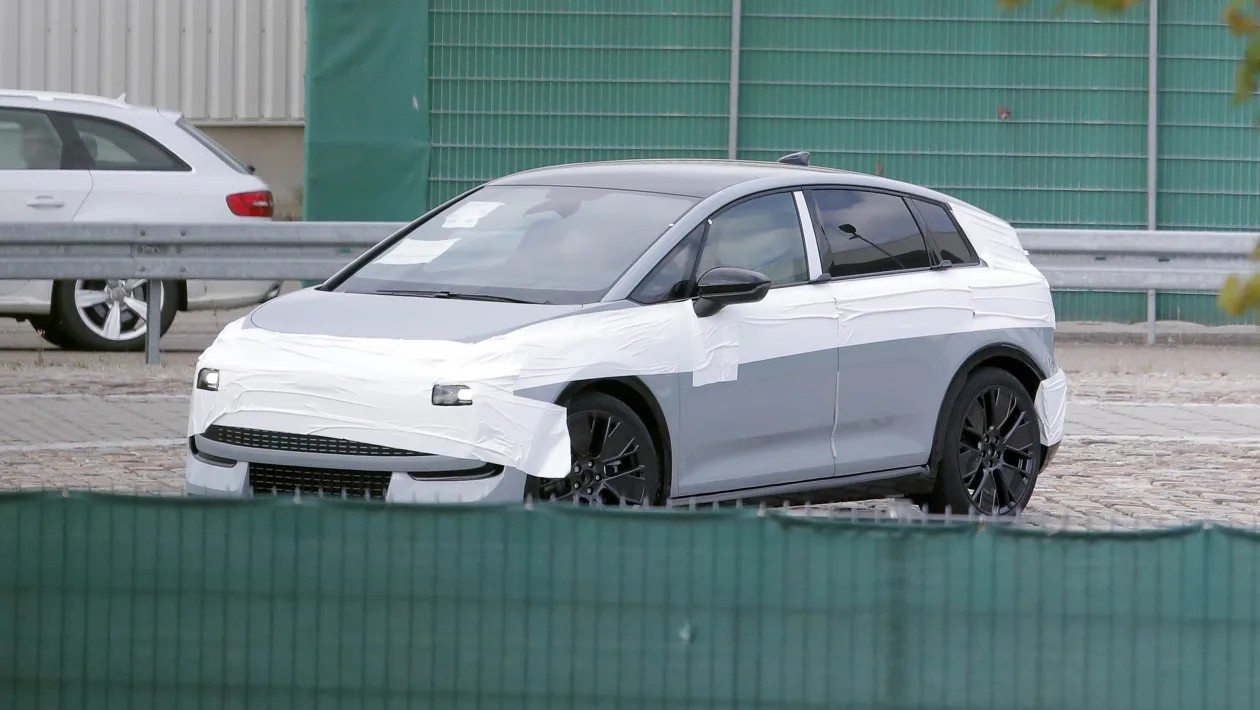
The proportions scream heritage. Square headlights sit inside the traditional Audi single-frame grille. Daytime running lights hide in an upper secondary unit. But look closer at the body. It’s a mix of old-school charm and new-age efficiency.
Define wheelarch flares meet a sharp shoulderline. The side profile stays sleek, thanks to small, flush winglet door handles. Short nose. Aggressive windscreen angle. Why does this matter? Aerodynamics. The shape cuts through the air to create a low drag coefficient. For an EV, that drag coefficient translates directly to range.
Compare this to the Volkswagen ID.3. They share the same bones—the MEB+ platform. Yet, the Audi feels different. The roofline drops lower. It arcs more aggressively toward the rear. That tail treatment looks suspiciously like the original A2. Some reports suggest a two-piece tailgate with a top section hinging up to the roof. If true, it offers a massive opening for loading cargo.
Is it too derivative? Maybe. Audi admits the car is too far in development to adopt the full radical language of the Concept-C. But it aligns visually with the future. It doesn’t look out of place next to the newer models coming down the pipe.
Engineering under pressure
Audi didn’t just design this in a vacuum. Footage from Lapland shows the prototype drifting in snow. Engineers are pushing hard. Bavaria’s country roads tested the suspension and driver-assistance systems. Northern Sweden’s bitter cold checked the powertrain and thermal management.
The wind tunnel was another battlefield. They optimized airflow. They refined noise levels. The sloping roofline helps, but every millimeter of drag is being hunted down.
This isn’t just about making a pretty car. It’s about making a viable one. The A2 e-tron needs to compete in the compact class. And it needs to do it with class.
Platform, range, and the missing quattro
What goes underneath? The MEB+ architecture. This is the updated base powering the VW ID.3 Neo, Cupra Tavascan, and Skoda Elroq. Expect similar tech upgrades. Powertrain options should align with those siblings. That means a potential range of around 400 miles for the efficient versions.
But here’s the catch. No quattro all-wheel drive. So far, every hatchback on this specific MEB+ iteration is rear-wheel drive. Audi might save the four-wheel-drive tech for larger SUVs.
Will we see the original’s aluminum space-frame construction? Probably not. Modern EV platforms are steel-heavy for cost and structural reasons. Space optimization will rely on packaging rather than exotic materials.
Market positioning and rivals
The A2 e-tron slots in where the A1 and Q2 used to be. Those cars are gone. Now, Audi needs a compact entry point. Think of it as the electric spiritual successor to the A3, but smaller and more affordable.
Rivals are plentiful. Volvo EX30 brings bold design. Alfa Romeo Junior offers style. Next year brings the new BMW 1 Series and Mercedes A-Class. These are the real threats. The Audi must prove it’s not just a badge-engineered VW.
CEO Gernot Döllner has been explicit about the strategy. He wants electric mobility that impresses in daily life. Efficient. Compact. Confident. The entry point must be reachable. Lease prices for the outgoing A3 start around £300 a month. The A2 needs to undercut or match that accessibility.
Broader corporate strategy
This launch is part of a wider shake-up. Audi is unveiling three new models this year. The Q7 comes first. Then the Q9, a massive new SUV. The A2 e-tron rounds out the trio.
Döllner has been ruthless with the product plan. Some cars got axed. Others got delayed. The timeline stretched. He admitted to pushing some models to the back burner to focus on key markets. China and the US are priority zones. A bespoke Q6 e-tron for China signals that localized demand drives the roadmap.
Why keep the A2? It serves as the accessible face of the brand. It draws in younger buyers or urban dwellers who can’t justify the price of an e-tron or Q4. It’s the gateway drug.
The design of the original A2 pioneered efficiency. It challenged convention. The new one inherits that spirit. It’s not just a car. It’s a statement that Audi is willing to simplify without dumbing down.
What remains uncertain
We don’t know the exact trim levels yet. The infotainment stack’s specific configuration is still a mystery. Will it carry the same screen layout as the Q8 e-tron? Will the interior feel premium enough to justify the Audi badge, or will it feel like a premium VW?
The price is the biggest unknown. If it sits too close to the ID.3, the brand premium evaporates. If it’s too expensive, it becomes irrelevant. The 400-mile range target is aggressive for this class. Real-world conditions, especially in colder climates where thermal management matters, will dictate the true usability.
One thing is clear. Audi isn’t bringing back the A2 for the cool factor alone. They need volume. They need a footprint in the segment where the competition is fiercest. The retro styling might grab headlines, but the engineering and pricing will determine survival.
The world debut is set for autumn. By then, the rumors will solidify into facts. Until then, we wait. And watch. Because if the A2 e-tron succeeds, it changes the rules of compact electric mobility. If it fails, it’s another cautionary tale about legacy brands struggling to adapt.
Either way, the road ahead is getting interesting.