


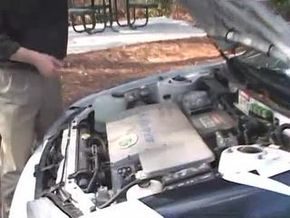
The heart of any electric vehicle is not the battery, but the electronic throttle controller. Most EV owners understand the battery stores energy and the motor spins the wheels, but the brain connecting them often gets overlooked. This controller sits under the hood, taking up significant space, and acts as a high-power switch. It takes the massive voltage stored in the pack and chops it into precise pulses before sending it to the motor. Without this regulation, the car would either stall or spin out of control.
How the Dual Potentiometer System Reads Pedal Input
When you press the accelerator, you are not directly engaging a mechanical linkage like in older internal combustion engines. Instead, your foot moves a pedal attached to a cable. That cable turns two separate potentiometers. This redundancy is the key to how the system stays safe.
Why two? If a single sensor failed, it might send a phantom signal telling the controller to dump full power into the motor even when you are sitting in traffic. The controller constantly compares the voltage readings from both potentiometers. If the numbers do not match, the system assumes a fault. It cuts off all power transfer immediately. No pulses go to the motor. The car coasts to a stop or stays dead. This failsafe prevents accidental acceleration caused by a single broken wire or sensor drift.
Why Pulse Width Modulation Controls Speed
The controller does not just turn the motor on and off. It manages the flow of electricity through the heavy cables connecting the battery pack and the drive unit. The “gas” pedal position tells the controller exactly how much power to draw from the battery. Floor the pedal, and the controller opens the gate wide, allowing maximum current to flow in rapid pulses. Light pressure results in smaller, less frequent pulses.
This method, known as Pulse Width Modulation, is how the car maintains speed. The motor reacts to the average power delivered by these pulses. It is a direct, digital relationship between your foot, the two sensors, and the magnetic force spinning the motor. It is efficient, responsive, and, thanks to the dual-check logic, significantly safer than a single-point failure design. The system trusts the numbers only when they agree.


