


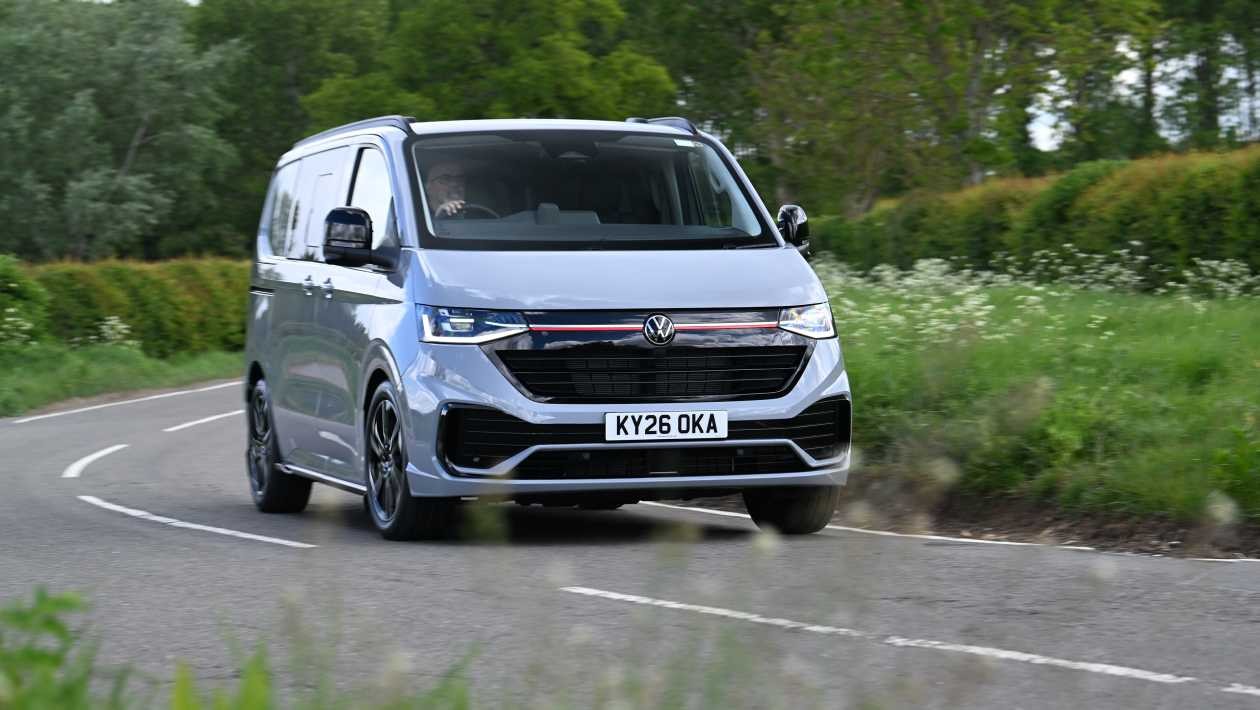
Volkswagen has long been a proponent of throwing every powertrain at its commercial lineup. Petrol? Check. Diesel? Standard issue. Fully electric? They are pushing hard there. But now, there is a new contender. Plug-in hybrid technology has finally landed in the Transporter range.
It is a significant shift. This marks the first time VW has offered a plug-in hybrid option for the legendary Transporter. And they aren’t just limiting it to the cargo haulers. The Kombi passenger van and the Shuttle model with seating for five to nine people all get the new eHybrid treatment.
Why does this matter? For businesses and private buyers needing utility, the Shuttle is particularly interesting. Its CO2 emissions sit at 95g/km. That number opens the door to beneficial tax rates in several jurisdictions. It is a rare sweet spot for vehicle taxation right now.
Under the hood: Power meets efficiency
The mechanicals are rooted in a 2.5-liter petrol engine. That is not the whole story though. An electric motor assists the internal combustion unit. Power comes from an 11.8kWh lithium-ion battery pack. Drive is sent to the front wheels via a CVT transmission.
Peak output is listed at 229bhp. That is useful. But the real story for city drivers is the electric-only capability. Some variants claim an EV range of up to 35 miles. Enough for a full day of urban deliveries? Likely.
When the battery drains, the system doesn’t stop working. It falls back to standard hybrid mode to boost economy. You can even run on petrol alone if need be. Charging from zero to full takes about 4.5 hours using a standard 3.7kW AC charger overnight. Not instant. But sufficient for most overnight depot parking scenarios.
Payload, towing, and real-world usage
VW quotes a combined fuel consumption of up to 74.3 mpg. That figure applies to the short wheelbase panel van operating on a mix of electricity and petrol. Real world results may vary, obviously. But it suggests significant savings over pure diesel variants in stop-start traffic.
Capability remains uncompromised. The Transporter eHybrid can tow a braked trailer weighing up to 2,300 kg. Max payload reaches 1,132 kg depending on the specific configuration and trim level selected. For a hybrid, that is respectable.
You might be wondering how this compares to its main rival. The Ford Transit Custom already offers a plug-in hybrid drivetrain. VW’s platform-mate has been in this race for a while. The question now is whether the Transporter can win on price or features.
Price comparison: VW vs Ford Transit Custom
Pricing details reveal a competitive landscape. We are looking at ex-VAT figures here, which complicates direct comparisons for VAT-registered businesses. However, the data is stark.
The Ford Transit Custom plug-in hybrid starts at £42,239. This price includes on-the-road costs but excludes VAT.
The Volkswagen Transporter short-wheelbase van in basic Commerce spec starts at £38,154. This figure excludes VAT and excludes on-the-road costs. It is the cheapest entry point. If you spec up, however, things change. A fully kitted Transporter Kombi in Sportline trim pushes the price to £53,954.
So which is the better buy? It depends on your tax situation and your payload needs. The Shuttle offers seating utility that the Transit Custom matches, but with potentially lower CO2-based tax implications. The panel van remains the workhorse.
The market for light commercial plug-ins is heating up. VW is not just catching up here; they are trying to define the category. Will drivers choose the 35-mile electric range for urban cleanliness?


