


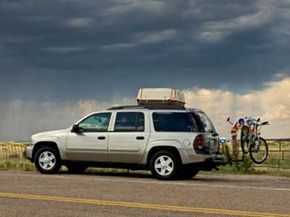
You wouldn’t try to jam a mountain bike into the backseat of a compact sedan without breaking it down. It’s like trying to fold a sectional sofa into a hatchback. Impossible. Or at least, incredibly frustrating. If you want to roll up to a trailhead and ride away the second you park, you need a dedicated bike rack for car. These accessories turn your daily driver into a transport vehicle. They let you take your two-wheeled passion to the park, the mountains, or the next town without spending your afternoon wrestling with straps and stems.
There are tons of styles out there. Some mount to the trunk. Others clip onto a receiver hitch. A few strap to the roof. The right choice depends entirely on what you’re driving and how you ride.
Trunk-Mounted Racks
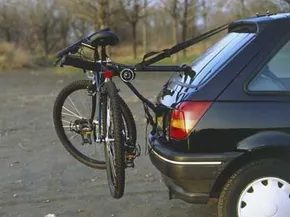
These hang off the rear of your vehicle. They use straps and hooks to grip the frame. They are cheap. They are light. You can take them off in seconds.
But they have rules. Your car needs a flat surface or a frame that the hooks can grip. No spoilers. No protruding lights that might scratch. And definitely no liftgates that open while you’re driving. If you try, you’ll tear the rack off. Or worse, you’ll break your taillight.
They are great for weekend warriors. You load up. You drive. You unload. Done. But if you carry expensive bikes, you have to be careful. The straps can slip. The hooks can dig into your paint. Use felt pads. Check the tension every few miles.
Hitch-Mounted Racks
This is where most serious riders end up. You buy a hitch receiver. It’s a square tube welded to your frame. Then you plug in a rack. It doesn’t wobble. It doesn’t swing. It’s solid.
Hitch bike racks come in two flavors: platform and fork-style.
Platform racks hold the bike by the wheels. No tools needed. You lift the bike, set the tires in the trays, and lock it down. This is better for your drivetrain. You aren’t touching the chain or the gears. It’s also easier to load heavy e-bikes. Fork-style racks clamp the front wheel into a fork holder. They are lighter. They take up less space when folded. But you have to remove the front wheel. Which means carrying a quick-release tool. And dealing with skewers.
If you drive an SUV or a truck, a hitch is the way to go. It keeps the bikes off the glass. It keeps them off the bumper. You can carry four bikes on a standard two-inch receiver. Maybe more if you get a vertical stack design. But vertical stacks are risky in low garage ceilings. Watch the clearance.
Roof-Mounted Racks
This is the oldest method. Straps or bars to the roof. Lift the bike up. Strap it down. Drive.
It works. But it’s heavy. You have to lift a 30-pound bike above your head. Every time. If you have a short trunk or a low roof, this is annoying. But if you have a station wagon or a sedan with no hitch, it’s your only option.
Roof racks are aerodynamic if you do it right. Crossbars
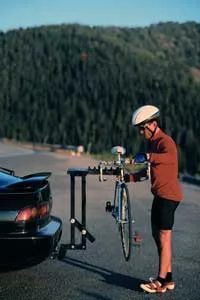

Stop guessing. Start measuring.
You’ve got bikes. You’ve got a vehicle. The math doesn’t always add up unless you pick the right carrier. The market is flooded with options, but they aren’t created equal. Some eat your ground clearance. Some scratch your paint. Some literally require you to dismantle your bike before loading.
First, look at your car. What’s it got? Roof rails? A hitch receiver? A spare tire on the back door? Or just a plain old trunk?
Once you know your hardware, count your wheels. Do you need to haul two mountain bikes to the trailhead on Saturday, or six road bikes for a weekend trip?
Let’s break down the five main ways to strap metal and rubber to your machine.
Roof-Mounted Systems
This is the classic look. Vertical stacking. Aerodynamic drag for days.
Most roof systems don’t just stick to your paint. They require a pre-existing base system or factory roof rails. You latch the crossbars, then attach the bike arms.
Some designs are lazy. They let you throw six full-sized bikes on top without touching the front wheel. Others demand you remove the front hub to lock the fork into place.
Before you pile on the carbon fiber, check your owner’s manual. Not the rack’s manual. Your car’s manual.
Roof loads add significant height. If you’re driving a lifted Jeep Wrangler through a national park with low-hanging pine limbs, you’re asking for a scrapes. You’re also asking for wind noise that will give you a migraine by mile fifty.
“Check your vehicle’s weight rating before loading the roof. Most sedans top out at 165 lbs of dynamic load. SUVs can often handle more, but the center of gravity shift is real.”
Hitch-Mount Carriers
No, you don’t need a trailer to use a hitch. But you do need the drawbar receiving tube or hitch tube.
These lock into the receiver behind your bumper. From there, you have two choices for how the bikes sit:
- Tube Top: You strap the frames to horizontal tubes.
- Tray Rack: You rest the bikes wheels-down.
Hitch racks take abuse. They’re built for torque. The main issue isn’t strength—it’s fit. You need to match your hitch size (1.25-inch vs. 2-inch).
The upside? The bikes sit several inches off the body. Less scratching. Also, many fold down or swing away so you can still open the trunk without taking the whole thing off.
Capacity ranges from two to six bikes, depending on the arm style.
Spare Tire Mounts
Got a Jeep, a Suzuki, or a rugged SUV with a rear-mounted spare? This is your playground.
These racks attach directly behind the tire. You don’t sacrifice the spare’s utility. You just mount the carrier over or around it.
The mechanics are identical to hitch racks: strap and lock.
But here’s the catch. They usually max out at two bikes. You’re not hauling the whole club.
Also, watch the clearance. If you load up, your rear window might be completely blocked. And if you have a full-size spare, the leverage can strain the door hinges over time.
Trunk-Mounted Racks
No hitch? No roof rails? No spare tire mount?
You still have an option. The trunk mount.
These are the universal donors of bike transport. They use straps and hooks to cling to the edge of your trunk lid or rear hatch.
They work on everything. From the flat trunk of a 90s Volvo to the nearly vertical door of a crossover.
The downside? They’re prone to rattle. Cheap ones scratch your paint if the padding isn’t thick enough. And they can obstruct your rearview mirror if you don’t adjust them carefully.
But they’re cheap. Versatile. And they fit nearly any automobile that has a lid that opens.
Truck Bed Racks
If you drive a pickup, don’t just toss the bikes in the bed and drive.
The wind will slap them around. You’ll lose a pedal. Or worse, you’ll get home to find someone took them.
Truck bed racks solve the security and damage problem.
Designs vary. Some look like mini-sidewalk racks, with a groove for the front tire. Others require you to remove the front wheel to lock the fork into a vertical post.
The goal is the same: stow the bikes vertically. Keep them off the bed liner. Keep them safe.
“Always use a wheel chock or frame strap in addition to a tray system. Vibration alone can loosen bolts over long distances.”
Installation Considerations
Picking the rack is step one. Installing it without ruining your car or your day is step two.
Every rack demands specific torque. Hand-tighten is not a setting.
If you’re using a hitch mount, you need a hitch pin with a security loop to prevent theft. If you’re going roof-top, you need to check the drag coefficient. A loaded roof can kill your MPG by 25% or more.
Trunk mounts require you to remove the wiper arms on some models to get the straps tight enough.
Don’t rush the straps. Give everything a tug before you leave the driveway.
The right rack disappears into the background. The wrong one becomes the most stressful part of every trip.
Pick the one that matches your hardware. Count the bikes. Drive careful.

Securing the Load: Fit and Hardware
Snug is the goal. You strap the rack to the roof or slide it into the truck bed, but if there is any give, you are asking for trouble. Paint chips. Lost cargo. The whole nine yards. Most installs are plug-and-play, but when you are turning your sedan into a mobile bike carrier for a long haul, you need to account for every rattle and vibration.
If you are rocking a hitch-mounted system and your SUV has a rear-mounted spare tire, you are going to have a geometry problem. The bike tray will likely bang against the tire. The solution is a hitch extender. It pushes the rack out, clearing the spare. Just remember, extension changes the leverage on your hitch ball, so don’t max out the weight rating. You can also boost capacity. Adding an extra cradle lets you squeeze two more bikes onto a standard tray. If the whole assembly is shaking loose on the highway, a hitch stabilizer is your friend. It wraps around both the receiver tube and the rack insert, killing the lateral play.
Frame Compatibility and Accessories
Not every bike fits every rack. Standard horizontal top tubes are easy. Women’s step-through frames? Mountain bikes with weird angles? You need a conversion bar. It bridges the gap between your seat post and handlebars, creating that horizontal line the clamps need to grip without crushing your carbon fork or aluminum frame. Tandems are a different beast entirely. Unless you have a specific heavy-duty hitch platform designed for the wheelbase and weight, you might be stuck carrying only one wheel or resorting to a roof system.
Buying the Right Gear
Installation is cheap. Quality costs money. If you are doing this once a year, a cheap plastic clamp job might suffice. If you are doing it every weekend, buy the aluminum or steel beefcake that survives rain, salt, and sun. Cheap racks warp. They rust. They fail.
Think about your other needs. Do you tow a boat or trailer regularly? A hitch-mounted rack blocks that receiver. You are going to hate yourself every time you have to unscrew the bolts, pack the rack away, and reattach it for a trip. If towing is part of your life, a roof rack or trunk-mounted solution might save you the hassle of constant swapping.
Professional Help and Dealer Options
Staring at the manual makes your head spin? Take it to a shop. Any good mechanic will slap it on for you. They have the torque wrenches and the experience to know if that hitch bolt needs Loctite.
Buying a new car? Ask the dealer. Some manufacturers offer factory-installed racks as options. It looks clean. It’s covered by warranty. You drive off the lot ready to ride. No drilling. No voiding coverage.
Bikes and cars don’t have to fight. A good rack means you get to the trailhead with the same bike you left the garage with. Safe. Unscratched. Ready to ride.
Explore the links on the next page to learn even more about towing.


