It burned fast.
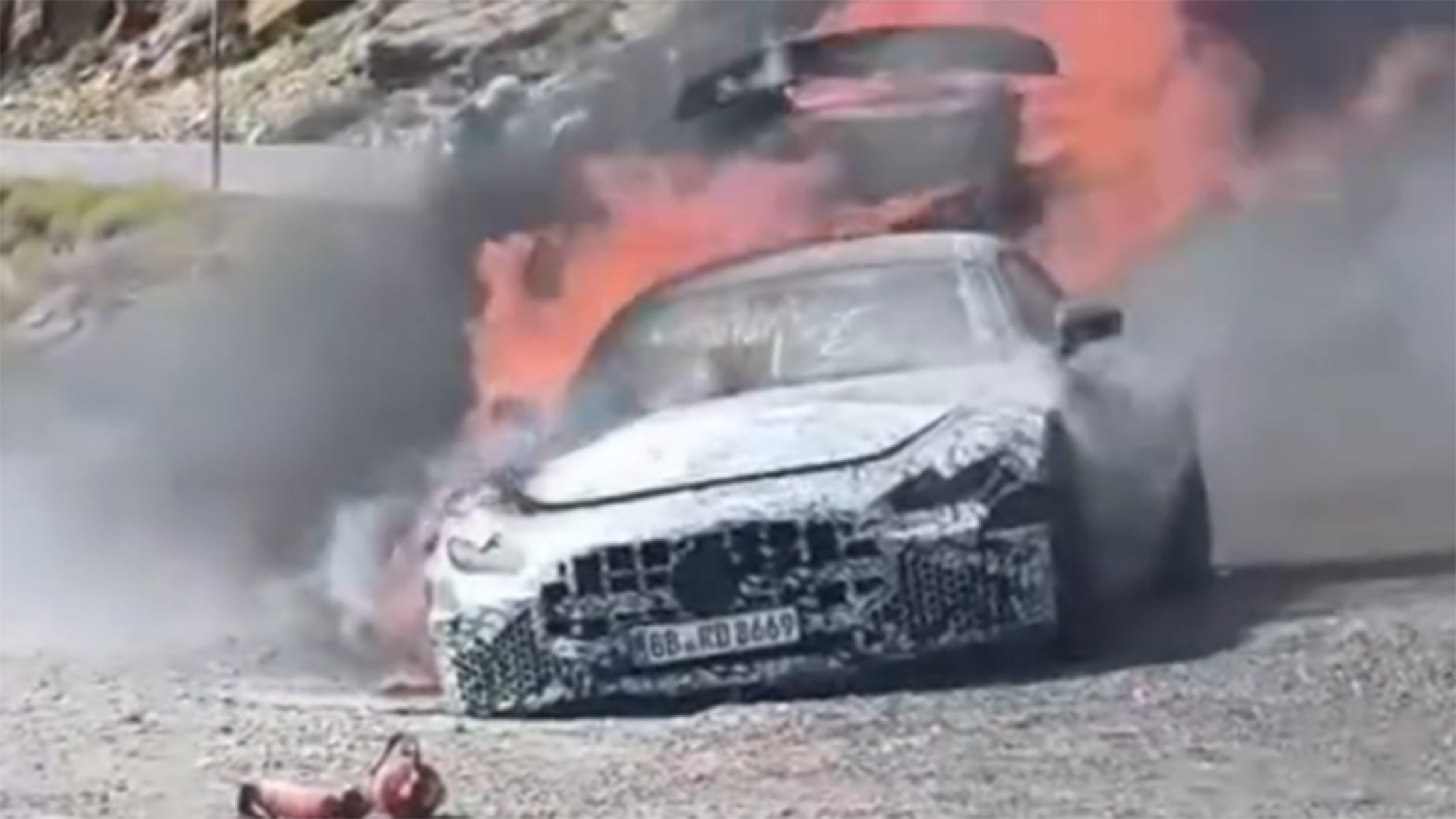
One minute a camouflaged Mercedes-AMG GT is crawling up a mountain pass in Spain. The next it is an inferno.
Video circulating on Instagram from user @kikisnevada_pgorage shows the updated GT prototype fully engulfed in flames. Thick smoke pours into the dry air of the Sierra Nevada mountains. The car didn’t just catch fire. It cooked itself completely.
Why did the Mercedes AMG GT prototype burn in Spain?
Nobody died. That is the only good news here.
The fire started at the rear of the vehicle and spread rapidly. By the time emergency crews showed up, the AMG prototype was little more than a scorched frame on the asphalt. The source who posted the video claims the blaze originated in the hybrid battery pack. They say the onboard extinguishers failed to contain it.
But we have no proof of that yet.
Mercedes-Benz has not commented on the incident. They never do, especially when things go wrong this visibly. We do not even know for sure if the burning car was a hybrid model.
“The incident occurred in the Sierra Nevada mountains, a common location for high-heat engineering tests.”
The new AMG GT facelift will keep its V8 lineup. It will also offer E Performance hybrid variants. If the prototype in the video was indeed a hybrid, it raises immediate questions about thermal management in extreme heat. If it was a pure ICE model, then the mystery deepens. Was it a fuel leak? A wiring short? An engine bay issue?
We cannot speculate on unconfirmed details. It is far too early.
How hot weather testing impacts EV and hybrid cars
Sierra Nevada is not a casual drive. It is a proving ground for heat stress. Manufacturers take cars there to see how electronics and fluids behave under extreme load. Lithium-ion batteries hate heat. Even with active cooling systems, pushing a powertrain to the limit in 100-degree Fahrenheit weather creates risk.
Critics immediately jumped to conclusions. The comments sections filled with debates about whether battery-powered cars belong in such environments. Some argue the fire risk is unacceptable. Others point out that combustion engines are highly flammable too, just less dramatically.
The surrounding forest did not catch fire. The damage stayed contained to the vehicle. That is lucky.
What this means for the AMG GT development
This setback is expensive. Not just in repair costs. In time.
Mercedes loses months of data from that specific mule. Engineers will have to rebuild the prototype. They will have to replicate the conditions. They need to know exactly what failed. Was it a sensor error? A seal breach? A software glitch that left the cooling system inactive?
The search intent for “AMG GT hybrid fire risk” will spike after this. People want to know if the new model is safe. The answer is: we do not know.
No official statement. No recall notice. Just a blackened chassis on a Spanish mountain road.
It is an uncomfortable reminder. Development is messy. Prototypes break. Things burn.
The engineers are probably staring at that wreck right now. Trying to figure out why it happened. Before they can sell you the new AMG GT, they need to solve this puzzle.
Until then, the car is ash.