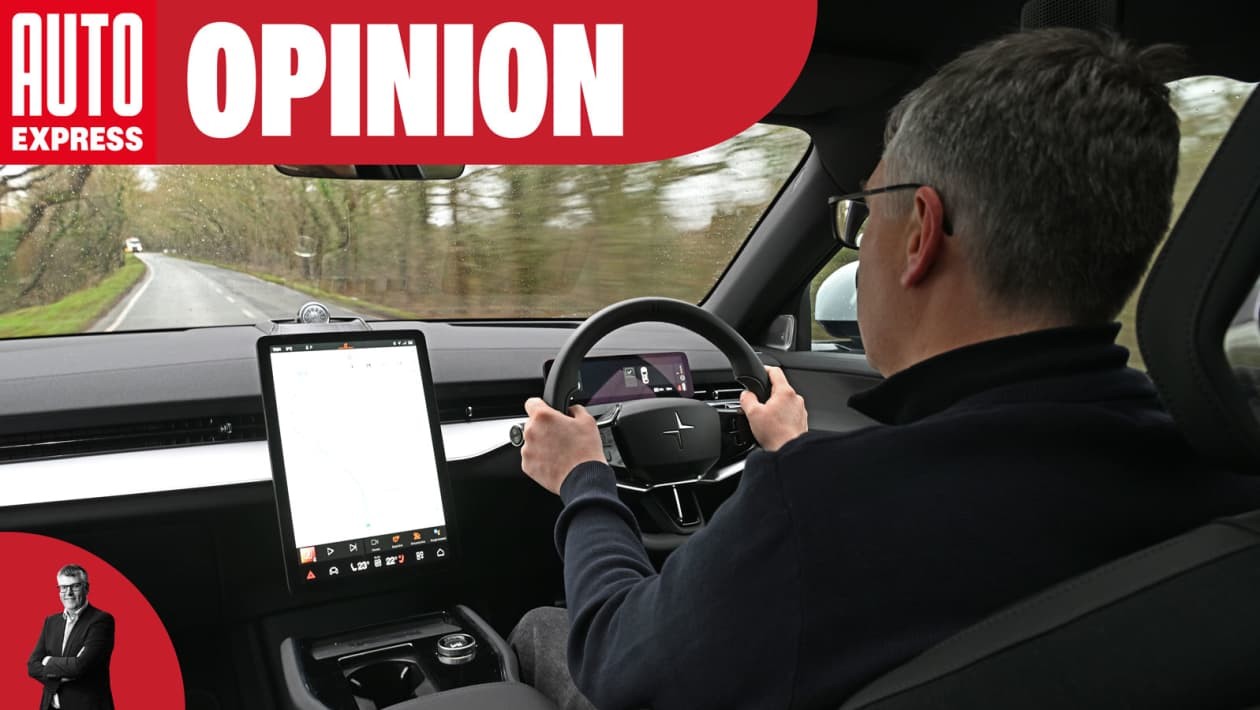
For many drivers, modern safety technology feels less like a guardian angel and more like an overbearing passenger. From sudden steering corrections to persistent auditory alerts, Advanced Driver Assistance Systems (ADAS) have often been criticized for being intrusive, annoying, and—most importantly—counterproductive.
However, a shift is underway. Leading manufacturers like BMW and Polestar are beginning to master a more subtle, intelligent approach to safety, moving away from “one-size-fits-all” alerts toward systems that actually understand the driver’s state.
The Problem with “Cheap” Safety
Historically, many car manufacturers took the path of least resistance when developing driver assistance. To meet safety ratings and regulatory requirements, brands often implemented the simplest, most basic versions of lane-keep assist or collision warnings.
The result was a “binary” system: the tech was either off, or it was aggressively interfering with the driver’s control. This lack of nuance led to a common phenomenon where drivers, frustrated by constant “nagging,” would simply turn the systems off entirely during their “pre-flight” ritual. This creates a significant safety gap, as the very technology designed to prevent accidents is rendered useless because it was too annoying to keep active.
A New Standard: The Euro NCAP Shift
The industry is currently facing a turning point driven by stricter testing protocols. New Euro NCAP standards, set to intensify this summer, are changing the goalposts.
Previously, safety ratings often focused on whether a car had certain technologies. The new criteria focus on how well those technologies actually work in harmony with the human driver. A key component of this is the “Driver State Link.”
- Contextual Awareness: Instead of intervening the moment a car drifts, smarter systems use driver-monitoring cameras to check if the driver is alert.
- Dynamic Intervention: If the system senses you are attentive and looking at the road, it allows for more freedom. If it detects fatigue or distraction, it intervenes much earlier and more decisively.
- Collaboration over Conflict: The goal is to ensure the tech and the driver work together, rather than fighting for control of the steering wheel.
Success Stories: BMW and Polestar
Recent testing of the BMW iX3 and the Polestar 3 suggests that the industry is finally hitting its stride. Unlike many contemporary vehicles, these models feature systems so refined and non-intrusive that they no longer trigger the instinct to deactivate them.
By prioritizing a seamless driving experience, these manufacturers are solving the fundamental paradox of ADAS: making the technology useful enough to keep on, but subtle enough to keep out of the way.
The Global Challenge: Addressing “Nagging” Tech
The transition is not universal. Some manufacturers, particularly within the rapidly expanding Chinese market, are still struggling with overly aggressive driver-monitoring systems. In some cases, the persistent alerts and intrusive camera monitoring have been so disruptive that drivers have resorted to physically covering or disabling the sensors.
While brands like BYD have faced criticism for these invasive interactions, the rapid pace of innovation in the Chinese automotive sector suggests that these issues may be short-lived. As manufacturers learn to respond to driver feedback, the “nagging” era of safety tech is likely nearing its end.
The ultimate goal of vehicle safety is not just to prevent crashes, but to do so in a way that maintains driver confidence and engagement.
Conclusion
The evolution of driver assistance is moving from blunt, intrusive alerts toward intelligent, context-aware systems. As manufacturers align with stricter safety standards, the era of “fighting the car” is being replaced by technology that knows exactly when to step in—and, more importantly, when to stay silent.