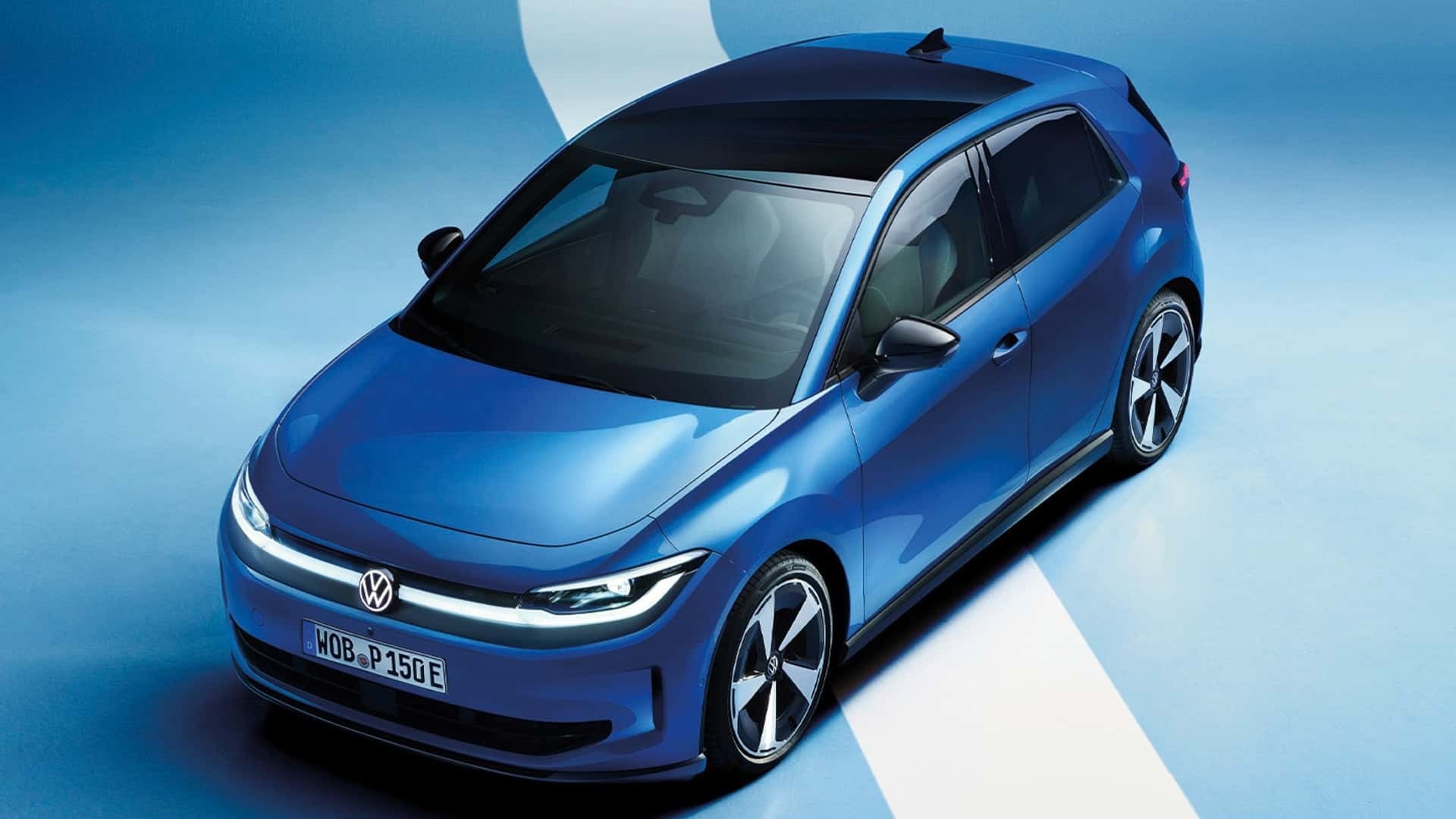
Volkswagen has officially entered the next chapter of its most enduring small car legacy. After 51 years of gasoline-powered success, the ID. Polo has arrived. While it shares a name with the legendary combustion-engine Polo, this is a fundamentally different machine: a ground-up electric development designed to make EV ownership accessible to the mass market.
A New Identity, Not Just a New Engine
The ID. Polo is not merely a gasoline car with a battery swapped in; it is an entirely new vehicle built on the MEB+ architecture. This distinction is crucial. By building the car from the chassis up as an EV, Volkswagen can optimize interior space and aerodynamics in ways a converted combustion car never could.
The design follows VW’s new “Pure Positive” language. Moving away from the cluttered, overly aggressive aesthetics seen in many modern vehicles, the ID. Polo opts for clean lines and sophisticated simplicity. While it remains a compact B-segment hatchback, its wider stance and taller profile—necessitated by the battery pack—give it a more substantial road presence than its predecessor.
User-Centric Interior: The Return of Tactile Control
In a move that many drivers will find refreshing, Volkswagen is listening to consumer feedback regarding digital fatigue. After years of experimenting with touch-sensitive sliders that proved frustrating for many, the ID. Polo is bringing back physical buttons.
- Climate Controls: Dedicated switches replace the previous touch sliders.
- Steering Wheel: Physical buttons have replaced the finicky touch-sensitive keys.
- Window Switches: Standardized controls are back on the driver’s door.
- Volume Knob: A central rotary dial allows for intuitive audio management.
Despite the return to tactile controls, the cabin remains high-tech. A 13-inch tablet-style touchscreen serves as the central hub, paired with a 10-inch digital instrument cluster. For those seeking luxury in a small package, optional upgrades include a panoramic glass roof, massaging front seats, and a premium 425-watt Harman Kardon sound system.
Performance and Range: Choosing Your Power
The ID. Polo offers a tiered approach to electric driving, allowing buyers to balance cost against range requirements.
Battery and Range Options
- The Efficient Choice (37 kWh LFP Battery): Designed for urban commuters, this battery offers an estimated range of 204 miles (329 km). It supports DC fast charging up to 90 kW, reaching 80% charge in roughly 27 minutes.
- The Long-Distance Choice (52 kWh NMC Battery): This larger pack extends the range to 283 miles (455 km). It supports up to 105 kW charging, hitting the 80% mark in just 24 minutes.
Power Outputs
The single-motor, front-wheel-drive setup is available in three distinct power levels:
* 114 hp
* 133 hp
* 208 hp (A high-performance ID. Polo GTI with 223 hp is expected later this year).
Additionally, the car features Vehicle-to-Load (V2L) technology as standard, turning the car into a mobile power bank capable of providing up to 3.6 kW of electricity to external devices.
Market Positioning and Competition
The ID. Polo enters a highly competitive European market where electric vehicles are rapidly gaining ground, already accounting for over 20% of sales in key regions.
With a starting price in Germany of €24,995, Volkswagen is positioning the ID. Polo as a strategic middle ground. It is more premium than the upcoming €20,000 “ID. Every1” planned for 2027, yet significantly more affordable than the larger ID. 3. This pricing strategy is aimed at capturing the massive segment of drivers looking to transition to electric without the premium price tag of a larger SUV.
The ID. Polo represents Volkswagen’s attempt to democratize electric mobility by combining a familiar, trusted nameplate with a modern, user-friendly, and appropriately priced electric platform.
Conclusion: By blending a fresh, clean design with a pragmatic return to physical controls and diverse battery options, the ID. Polo is positioned to be a pivotal model in Volkswagen’s transition to a fully electric lineup.