The automotive industry is facing a significant environmental hurdle: the end-of-life disposal of tyres. Because a single tyre is a complex cocktail of over 200 different materials —including steel, textiles, chemical agents, and various rubbers—recycling them has historically been a logistical and ecological nightmare.
However, a shift is underway. Major industry leaders such as Michelin, Bridgestone, Goodyear, Continental, Pirelli, and Falken are no longer just discussing sustainability; they are actively re-engineering their products to incorporate recycled and bio-based materials.
The Challenge of “Fillers”
To understand this transition, one must look at the “fillers” used in tyre construction. Much like flour in a cake, fillers are added to rubber compounds to provide strength, stability, and durability. Two primary culprits in traditional manufacturing are carbon black and silica.
1. Replacing Carbon Black
Traditionally derived from crude oil, carbon black is essential for maintaining sidewall stability and ensuring the tread can withstand road abrasion. Manufacturers are now pivoting toward two greener alternatives:
– Organic Oils: Using “tall oil,” a byproduct extracted from coniferous trees during wood pulping.
– Tyre Pyrolysis Oil (TPO): This is produced by heating shredded old tyres in a specialized reactor without oxygen.
Companies like Continental are utilizing a “mass balance” approach, which involves blending these bio-oils or recycled pyrolysis oils with traditional fossil-based raw materials to reduce the overall carbon footprint.
2. The Evolution of Silica
Silica was a game-changer for tyre safety roughly 30 years ago, effectively cutting braking distances in half. Traditionally sourced from quartz sand, the industry is now turning to agricultural waste. For example, Continental is increasingly using silica derived from rice husks —a byproduct of rice production in Asia and Italy—turning agricultural waste into a high-performance component.
Case Study: Pirelli’s High-Performance Green Tyre
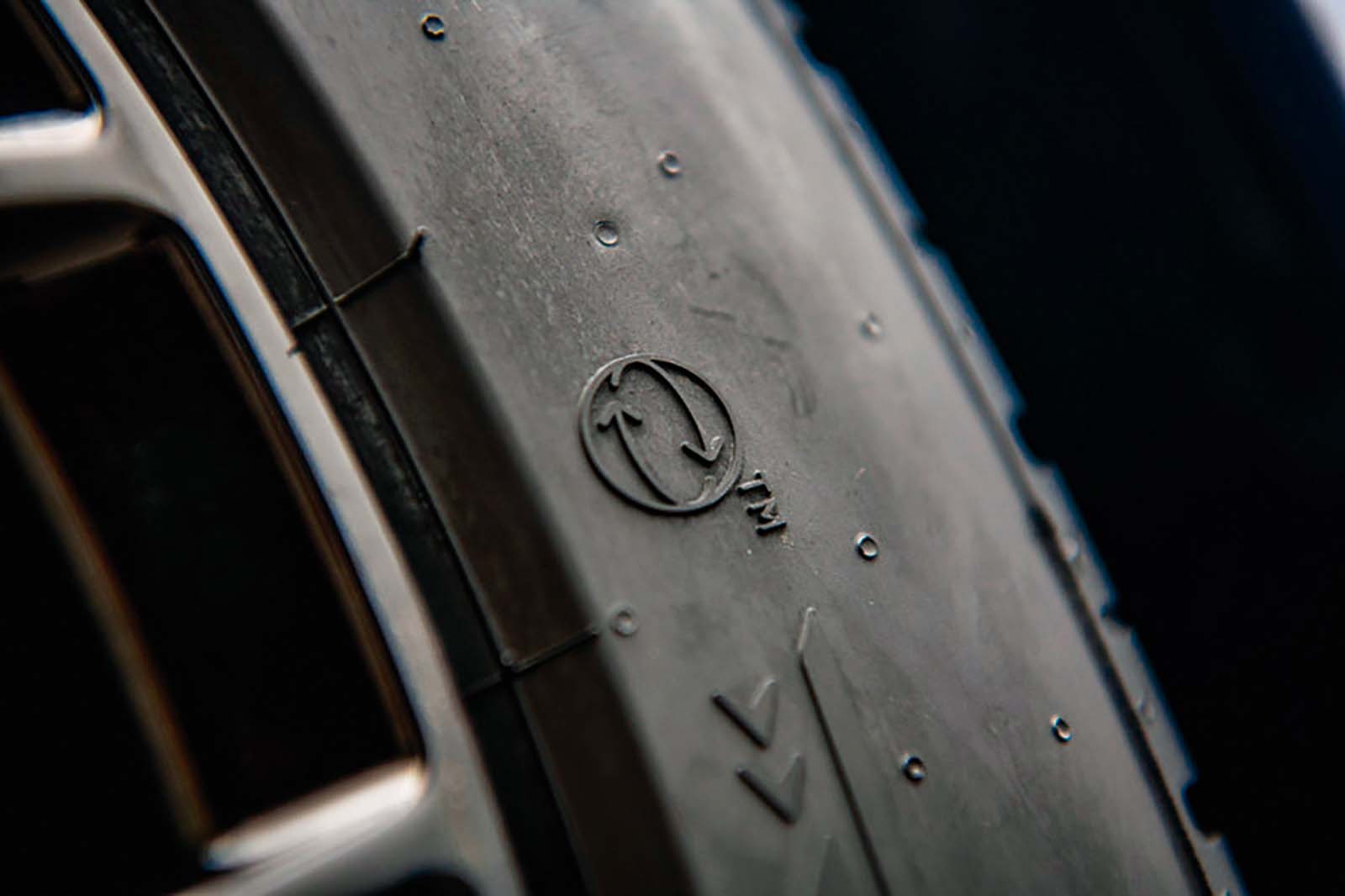
Pirelli has recently demonstrated how these technologies converge in a consumer product. Their new P Zero tyre, developed for JLR (Jaguar Land Rover), is composed of 70% bio-based or recycled materials.
The composition of this high-performance tyre includes:
– FSC-certified natural rubber: Ensuring forests are managed responsibly.
– Rice husk silica: For improved tread performance.
– Pyrolysis oil: Replacing traditional fossil oils.
– Bio-circular polymers: Derived from used cooking oil.
– Bio-resins: Plant-based plasticizers that fine-tune the balance between wet and dry road performance.
Why This Matters
This shift represents a move toward a circular economy. By utilizing “waste” products—such as cooking oil, rice husks, and old tyres—the industry is reducing its reliance on finite fossil fuels and minimizing the environmental impact of its supply chain.
The transition from crude oil and quartz sand to organic oils and agricultural byproducts marks a fundamental change in how we define automotive performance and sustainability.
Conclusion
The tyre industry is successfully transforming complex waste streams into high-performance components. By integrating bio-based materials and recycled oils, manufacturers are proving that safety and durability do not have to come at the expense of the planet.