


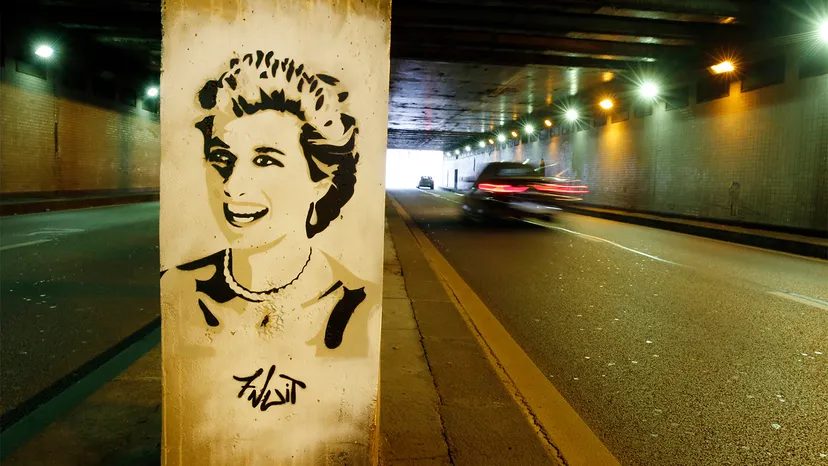
3,300 people die in traffic accidents every day. This is a shocking but silent statistic that continues to grow. The World Health Organization predicts that by 2030, road injuries will become the fifth leading cause of death worldwide. Most deaths happen to people we never know. We don’t pay attention to headlines. We scroll past them.
Only when the victims become famous can we truly register the tragedy.
On August 31, 1997, Princess Diana died in a tunnel in Paris, shocking the world. She was in a Mercedes-Benz S-Class with Dodi Fayed. The car hit a concrete pillar. The world mourned. This is a global event. However, Princess Diana was no exception. He is part of a long, grim list.
Painter Jackson Pollock dies in a car accident. Pulitzer Prize-winning journalist David Halberstam did the same. Yankees manager Billy Martin. Actors Grace Kelly and Jayne Mansfield. These were accidents. Then came the political assassinations. Archduke Franz Ferdinand of the Austro-Hungarian Empire. US President John F. Kennedy. Both were shot and killed while traveling as passengers. In some cases, the vehicle may simply be the location for another cause of death. Country legend Hank Williams died in the backseat of a Cadillac.
But the real mystery isn’t just how they died. It is what happened to the cars themselves.
Often the answer is nowhere to be found. In 2005, the Metropolitan Police Department scrutinized the Mercedes carrying Princess Diana in a re-investigation. British newspapers reported conflicting information. *The Sun said that it was sent back to France and stored in a container in a warehouse outside Paris. The Mirror claims it is in France, but the exact location is unknown. French authorities ignored the email. The royal press did not comment on the matter. The car is gone.
James Dean’s Porsche 550 Spyder has a similar ghost story. It vanished in 1960 while en route from Miami to Los Angeles. It hasn’t been seen in public.
However, the fate of the five dead vehicles is already known. Their stories were recorded. Their location is monitored.
5: The car that started the First World War
Let’s start with the most consequential vehicles in automotive history. Archduke Franz Ferdinand was the heir to the Austro-Hungarian throne. On June 28, 1914, he and his wife Sophie were traveling through Sarajevo. Bad route planning. Security was lax.
A young Serbian nationalist named Gavrilo Princip threw a bomb into their car. It missed. The Archduke’s driver, Leopold Lojka, continued.
Late in the afternoon, the Archduke decided to visit the wounded in the hospital. He told the driver to go to Main Street. Lojka, unaware of the detour and taken the wrong road. He stopped and reversed. It was a mistake. Princip happened to be standing nearby.
Princip fired twice. One bullet hit Sophie in the stomach. Another shot hit the Archduke in the neck. The car that transported them that day was a Gräf & Stift 60-HP Double Phaeton. This is a convertible station wagon. It was a luxury car at the time.
What happened to Gräf & Stift? It was not kept as a prize in the Austro-Hungarian Empire. It is not on display in the Vienna museum. After the murder, the local authorities confiscated the car. It was likely stripped for parts or scrapped as it collapses in the coming years. The car itself has disappeared. That history still remains.
This sets the tone for the rest of the list. Many of these cars did not survive. metal
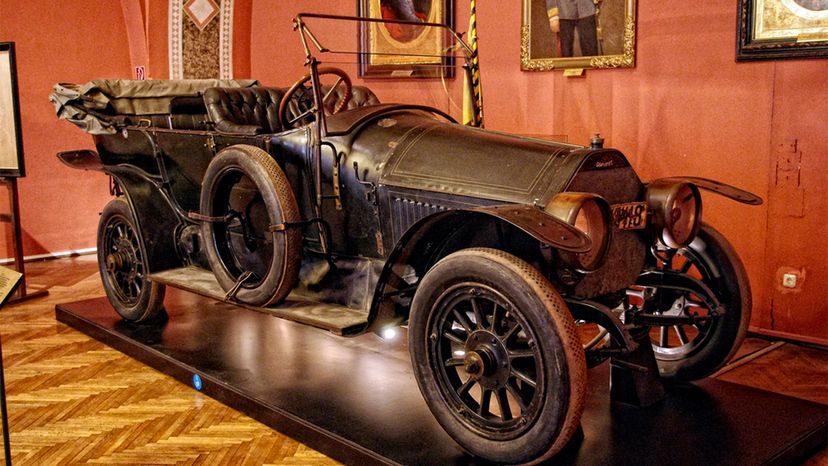

June 28, 1914 changed the world. Not because of fights, but because of wrong turns and wrong decisions. Archduke Franz Ferdinand, heir to the Austro-Hungarian Empire, sat in the back seat of a 1910 black Gräf & Stift double phaeton. Next to him was his wife, Duchess Sophie von Hohenberg. They were supposed to be safe. they weren’t.
In Sarajevo, Serbian nationalist Gavrilo Princip stepped out of a crowd and shot them both. Two bullets. The immediate trigger for World War I.
The car itself is a piece of industrial history that most people miss. It wasn’t a custom-made royal carriage. It was a stock model of Gräf & Stift, founded by a former Viennese bicycle manufacturers. Gräf brothers knows how to build light and reliable frames. They applied this logic to cars.
This specific chassis does not belong to the Archduke. Its owner was Count Franz von Harlach, an Austrian military officer. The Archduke borrowed it for an ill-fated state visit. That distinction is important because it explains why the car is in the right place at the wrong time. It was a loaner. It’s basically a rental.
For decades, people claimed the car was cursed. The myth grew wild. Stories circulated about owners dying in a horrific accidents. One doctor fell out of the car during a road race. Another owner died in a head-on collision. The media loves the “cursed car” angle. It sells newspapers.
A 2013 Smithsonian article finally killed the story. The deaths were coincidence. Statistical noise. A car is just a machine. There is not a soul that curses you.
Today, Gräf & Stift double phaeton is housed in the Museum of Military History in Vienna. You can stand in front of it. It was stripped naked. No upholstery. No romance. Just metal and wood. Next to it hangs the Archduke’s blue military uniform. The fabric was stained with his blood. If you look closely, you can still see it. Next to it is the chaise lounge where he died. The juxtaposition is nauseating. Luxury next to violence.
Read Harlan K. Ullman’s A Fistful of Bullets: The Assassination of Archduke Franz Ferdinand Still Threatens Peace for a deeper understanding of how the shots fired in Sarajevo shook the world. This is more than just history. This is a warning sign for modern geopolitics.
Bonnie and Clyde Ford
From the car that started the war to the car that started the legend. The 1932 Ford V-8 Roadster driven by Bonnie Parker and Clyde Barrow is more cultural immortality than automotive engineering.
The Ford Model 18, commonly known as the V-8, was introduced in 1932. This was the first mass-produced V-8 engine in the United States. It was heavy, underpowered by today’s standards and prone to overheating. It was pretty quick too. Top speed is about 70 miles per hour. Compared to modern times, 0-60 seems like an eternity.
The story begins in 1934 in Topeka, Kansas. A local couple spent $700 on a Ford deluxe sedan. Painted Cordoba Grey. It was equipped with a V-8 cylinder engine. This was standard at the time, but it gave the car a bit more power. They were open for 6 weeks. that’s it. Then the car disappeared from their lives.
It didn’t sell. It was not towed. found.
Clyde Barrow roamed the area. He needs a car. He didn’t want a car. He wanted a Ford. In a photo from that time, he and his partner, Bonnie Parker, stand next to several stolen Fords. They are fans of the brand. Perhaps the handling is predictable. Maybe the parts are cheaper. Or maybe it just looks like a Craftsman until you look at the trunk.
End of Gibbsland
On May 23, 1934, things took a turn for the worse. They stopped for coffee and donuts in Gibbsland, Louisiana. It was a normal break. Then they drove off.
They were soon ambushed by law enforcement.
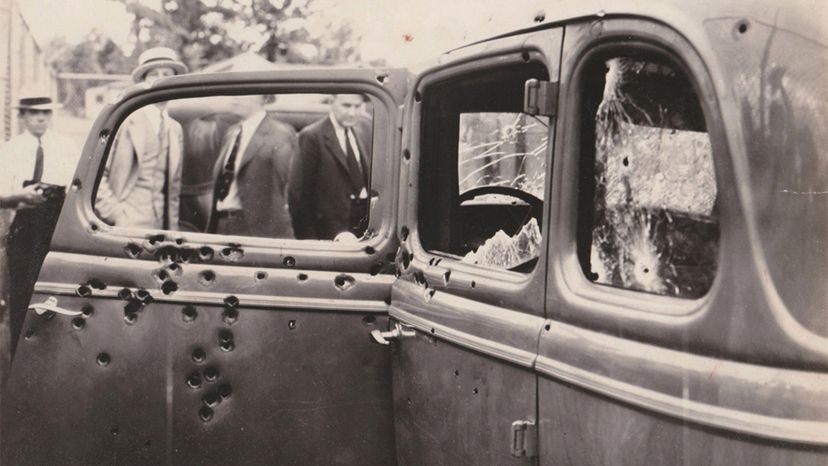
Hundreds of bullets were found inside the car. hundreds. The residents did not survive the hailstorm. The sedan’s situation is not so good. It was torn to pieces. The glass broke. Metal buckle. Before the engine shut down, disaster struck.
From the crime scene to casino exhibitions
The heavily damaged Ford was towed to nearby Arcadia. This is where the souvenir shop comes into play. They broke pieces of glass. They tried to remove the parts. It is free and available to anyone who wants to understand this part of history.
The sheriff had to intervene. He surrounded the car. He finished the robbery. The car is parked there. Includes a pocket with bullet holes. Blood stains. We are waiting for a legal solution.
Ultimately, the decision was made by a federal judge. The car was not destroyed. It was not sold as scrap. It was returned to its original owner. The couple bought a house in Topeka for $700 and got their property back. Now the property they left behind.
Let’s fast forward to today. The car is not in a private garage in Kansas. It is not in the Louisiana State Museum. The venue is the Whiskey Pete Hotel and Casino in Primm, Nevada. It’s on display. You can walk across. You can see the dent. You understand the history of steel materials.
3: Hank Williams’ Cadillac
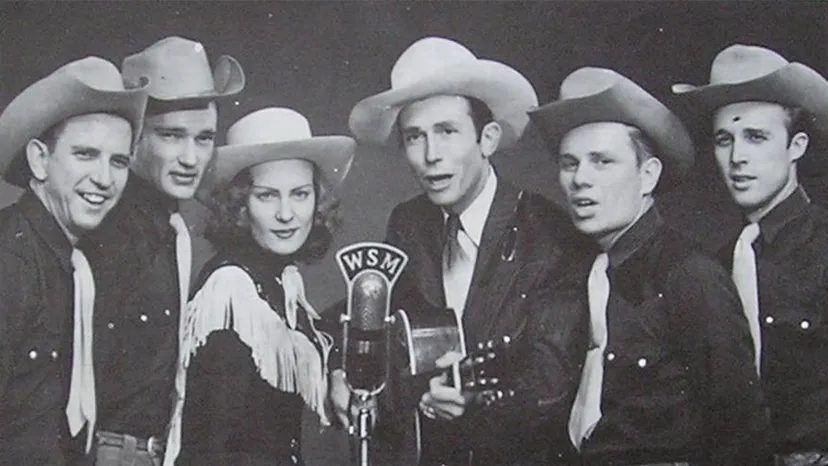
Hank Williams didn’t drive away at night. he was driven into it. On December 30, 1952, the country music icon left Montgomery, Alabama, loaded into the back seat of a light blue Cadillac convertible. This car is brand new. The driver was Arnold “Skeeter” Crittenden, a 17-year-old college student hired to perform a special mission: to transport the Star from point A to point B. The destinations were Charleston, West Virginia, and Canton, Ohio. The goal was to keep the career alive.
It wasn’t working.
By the end of 1952, Williams was no longer headlining of the Grand Ole Opry. He played in a small, smoky club. He was eager to return. The physical toll was catastrophic. The back surgery caused him constant pain. The only thing that numbed him was morphine. The only thing that helped him sleep was chloral hydrate, a powerful sedative. He drank to keep the whole operation going. A lot.
The Cadillac became a rolling sickbed. This is in stark contrast to the glamorous image he once presented. The car stood quietly in the dark, and the man sitting in the back seat continued his losing battle.
The next morning
New Year’s Day, 1953. The car was traveling near Oak Hill, West Virginia. Crittenden stopped the car. He checked the passengers. Williams was silent for a moment. Too quiet.
The driver took him to the nearest hospital. It didn’t matter. Doctors pronounced him dead at the age of 29. What was the official cause of death? heart failure.
It’s easy to look back and see the signs. The fall was not sudden. It was a slow erosion of health, reputation, and humanity. The Cadillac wasn’t the cause. It’s just a vehicle. The real culprit was a mix of prescription drugs and alcohol, and his body simply couldn’t process anymore.
The Car Remains
Today, that baby blue Cadillac is more than just a car. It’s an artifact. It can be seen at the Hank Williams Museum in Montgomery, Alabama. It sits alongside other relics of a short but intense life. There’s his 1937 Gibson guitar. There’s the microphone and stand he used in his last performance.
This car is a reminder of how quickly things can fall apart. How a man can be at the top of his game one month and then dead in the backseat of a car the next?
For those seeking a deeper understanding of this tragedy, Sing a Sad Song: The Life of Hank Williams by Roger M. Williams is the definitive text. It’s not a fluff piece. This is a tough look at the man behind the music.
2: JFK Lincoln Continental
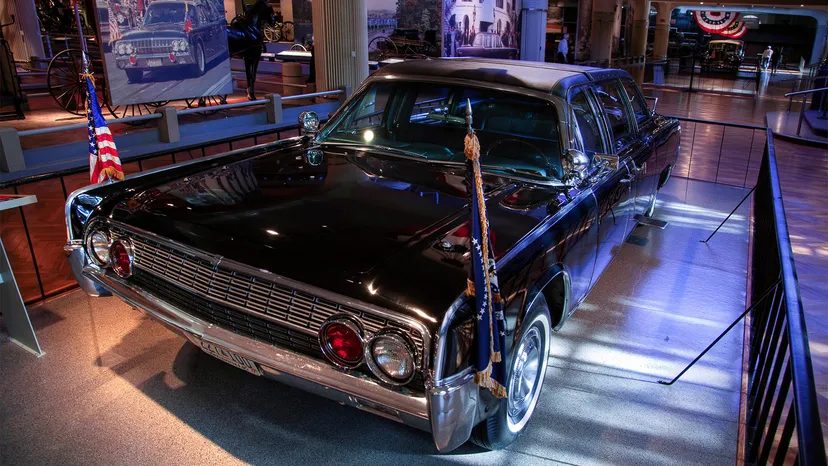
On November 22, 1963, John F. Kennedy’s ride through Dallas in a convertible Lincoln Continental was a marvel of mid-century technology. Codenamed X-100 by the Secret Service, it was the most advanced presidential car of its time. It has dual radio telephones, spotlight-equipped flagstaffs on the fenders, and a hydraulic rear seat lifter that raises the president 11 inches for improved visibility.
This visibility proved to be a liability.
Lee Harvey Oswald sat in the sixth floor window of the Texas School Book Depository and used the exposed nature of the convertible to his advantage. The open roof made Kennedy vulnerable to attack. The rest of history is a bloody tragedy.
One would expect such vehicles to be decommissioned immediately after an assassination. This is logical. It would be safe.
Instead, the government spent $500,000 to refurbish the Lincoln Continental Assassination Limousine.
Black armor
The changes are huge. The open top is gone. Windshields and windows were replaced with bulletproof glass. A fixed roof has been installed. The vehicle’s armor plate weighed 1,600 pounds.
The paint job shifted from dark blue to black.
This is more than just decoration. The modifications turned a symbol of accessibility into a fortress. The Lincoln Continental Assassination Limousine became a mobile bunker.
Further improvements were made in 1967, and the car was used by four presidents: Lyndon B. Johnson, Richard Nixon, Gerald Ford and Jimmy Carter. It stayed in service until 1977.
Today, the armored ghost sits at the Henry Ford Museum in Dearborn, Michigan. It’s a stark reminder of how quickly the president’s security protocols have evolved since the Dallas incident.
Convertibles also made the president vulnerable to attack, as seen when assassin Lee Harvey Oswald allegedly shot President Kennedy from the sixth floor window of the Texas School Book Depository.
TupacBMW
A 1996 BMW 750iL riddled with bullets and the unsolved murder of Tupac Shakur
This series of events began on September 7, 1996. Rapper Tupac Shakur and Death Row Records CEO Suge Knight attended a Mike Tyson fight in Las Vegas. They left the arena in a rented black 1996 BMW 750iL sedan. It headed to the nightclub run by Knight. Then the white Cadillac pulled up. Shots were fired. Both men were hit. Shakur took the brunt. He died six days later in a Las Vegas hospital. The case is still unsolved.
The police confiscated the BMW. They sold it at auction. It changed hands many times. The owner restored it. The vehicle was purchased by Las Vegas-based Celebrity Cars in 2017 and appeared on the “Pawn Stars” channel in 2018.
Murder weapon vehicle price and condition
In April 2019, the car was for sale. The asking price is $1.5 million. According to the seller, the BMW is in excellent condition. It has been repainted and restored. There is a small indentation on the body. It might be where a bullet once entered.
For more information, read “Tupac Shakur: The Life and Times of an American Icon” by Tayannah Lee McQuillar. HowStuffWorks suggests similar titles. You can buy from the provided links. We earn a share of the sale.
More information about car history
Why this BMW model is important
The 1996 BMW 750iL is a sedan of the E38 generation. It is a luxury flagship model. “L” stands for long wheelbase. This offers even more rear legroom. Suge Knight likes spacious interiors. Ensure privacy during important meetings. The history of this car is directly related to the history of West Coast hip-hop. This represents a certain era of Death Row Records.
Where to find 1996 BMW 750iL auction documents
Las Vegas Police Department auction records have been released to the public. These represent the transfer of a vehicle from a law enforcement agency to a private buyer. Celebrity Cars held this title even before it was available online. Their website tells about the restoration work. Prices reflect media appearances. *Pawn Stars viewers are concerned about the origin of the car.
How the bullet indentation was documented
The block is subtle. It sits on the exterior bodywork. Restoration efforts did not erase it completely. The seller emphasizes that this is part of the car’s story. Collectors value authenticity. Visible traces of gunfire added historical weight. It serves as physical evidence of the night Tupac was injured.
Comparison with other music industry memorabilia
Such cars are rarely found on the souvenir market. Most of the objects are clothes, musical instruments or manuscripts. Vehicles directly related to cultural figures are rare. The $1.5 million price tag places it among the luxury collections. It competes with rare supercars. Its value comes from tragedy. This makes this category unique.
Who owns the Tupac BMW now?
The 2019 listing status is unknown. After this date, Celebrity Cars may have sold it. No public record confirms


