We’ve all been there. You’re standing in your driveway with shopping bags in your arms, wondering if your milk can will make it from the bumper to your front door. Or maybe a heavy, clumsy bookcase digs into your arm. Your body has limits. It is not built to support unlimited weight.
Cars, trucks and SUVs have similar biological limits, but contain more steel and rubber. When your car is overloaded, it’s more than just a few extra trips. This puts stress on the engine and transmission and damages the suspension. This can cause mechanical failure and pose a serious safety hazard to you and other highway users.
Understanding **how to calculate payload capacity is more than just adding stuff to the back. It’s about safety. It’s about knowing exactly where the line is between an “efficient hauler” and a “dangerous missile”. Before you toss your gear into your bed or suitcase, remember the biggest variable: people. Passengers count as payload. Every single one.
So how do you determine the hard limit for a particular vehicle?
Calculating Payload Capacity
The calculations are simple, but the details are important. Payload is the maximum weight a vehicle can carry, including passengers, cargo and manufacturer-fitted accessories. This is not advice. It’s a hard number stamped somewhere on your vehicle.
Fasten your seat belts – refer to the vehicle’s volume and weight markings. It is usually located in the driver’s side door frame or glove compartment. This sticker shows the total weight that the vehicle can safely carry.
The breakdown is as follows:
- Check the total weight limit: The maximum combined weight of passengers and cargo is indicated on the sign. This is usually labeled “GAWR” (Gross Axle Weight Rating) or the vehicle’s total weight limit for each axle.
- Subtract Curb Weight: This is the weight of the vehicle itself with standard equipment, with a full tank of gas without passengers or luggage. It is mentioned in the user manual.
- Account for Passengers: Multiply the average weight per passenger (manufacturers usually calculate 150 lbs or 68 kg) by the number of people. Add your pet’s weight.
- Subtract Optional Equipment: If you have a tow package, heavy suspension or sunroof, their weight will count towards the vehicle’s weight, but will reduce the available cargo capacity.
“Cargo capacity is more than just what you put in the back. It’s everything added to the vehicle’s base weight.”
Let’s say your SUV has a payload capacity of 1,200 pounds. If you have four passengers, each weighing 180 lbs, that’s 720 lbs gone. 480 lbs left for cargo, fuel and extras. Loading 500 lbs of gear puts you 20 lbs over the limit. small? perhaps. Is it dangerous? Yes. Over time, those extra 20 lbs can cause brake failure, tire failure, or suspension collapse.
Some vehicles have a digital payload display on the dashboard. These systems use sensors
Calculating vehicle weight doesn’t have to be complicated. It comes down to two numbers. You need the gross vehicle weight rating (GVWR) and the vehicle weight. Subtract one from the other to get the payload.
The gross vehicle weight rating is the hard limit. This is the maximum permissible weight of the entire machine loaded, with fuel and ready to drive. This total includes the vehicle itself, all necessary fluids such as petrol, oil and coolant, as well as all passengers, tools and luggage in the vehicle. This number is determined by the manufacturer. It can be found in the owner’s manual or on a sticker near the door lock. Some online databases also list them, but the truth is on your car sticker.
The weight of the car is simpler. This is the weight of the vehicle itself. No people. No luggage. Just steel, glass and an engine. It is important that the weight of the vehicle includes a full tank of fuel and all operating fluids. This is the starting point.
Payload capacity is the remaining space. This is something you can add when the tank is full and topped off. The math is basic subtraction.
Gross Vehicle Weight Rating (GVWR) – vehicle weight = payload
Take a hypothetical sedan. GVWR is 3,500 lb (1,588 kg). Curb weight is 3,000 pounds (1,361 kilograms). Let’s do the math.
3,500 – 3,000 = 500 lb (227 kg) load capacity.
that’s it. You have 500 pounds to play with. Drivers often confuse payload and towing capacity. they are not the same thing. Payload goes in the vehicle. Towing goes behind it. If you load your sedan with 600 pounds of gravel, you’ve exceeded its carrying capacity. The suspension will bottom out. The frame can warp. You’re just asking for trouble.
Does car type matter? Absolutely. How you calculate and use this capacity varies greatly depending on whether you’re driving a car, SUV, or pickup truck.
Loading capacity of the truck
Pickup trucks tell a different story. They are designed to haul. But the calculation remains the same here. The weight of the vehicle must be deducted from the GVWR. The difference is in the numbers. And in the consequences.
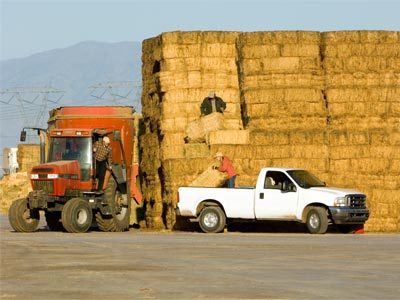
A full-size pickup can have a GVWR of 7,000 pounds. If the vehicle weighs 5,500 lbs, the payload is 1,500 lbs. That sounds generous. Until you consider that the truck itself already weighs a ton thanks to the heavy suspension, big engine and four wheel drive system. The weight of the vehicle makes up a large part of the total capacity.
Many buyers focus on towing. They want to know how much boat they can pull. However, loading a truck with equipment, fuel and passengers can exceed its carrying capacity before you can hook up a trailer. Exceeding the carrying capacity will not only void the warranty. It compromises braking. It strains the steering. The truck becomes a heavy, unstable piece of metal.
So, check the sticker. do the subtraction
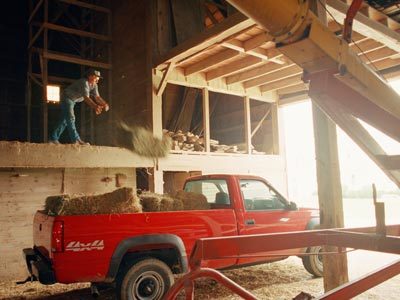
The definition of “payload” for a pickup truck is very different from the definition of “payload” for a car or SUV. You don’t need to load long, bulky boards into a compact station wagon for home renovations. Instead, you don’t need bulky, heavy equipment to carry bag after bag.
Truck loads typically revolve around heavier, denser cargo. To understand these restrictions, you need to understand how the United States classifies these vehicles. The government bases these ratings on gross vehicle weight (GVWR). GVWR is the maximum total weight that the vehicle is designed to carry, including chassis, body, engine, fuel, passengers and cargo.
This can be viewed through two lenses: by specific weight classes or by broader duty categories. Although these overlap, it is important to distinguish between the two when trying to determine what can be legally and safely hailed.
Federal weight class
The US Department of Transportation classifies GVWR into eight different categories. This is not just a bureaucratic trivia. It dictates everything from permit requirements to infrastructure wear and tear.
Class 1
GVWR up to 6,000 lbs (2,722 kg)
Class 2
GVWR up to 10,000 lbs (4,536 kg)
Class 3
GVWR up to 14,000 lbs (6,350 kg)
Class 4
GVWR up to 16,000 lbs (7,258 kg)
Class 5
GVWR up to 19,500 lbs (8,845 kg)
Class 6
GVWR up to 26,000 lbs (11,793 kg)
Class 7
GVWR up to 33,000 lbs (14,969 kg)
Class 8
GVWR is over 33,000 lbs.
light-duty, medium or heavy?
The DOT combines these eight categories into three main categories. Levels 1 and 2 are light-duty. These are standard pick-up trucks and work vans. Classes 3-5 are medium-duty and are typically used with box trucks and large commercial delivery vehicles. All equipment above level 6 is heavy-duty. There are semi-tractors, dump trucks and other industrial beasts here.
Knowing where your vehicle sits in this hierarchy will help you estimate its true load capacity. It’s not just about the size of the truck. This applies to structural and legal restrictions imposed by that classification. If a Class 2 truck loaded with Class 6 expectations, it risks not only a fine but also catastrophic failure.
The next page switches to passenger cars. How much cargo can your car actually carry?
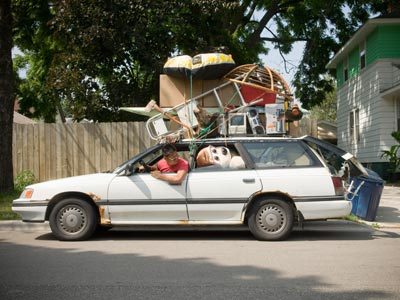
When driving a sedan, we tend to ignore the cargo capacity. It doesn’t mean you’re hauling lumber or a bunch of construction workers. There may be several people and several suitcases on a family trip, but no one actually calculates whether the total weight exceeds safety requirements. Truck drivers live off these figures. Car drivers? Not so much.
The logic is simple, or so it seems. The loading limit for passenger cars is lower than for trucks. We transport light loads. If something is heavy enough to damage the suspension or affect the ride, it may not fit in the trunk at all. So ignore it. We are wrong to do this.
Every vehicle has a certain weight budget, not just groceries loaded in the back. The weight that the car can safely carry, including the people inside. Manufacturers do not use magic numbers here. They stick to the usual baseline.
Most car manufacturers allow 150 pounds (68 kg) per person per seat. This is the passenger’s basic weight, including whatever they are wearing and carrying. It’s a round number, easy to calculate.
Think of it this way. An empty seat in your car is basically an empty bank account with fixed deposits. If the back row seats three people and is currently empty, the available weight capacity is 450 pounds (204 kg). You can fill that space with luggage, gear, etc., but once you cross the 450-pound threshold in that row, you’re pushing the limits of the car’s structure and suspension.
It’s not just about fitting things in. The decisive factor is how the car can handle the additional weight. Too much weight on your back? The rear suspension sags. The front end gets light. Steering becomes vague. The braking distance increases. This is a physics problem, not just a packing puzzle.
The SUV is expected to offer more capacity. The body size has increased. The ground clearance is higher. There is even more space in the back for throwing things. But can a larger vehicle safely carry more weight? Not necessarily. The payload classification is specific to the model, engine and accessory package. The load limits of a fully loaded midsize SUV are likely to be very close to the load limits of a fully loaded sedan.
We assume bigger is better for hauling. That’s a dangerous assumption. In the next section, breaks down exactly how the cargo capacity of these large vehicles works because the calculation is not always proportional to square feet.
SUV payload
The temptation for an SUV is to think of it as a light truck. You see the open space. You see the rugged look. You think, “I can throw anything in here and it won’t matter.”
This is important.
The cargo capacity of an SUV varies greatly depending on its configuration. A base model with cloth seats and no towing package will likely offer decent payload number. Adding a heavy-duty towing package, larger wheels, and leather upholstery can significantly drop significantly. Equipment added to make an SUV useful also puts a strain on the weight it can legally and safely carry.
This is where things get messy. People focus on towing capacity and think payload works the same way. It doesn’t. The towing capacity is about the hitch. Payload is about the
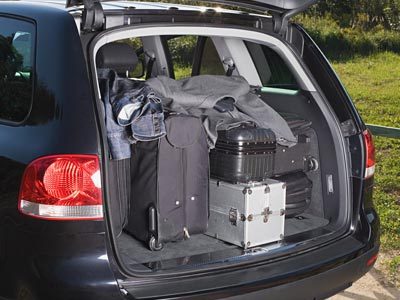
You might think of an SUV as the ultimate hybrid, with the towing power of a pickup truck and the comfort of a sedan. While this is a fair assessment, the reality is more nuanced. The cargo capacity of an SUV is typically between a standard sedan and a full-size truck. It can carry more stuff than a standard crossover, but it doesn’t have the bed space of a utility vehicle.
There is flexibility. Fold down the rear seats to create a spacious trunk that can hold large gear. But the problem is that SUVs have roofs. Unlike open trucks, pallets cannot be stacked high. In addition, SUVs should not be subject to the same load limits as trucks. Overloading your SUV poses a serious safety risk.
Overload physics
Why is this distinction so important? Center of gravity. SUVs sit higher off the ground than cars. If you load cargo in that high position, the center of gravity rises even higher. This significantly increases the likelihood of a rollover accident, especially if the movement is sudden or the vehicle is already close to its limits. The idea that SUVs are invincible off-road vehicles defies the physics of stability.
Manufacturers use electronic stability control systems to solve these problems. Laws were also enacted. Beginning in September 2004, the National Highway Traffic Safety Administration (NHTSA) required vehicles with a gross vehicle weight rating (GVWR) of less than 10,000 pounds to have a decal affixed to the door frame. This sticker indicates the maximum weight of all passengers and luggage.
Door frame stickers are more than just paperwork, they are strict limits on what can be transported safely without affecting the structural integrity or handling of the vehicle.
What should you do if your shipment exceeds the factory limit? Can you cheat the system?
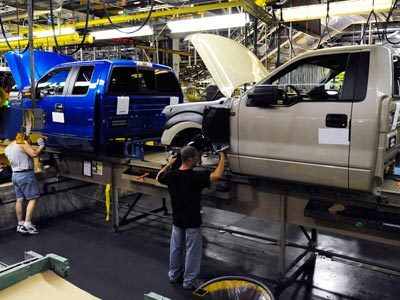
Payload capacity is a hard limit. It’s the maximum weight your vehicle can safely carry, including passengers, cargo, and fuel. But what happens when you find a truck that fits your lifestyle, yet the numbers don’t add up? You want to carry more. Is it possible to boost that limit?
The short answer is no. You cannot legally or safely increase the manufacturer’s rated payload capacity.
However, manufacturers do offer towing packages. These aren’t magic wands that change the fundamental physics of your chassis, but they do optimize the vehicle for heavy loads. Understanding the difference between payload capacity and towing capability is where most drivers get into trouble.
The Role of Towing Packages
When you buy a truck, the base model is often stripped down to keep the price point accessible. If you plan to haul significant weight, you need the right hardware. This is where optional towing packages come in.
These packages vary wildly by brand. Some include just a hitch. Others are comprehensive upgrades designed to handle the stress of heavy loads. Typical inclusions are:
- Heavy-duty hitches
- Trailer wiring harnesses
- Safety chains
- Upgraded cooling systems
- Reinforced brakes
- Larger engines
A larger engine doesn’t increase payload. It increases towing capacity. It helps the engine move heavy trailers without overheating. Stronger brakes help you stop that trailer. Better cooling prevents the transmission from melting under load.
But here is the catch: these upgrades do not change the Gross Vehicle Weight Rating (GVWR).
Why Payload Limits Are Non-Negotiable
Payload capacity is calculated by subtracting the curb weight from the GVWR. That number is fixed. It is determined by the strength of the springs, the frame, and the suspension components.
Overloading a vehicle is dangerous. Period.
When you exceed payload limits:
– Handling degrades significantly.
– Braking distance increases.
– Tire failure becomes a real risk.
– Suspension damage is likely.
If a police officer pulls you over and sees your suspension is bottomed out, or if the tires look compromised, you can be ticketed for unsafe loading. Nobody enjoys that. It’s a fine you don’t need, and the risk to your family and other drivers is too high to ignore.
Do you really think the law cares that you have a “heavy-duty hitch”? It cares that you are breaking the laws of physics.
Acura Payload Capacities
Payload varies by model and year. Older models often have lower limits due to lighter construction or different equipment levels. Check the chart below for specific years.
2006 Acura Models
| Model | Max Payload (lbs) |
|---|---|
| MDX | – |
| RL | – |
| RSX | – |
| TL | – |
| TSX | – |
2007 Acura Models
| Model | Max Payload (lbs) |
|---|---|
| MDX | 1158 |
| RL | – |
| RDX | 870 |
| TL | – |
| TSX | 850 |
2008 Acura Models
| Model | Max Payload (lbs) |
|---|---|
| MDX | 1158 |
| RL | – |
| RSX | 870 |
| TL | – |
| TSX | 850 |
2009 Acura Models
| Model | Max Payload (lbs) |
|---|---|
| MDX | 1158 |
| RL | – |
| RSX | 870 |
| TL | – |
| TSX | 850 |
More Acura Specs:
– Acura GVWR
– Acura GAWR
– Acura GCWR
– Acura Cargo Carrying Capacity
– Acura Curb Weight
– Acura Towing Capacity
Audi Payload Capacities
Audi’s lineup has shifted over the years. The R8, for example, has different engineering priorities compared to an A8. Payload limits reflect those differences.
2006 Audi Models
| Model | Max Payload (lbs) |
|---|---|
| A3 | – |
| A4 | – |
| A6 | – |
| A8 | 1213 |
| S4 | – |
| TT | 728 |
2007 Audi Models
| Model | Max Payload (lbs) |
|---|---|
| A3 | – |
| A4 | – |
| A6 | – |
| A8 | – |
| Q7 | – |
| RS4 | – |
| S4 | – |
| S6 | – |
| S8 | 1213 |
2008 Audi Models
| Model | Max Payload (lbs) |
|---|---|
| A3 | – |
| A4 | – |
| A5 | – |
| A6 | – |
| A8 | – |
| Q7 | – |
| R8 | – |
| RS4 | – |
| S4 | – |
| S5 | – |
| S6 | – |
| S8 | – |
| TT | – |
2009 Audi Models
| Model | Max Payload (lbs) |
|---|---|
| A3 | – |
| A4 | – |
| A5 | – |
| A8 | – |
| Q7 | – |
| R8 | – |
| S4 | – |
| S5 | – |
| S8 | – |
| TT | – |
More Audi Specs:
– Audi GVWR
– Audi GAWR
– Audi GCWR
– Audi Cargo Carrying Capacity
– Audi Curb Weight
– Audi Towing Capacity
BMW Payload Capacities
BMW offers a wide range of vehicles, from the Z4 sports car to the X5 SUV. The payload differences are stark. The Z4, with its aluminum space frame and sport suspension, carries very little. The X5, built on a truck-derived platform, handles significantly more.
2006 BMW Models
| Model | Max Payload (lbs) |
|---|---|
| 325 | 1058 |
| 330 | 1058 |
| 525 | 1102 |
| 530 | 1102 |
| 550 | 1102 |
| 650 | 838 |
Load capacity according to Chevrolet model
When you look at large haulers, you’ll see numbers that differ from what’s in the marketing brochure. The 2006-2009 Chevrolet lineup offers a wide range of Chevrolet Maximum Payloads depending on whether you’re driving a compact SUV or a commercial pickup truck. The important numbers are clear at a glance. The Silverado 3500 HD led the pack for several years, reaching 5,169 pounds in 2006 and 2007, but leveled off at 3,873 pounds in 2009 due to engine configuration changes. The Silverado 2500 HD maintains its strength and weight ranges from 3,458 pounds to 3,606 pounds.
For the half-ton crowd, the Silverado 1500 is more modest. It was 1,913 pounds in 2006, dropped to 1,658 pounds in 2007, and stabilized around 1,652 pounds in 2009. The hybrid version took a big hit, dropping to just 1,162 pounds. The SUV buyer also has options. As of 2007, the Tahoe’s maximum payload is around 1,835 pounds, while the Suburban 2500’s maximum payload is closer to 2,800 pounds. If you’re looking for a light truck like the Colorado, expect it to weigh around 1,250 to 1,316 pounds. Minivans like the Express 3500 are surprisingly practical, and the 2009 model can haul 4,147 pounds.
“Payload is more than just weight. It’s how much you can carry in the bed without exceeding the total weight of the vehicle.”
Load limits for Chrysler and Dodge
The Chrysler and Dodge numbers of this era indicate a move to more efficient, yet capable platforms. The Dodge Ram 3500 is still a beast. In 2008, he was able to carry 4,870 pounds. By 2009, despite some aerodynamic and weight-saving upgrades, the 3500 HD still managed 3,560 pounds. The 2500 HD models always hover between 3,020 and 3,260 pounds.
Chrysler passenger cars are lighter duty. The Town & Country minivan offered a reliable 1,200-pound capacity in 2007 and 2008, but by 2009 it had disappeared from the list of large-capacity options. The PT Cruiser managed 1,907 pounds in 2007, an impressive figure for its retro styling, but dropped to 889 pounds in 2008. The Aspen SUV’s weight held steady at 1,600 pounds for its first two years, dropping 20 pounds to 1,500 pounds with the hybrid version.
Dodge’s truck selection also includes the Sprinter van. The 2006 Sprinter Wagon 2500 offers 4,824 pounds, making it a strong candidate for small fleet managers. By 2007, the wagon version’s weight had dropped slightly to 3,766 pounds, while some of the regain some cargo space in 4,530 pounds in the 3500 model.
Ford heavy metal trucks and light trucks
Ford dominates the commercial van segment with its E-series. The E 350 Super Duty was the king of the payload. It weighed 4,165 pounds in 2006 and remained over 4,000 pounds until 2009. The E 250 is no slouch either, comfortably carrying between 3,435 and 3,700 pounds.
As far as pickup trucks go, the F-series offers an interesting fluctuations. The F-350’s weight started at 4,000 pounds in 2006, dropped to 3,900 pounds in 2008, and remained at that level until 2009. The F-250’s payload has dropped from 3,100 pounds to 3,030 pounds. The F-150 has been more stable, fluctuating between 1,640 and 1,650 pounds for the first few years before jumping to 3,030 pounds in 2009. This jump may reflect a change in cab configuration or chassis type, as the normal 0.5-ton payload rarely doubles.
From 2007 to 2009, SUVs like the Expedition had a payload of 1,822 pounds. The Explorer’s payload is about 1,520 pounds. If you’re looking for something smaller, the Escape Hybrid is actually better than the regular Escape, at 1,040 pounds compared to the standard version’s 960 pounds.
GMC Sierra and Savanna Specifications
GMC copied Chevrolet’s architecture, but often changed the numbers slightly. The Sierra 3500 is one of the best. In 2006, he was able to carry 4,658 pounds. By 2009, that number had risen to 4,812 pounds, indicating improvements in chassis efficiency and engine tuning. The Sierra 2500 has a weight capacity of approximately 3,892 to 3,924 pounds.
The half-ton Sierra 1500 starts at 1,889 pounds in 2006 and drops to 1,842 pounds in 2009. The Yukon and Yukon XL weigh in at around 1,592 to 1,835 pounds, depending on model year and powertrain. The Yukon Hybrid offers a solid 1,830 pounds in 2008 and 2009.
As far as trucks go, the Savanna 3500 is a workhorse. From 2006 to 2009, it consistently delivered a payload of 4,147 pounds. The Savanna 2500 has a payload of 3,262 pounds. These figures are very important for any commercial vehicle, and every pound counts towards GMC’s maximum payload capacity.
Why payload is more important than towing
Many buyers confuse towing capacity with payload capacity. they are different. Payload is the weight of passengers, cargo and fuel *inside the vehicle. Towing is what you pull behind it. Exceeding the load capacity is dangerous. This affects handling and braking and can damage the suspension.
The information above shows the differences in vehicle payload by brand. Although the Dodge Ram 3500 and Ford F-350 look similar, their payload limits can vary by hundreds of pounds depending on model year and configuration. Make sure you check the door jamb sticker for your VIN number. The table data provides a starting point, but individual options such as engine size, cab type and trim level adjust the final figures.
“If you’re going to tow, remember that tongue weight counts against payload; you can’t max both.”
Data from 2006 to 2009 shows a trend toward larger, more powerful trucks, but also recognizes that hybrid systems often sacrifice payload for electric assistance. When you need to haul heavy loads, the Silverado 3500 HD, Ram 3500 and Ford E-Series standard combustion engines are the most reliable options for high-capacity needs.
了解车辆有效负载能力:本田、悍马、现代等
准确地了解您的车辆可以运输什么是平稳的高速公路驾驶和损坏的悬架之间的区别。 有效载荷不仅仅与重量有关;还与重量有关。 这是底盘在发生摇晃之前可以承载的乘客、货物和液体容量的总限制。 我们正在研究主要品牌 2006 至 2009 车型年的硬数据。 这些数据可帮助您计算车顶行李架、您的家人和露营装备是否确实符合工程限制。
ホンダペイロード
ホンダは小型ハイブリッド車から大型トラックまで、さまざまなオプションを提供しています。 リッジライン は、強力な1549ポンド の積載量により、2006年、2007年、2008年にその価値を一貫して証明しました。 オデッセイ ミニバンは、同年1349 ポンド で安定しており、家族や荷物を運ぶのに信頼できる選択肢となっています。
パイロット は、2007 年と 2008 年に 1,322 ポンド で好調にスタートしました。 小型車両にはより厳しい制限があります。 2007 年 シビック の重量は 385 ポンド 、エレメント の重量は 2007 年と 2008 年で 675 ポンド です。 インサイト (2006 年) の制限は、控えめな 400 ポンド です。
本田关键数据
- 2006 年山脊线: 1549 磅
- 2007-2008 奥德赛: 1349 磅
- 2006-2008 元素: 675 磅
- 2007-2008 飞行员: 1322 磅
- 2006 洞察力: 400 磅
- 2007 款思域: 385 磅
Hummer payload
When buying a Hummer, make sure it can handle the weight. The H2 went from an unspecified limit in 2006 and 2007 to a stable 2200lb in 2008 and 2009. The H3 maintained a stable 1150lb payload from 2006 to 2008, then increased slightly in 2009 to 1312 lbs. H3T pickup 1090 lbs. The H1 Alpha (2006) is a 3087 lb** beast.
ハマーキーデータ
- 2006 H1 アルファ: 3087 ポンド。
- 2008-2009 下期: 2200 ポンド。
- 2009 H3: 1312 ポンド。
- 2006-2008 H3: 1150 ポンド。
- 2009 H3T: 1090 ポンド。
Hyundai payload
Meanwhile, Hyundai has many models in its lineup that lack payload data or unspecified official records, which can complicate planning. However, some specific figures stand out. Veracruz occurred in 2007 and 2008, but the specific number of payloads is not listed in the primary data set for those years. The Entourage Minibus (2007-2008) also does not have a specific payload list in this data set. Data from 2006 to 2009 is equally scarce for the Tucson, Sonata and Elantra. This lack of information often reflects different trim levels and region specifications, making it difficult to determine an individual “maximum payload” number without looking at the door frame sticker for a specific VIN.
Infiniti payload
Infiniti offers exact numbers for luxury SUVs and sedans. The QX56 was a huge hit, starting at 1440 lbs in 2006 and rising to 1553 lbs in 2008 and 2009. The FX35 remained unchanged at 1183 lbs from 2006 to 2008 and rose slightly 1213 lbs to stay at 1091 lbs in 2008. 2006-2008, but was replaced in 2009 by the FX50, which carries 1185 lbs.
Sedan models such as the M35 and M45 were updated in 2008 and can carry 996 lbs and 1010 lbs respectively. The G37 (2008) manages 1040 lbs.
英菲尼迪关键人物
- 2008-2009 QX56: 1553 磅
- 2006 QX56: 1440 磅
- 2009 FX35: 1213 磅
- 2006-2008 FX35: 1183 磅
- 2009 FX50: 1185 磅
- 2008 M45: 1010 磅
Isuzu payload
Isuzu focuses on crossovers and light trucks. From 2006 to 2008 Ascender SUV’s payload was 1133 lbs. i-series Trucks vary. i-280 (2006) and i-290 (2007) can carry 1532 lbs. The i-290 dropped slightly in 2008 to £1,512. 1,190 lbs for the i-350 (2006), increased to 1,516 lbs for the i-370 in 2007, and dropped to 1,260 lbs in 2008.
五十铃关键人物
- 2006-2008 Ascender: 1133 磅
- 2006 i-280: 1532 磅
- 2007 i-290: 1532 磅
- 2008 i-290: 1512 磅
- 2007 i-370: 1516 磅
Jaguar payload
Jaguar’s payload requirements are stricter, reflecting its focus on luxury sports cars. From 2006 to 2008, the X-Type held steady at 1058 lbs. The model XK has a lower limit. XKR load capacity is 772 lbs in 2008 and 2009, XK Coupe (2009) load capacity is 815 lbs. Other models such as S-Type, XJ8, XJR are missing information for this particular model year due to configuration changes.
Key Jaguar Figures
- 2006-2008 X-Type: 1058 lbs
- 2008-2009 XKR: 772 lbs
- 2009 XK Coupe: 815 lbs
Jeep payload
Jeeps are built to be practical, and their payload reflects their versatility. Commander from 1620 lbs in 2006 and leveled off at 1300 lbs in 2008-2009. Grand Cherokee Variations: 1100 lbs (2006), 1050 lbs (2007), s 18 , l (2008-2009).
Wrangler and Wrangler Unlimited are the same. In 2007-2008, both had a capacity of 1000 lbs. For 2009, the Wrangler Unlimited increases to 1150 lbs, while the standard Wrangler remains at 1000 lbs. Between 2006 and 2009 Liberty remained stable at 1150 lbs. Compact models such as the Compass and Patriot both weigh 925 lbs.
吉普车关键人物
- 2006 指挥官: 1620 磅
- 2008-2009 指挥官: 1300 磅
- 2008-2009 大切诺基: 1180 磅
- 2009 年牧马人无限: 1150 磅
- 2006-2009 自由号: 1150 磅
Loading capacity according to Mazda year and model
Mazda’s lineup in the mid to late 2000s ranged from small sports cars to mid-size trucks. If you’re looking for how much cargo a particular Mazda can carry, the numbers will vary greatly depending on whether you’re driving a Miata or a B-Series truck.
The 2006 Mazda B2300 and B4000 trucks carry 1,260 lbs. The big B3000 is a 1,680lb workhorse. Passenger cars tell a different story. The Mazda3’s payload capacity isn’t mentioned in the source data, likely due to trim changes, but the Mazda6 can haul 1,319 lbs. The performance-focused MazdaSpeed6 weighs in at 963 lbs thanks to the added weight of the turbocharged powertrain and reinforced chassis. The RX-8 sports car managed 779 lbs, while the MX-5, a lightweight roadster, weighs just 637 lbs. The Mazda5 minivan offered 1,239 lbs and the MPV provided 1,506 lbs. The Tribute compact SUV sat at 988 lbs.
By 2007, the CX-7 and CX-9 SUVs were on the market. The CX-9 has a payload of 1,493 lbs. The Mazda6’s payload drops slightly to 1,080 lbs. There are no specific numbers listed for the MazdaSpeed3. The RX-8’s payload has been reduced to 765 lbs. Trucks are flat at 1,260 lbs for the B2300 and B4000 and 1,680 lbs for the B3000.
In 2008, the Tribute Hybrid was introduced, with a payload of 1,083 pounds compared to 1,057 pounds in the standard Tribute. The Mazda5’s payload has been reduced to 1,191 lbs. The Mazda6 weighs 1,087 lbs. The MX-5 drops to 633 lbs. Specifically, the 2008 CX-9 and CX-7 payload data is not listed in this data set. B-series trucks remain unchanged.
In 2009, the B2300’s payload was reduced to 1,200 lbs, but the B4000 still remained at 1,260 lbs. The Mazda5 still weighs in at 1,191 lbs. The Mazda6 has a payload of 1,082 lbs. The RX-8’s payload is further reduced to 754 lbs. The Tribute was not listed for this year.
Mercedes-Benz load limits
Mercedes-Benz vehicles of this era typically have considerable cargo capacity, especially in the SUV and van segments. However, many passenger cars, such as the C-Class and S-Class, do not indicate a certain maximum load capacity in this information. This is likely due to the wide variation in interiors and equipment levels.
The 2006 R-Class offers a powerful 2,000 lb payload. The ML350 SUV is rated at 1,616 lbs and the larger displacement ML500 is rated at 1,496 lbs.
The GL-Class was introduced in the 2007 model year. The GL450 has a payload of 1,620 pounds and the GL320 has a payload of 1,086 pounds. The ML350’s payload increases slightly to 1,635 lbs. The ML320 is rated at 1,422 lbs and the ML500 at 1,620 lbs, which is comparable to the GL450. The high-performance ML63 AMG has a lower payload of 1,257 pounds. R-Class payload is reduced to 1,635 lbs. The G500 offers 1,289 lbs.. The SLR McLaren is a supercar with a very limited weight of 626 lbs. The weight of the E-Class is stated at 1,157 lbs.
In 2008, the G500’s payload increases significantly to 1,764 lbs. The G55 is rated at 1,433 lbs. The GL450 and GL550 both offer 1,620 lbs. The ML320 remains at 1,422 lbs, while the ML350 and ML550 are at 1,635 lbs and 1,620 lbs. ML63 AMG is not listed. The SLR McLaren’s payload has been dramatically reduced to 342 lbs. This is likely due to the addition of carbon fiber components or specific racing modifications. The E-Class still weighs 1,157 pounds.
In 2009, the E-Class payload stabilized at 1,157 lbs. GL450 and GL550 continue 1,620 lbs. The ML350 is 1,635 lbs, the ML320 is 1,422 lbs, and the ML550 is 1,620 lbs. The ML63 AMG has a payload of 1,300 lbs. R-Class payload is reduced to 1,365 lbs.
Mercury payload capacity
As a division of Ford, Mercury shares many platforms with Ford, which is reflected in its payload figures. The Mountaineer is basically a Ford Explorer and dominates the brand’s cargo capacity.
In 2006, Mountaineer handled 1,549 lbs. The Monterey minivan weighs 1,320 lbs. The Mariner SUV is a 1,075 lb compact crossover. The Mariner Hybrid is heavier with a payload of 920 lbs. Payload numbers for Grand Marquis, Milan and Montego are not listed.
According to 2007 figures, the Mountaineer’s payload capacity was reduced to 1,443 lbs. Monterey remained at 1,320 pounds. Weights for the Mariner and Mariner Hybrid remain at 1,075 lbs and 920 lbs. Other models such as the Grand Marquis, Milan and Montego are not yet available.
Sable was launched in 2008, but the payload number was not listed. Mariner payload was reduced to 1,059 lbs. The Mountaineer still weighs 1,443 pounds. The Mariner Hybrid still weighs in at 920 lbs. Grand Marquis, Milan and Montego are not yet on the list.
In 2009, the Mountaineer had a payload capacity of 1,443 lbs. The Mariner remained at 1,059 lbs. The Mariner Hybrid still weighs 920 lbs. Information is not available for Grand Marquis, Milan and Sable.
MINI payload specifications
MINI cars of this era were compact and light, so their carrying capacity was less than that of trucks and SUVs. The John Cooper Works (JCW) performance variant has no added payload compared to the standard model in this data set.
The 2006 Cooper Hardtop has a load capacity of 816 lbs. The Cooper Convertible features reinforced construction, a retractable roof, and a was lower at 771 lbs.
These figures remain unchanged in the 2007 lineup. The Cooper Hardtop remained at 816 lbs and the Cooper Cabriolet stayed at 771 lbs.
In 2008, the Cooper Clubman was introduced, with a carrying capacity of 816 pounds equivalent to a hardtop. The convertible remained at 771 lbs.
For 2009, the JCW Hardtop and JCW Clubman both offer a 816 lbs payload. The convertible may look similar to its predecessor, but it was not listed for this year.
Mitsubishi model payload
Mitsubishi’s product range includes durable SUVs and sports sedans. The Raider pickup is a modified Dodge Dakota with considerable cargo capacity.
In 2006, the Raider handled 1,590 lbs. The Montero SUV offers 1,165 lbs. Endeavor offers 1,055 lbs. The Lancer Sedan weighs 981 lbs and the Galant weighs 969 lbs. The Outlander compact SUV weighs 904 lbs. The Eclipse Coupe has a payload of 794 lbs.
According to 2007 figures, the Raider’s payload has dropped slightly to 1,580 lbs. Outlander’s payload increases significantly to 1,538 lbs. Endeavor remained at 1,055 lbs. The Galant’s payload capacity is down to 937 lbs.
Saturn Payload
Saturn’s product line between the mid and late 2000s offered a variety of Cargo Carrying Capacity capabilities. If you are transporting large items, the Relay minivan and VUE crossover are the best options.
2006 Saturn Model
* Relay: 1,350 lbs.
* VUE: 1,331 lbs
* ION: No data available
2007 Saturn Model
* Outlook: 1,678 lbs (The hauler)
* VUE Hybrid: 1,511 lbs.
* Relay: 1,354 lbs.
* Aura: 1,009 lbs
* VUE (gas): 1,331 lbs.
* Aura Hybrid/Ion/Sky: No data available
2008 Saturn Model
* Outlook: 1,678 lbs.
* Astra: 893 lbs
* VUE Hybrid: 1,111 lbs.
* Aura: 1,009 lbs
* VUE (gas): 1,000 lbs.
* Aura Hybrid/Sky: No data available
2009 Saturn Model
* Outlook: 1,709 lbs
* Aura: 1,009 lbs
* VUE Hybrid: 1,111 lbs.
* VUE (gas): 1,000 lbs.
* Astra/Aura Hybrid/Sky: No data available available
[Saturn Details: GVWR, GAWR, GCWR, Cargo Carrying Capacity, Curb Weight, Towing Capacity]
Scion Payload
Scion wasted no time in time. The tC, xA, xB and xD are designed for stylish city driving, not for moving furniture.
2006-2009 Scion models
* tC: No data available available for all years (2006, 2007, 2008, 2009).
* xA: No data available (2006, 2007)
* xB: No data available (2006, 2008, 2009)
* xD: No data available (2008, 2009)
*Note: The lack of Cargo Carrying Capacity data for these compact models may indicate that they have very low limits or are not rated for significant cargo in standard configurations. *
[Scion Details: GVWR, GAWR, GCWR, Cargo Carrying Capacity, Curb Weight, Towing Capacity]
smart Payload
Smart Fortwo is a city microcar. Don’t expect too much weight.
2008 Smart Fortwo
* Maximum Load: 463 lbs.
That’s barely two adults and a few bags. Keep it light.
[More smart Specs: GVWR, GAWR, GCWR, Cargo Carrying Capacity, vehicle weight, towing capacity]
Subaru Cargo Carrying Capacity
Subaru sticks with all-wheel drive, but cargo capacity varies greatly depending on whether you’re driving a WRX or a Tribeca.
2006 Subaru Models
* B9 Tribeca: 1,560 lbs.
* Impreza Outback Sport: 1,132 lbs.
* Legacy Wagon: 1,300 lbs.
* Outback: 1,245 lbs.
* Legacy Sedan: 1,200 lbs.
* Baja: 1,070 lbs.
* Forester: 1060 lbs.
* Impreza Wagon: 995 lbs
* Impreza Sedan: 955 lbs.
* Impreza WRX STI: 794 lbs (Lightweight sports car penalty)
2007 Subaru Models
* B9 Tribeca: 1,560 lbs.
* Impreza Outback Sport: 1,132 lbs.
* Legacy Wagon: 1,290 lbs.
* Impreza Wagon: 995 lbs
* Forester: 1,010 lbs.
* Legacy Sedan: 1,055 lbs.
* Outback: 995 lbs.
* Impreza Sedan: 955 lbs.
2008 Subaru Models
* Impreza WRX STI: 1,080 lbs.
* Impreza Outback Sport: 1,082 lbs.
* Tribeca: £660 (Massive drop from 2006/07)
* Forester: 1,010 lbs.
* Legacy: £1,055
* Outback: 1,085 lbs.
* Impreza Wagon: 976 lbs.
* Impreza Sedan: 856 lbs.
2009 Subaru Models
* Forester Ranger: £1,230 (Huge gain)
* Legacy: £1,055
* Outback: 1,078 lbs.
* Tribeca: 660 lbs.
[Subaru Details: GVWR, GAWR, GCWR, Cargo Carrying Capacity, Curb Weight, Towing Capacity]
Suzuki Cargo Carrying Capacity
Suzuki’s XL7 is the workhorse, but the small sedan and SX4 are more limited.
2006 Suzuki Model
* Grand Vitara: £1,175.
* XL7: 1,168 lbs.
* Forenza: £981.
Reno: £941.
Aerio: £955.
* Verona: No data available
2007 Suzuki Model
* XL7: 1,626 lbs (Peak capacity)
* **Aerio / Forenza / Grand Vitara / Reno / SX4: ** No data available
2008 Suzuki Model
* XL7: 1,626 lbs.
* Grand Vitara: £1,178.
Reno: £926.
* Forenza: £926.
* SX4: 893 lbs.
2009 Suzuki Model
* SX4: 893 lbs.
* Equator/Grand Vitara/XL7: No data available
[Suzuki Details: GVWR, GAWR, GCWR, Cargo Carrying Capacity, Curb Weight, Towing Capacity]
Toyota Cargo Carrying Capacity
Toyota is known for its reliability, and its Cargo Carrying Capacity figures reflect a no-nonsense approach. Tundra and Highlander lead the pack.
2006 Toyota Model
* Tundra: 1,835 lbs.
* Highlander: 1,840 lbs.
* Highlander Hybrid: 1,605 lbs.
* Sienna: £1,570.
* Tacoma: 1,540 lbs.
* Sequoia: 1,510 lbs.
* Land Cruiser: 1500 lbs.
* Matrix: 1,166 lbs.
* RAV4: 1,130 lbs.
* Avalon: £1,075.
* Prius: £1,085.
* Camry: £1,059.
* Corolla: 1,055 lbs.
* Camry Solara: No data available
2007 Toyota Models
* Highlander: 1,844 lbs.
* Highlander Hybrid: 1,605 lbs.
* Land Cruiser: 1,500 lbs.
* Sequoia: 1,510 lbs.
* FJ Cruiser: 1,280 lbs.
* 4Runner: 1,285 lbs.
* Tacoma: 1,540 lbs.
* Sienna: 1,420 lbs.
* Matrix: