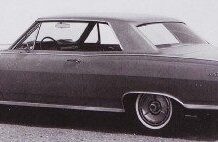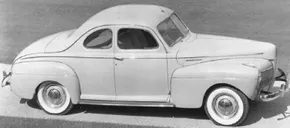
水星は何もないところから現れたわけではありません。 このモデルは、父ヘンリーが人気を博す何年も前に、中級ブランドの必要性を感じていたエドセル・フォードによってデザインされました。 最初のマーキュリーが 1939 年モデルの組立ラインから出荷されたとき、それらはポンティアック エイトの領域に真っ向から着陸しました。 オールズモビルはそのすぐ上に位置します。 そこが一番甘いところですね。 それはまさにエドセルがこのブランドを望んでいた場所であり、ディアボーンが標準的なフォードと高級なリンカーン ゼファーの間のギャップを埋めるためにそれを必要としていた場所だ。
Volume didn’t match General Motors’ divisions overnight. しかし、マーキュリーは初日から利益を上げました。 1940 年代初頭の年間生産台数は約 80,000 台でした。 そのランキング(業界で 12 位または 13 位)は二の次ではありません。 これは戦略的な勝利です。 このブランドは、ヘンリー・フォードが無視していた大きな価格差を捉えることで、新たなビジネスを獲得しました。
エンジンの進化とパフォーマンス
初期のマーキュリーの心臓部は 239 立方インチの L ヘッド V-8 エンジンでした。 1948 年まで生産され続けました。 フォード「V-8/85」を引き延ばしたものと考えてください。 Same stroke. Larger bore. 出力は95ブレーキ馬力から始まります。 1942 年までに、その数値は 100 馬力にまで上昇しました。 レーシングエンジンではありませんが、怠惰ではありません。 マーキュリーは、その神話上の同名者である翼のある使者に匹敵する評判を獲得しています。 改造されたストックユニットは V-8 フォードを上回りました。 They regularly cracked 100 mph.
デザインとスタイリングのヒント
プラットフォームのホイールベースは116インチです。 これは1939年型フォードよりも4インチ長かった。 余分な長さにより、同様の外観がより充実した「重要な」外観になります。 インストルメントパネルにはstrip-type instrumentsが使用されており、フォードのデザイン言語を多用しています。 しかし、gearshift told a different story マーキュリーはコラムマウントシフターを使用しました。 これは話題ですね。 ドライバーは新しいポジションに適応する必要があります。
1939 年と 1940 年のスタイルは、sharp, pointed prowが特徴でした。 フェンダーは綺麗な曲線を描いています。 ボディラインがシルエットを丸く仕上げます。 初期モデルには、2 ドアおよび 4 ドアの”beetleback” sedansが含まれていました。 notchback sedan coupeとコンバーチブルクーペがラインナップを完成させます。 価格は916ドルから1018ドルです。
1940 年に、マーキュリーはコンバーチブル セダンを追加しました。 価格は 1,212 ドルです。 それはその時代で最も重く、最も高価な水星でした。 しかし、4ドアコンバーチブルは勢いを失いつつある。 需要が落ち込む。 フォードは 1941 年にこのモデルを放棄しました。 生産されたのはわずか約 1,150 台でした。
The 1941 Shift and 1942 Facelift
In 1941, the range was expanded to seven cars. There will also be two- and four-seater coupes. The same applies to business coupe and wooden station wagons. The styling follows the Ford formula, but looks thicker. The grace of 1940 are gone forever. The wheelbase has been extended by 2 inches. The fenders are higher and bigger. The divider-bar grille is a center stage. The parking lights have been moved to the upper part of the fender.
In 1942, it underwent a significant facelift. A 100 horsepower engine was now standard. Mercury also introduced the Liquamatic, a semi-automatic transmission available for an extra charge. This is a disaster. The system is tricky. It was canceled immediately. World War II further limited vehicle production to less than 23,000 units, and the United States’ involvement in the conflict halted civilian production altogether.
Chrome is trending. At least until the government seized it for the war effort. All 1942 Mercurys were equipped with a wide, shiny two-piece horizontal grille. Two chrome strips surround each fender. A bright, full-perimeter molding runs along the waistline. The parking lights have been moved in, still on both sides of the sharp hood. I could see it was very busy. Very detailed. Model year 1941 was busier than 1940. Model year 1942 was busier than 1941.
Models manufactured at the end of 1942 lost the chrome decorations. These “blackout” Mercurys are now prized by collectors for their austerity.
The transition period after the war and the change of leadership
Edsel Ford died in 1943 of complications from stomach cancer. Henry Ford Sr. lived until 1947. Before the war ended, Henry Ford II returned from the Navy. He took over the Ford Motor Company. He immediately began civilian production. In 1946, Mercury sold about 86,600 cars, which was 10th in the industry.
Dearborn delayed the release of its first all-new post-war model until 1949. The interim Mercury is based on the 1942 design. The Inboard parking lights remains. The Two-band fender moldings remains the same. The hood was blunted. A new vertical-bar grille replaces the horizontal one. A large “Mercury Eight” nameplate hangs from the grill. The Mechanics has not changed. Liquamatic never returned.
The introduction of the Ford 239 V-8 in 1946 didn’t help the Mercury. The differences between brands are blurring. The gap has narrowed.
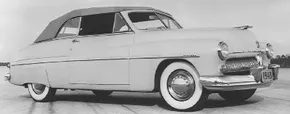
短命アスリートの実験
ビジネス クーペは 1946 年のラインナップから姿を消し、マーキュリー スポーツマン コンバーチブルに置き換えられました。 見た目はフォード版と似ていますが、構造は異なります。 メープルまたはイエローバーチのフレームがマホガニーのインサートをサポートします。 それはただ見せるためだけではありません。 木は構造物です。
この構造上の選択は、まさに悪夢を生み出します。 標準フェンダーでは後部のカーブをクリアできません。 そこでマーキュリーは 1941年セダンデリバリー用フェンダーに交換しました。 木材を形状に合わせて成形しました。 継手が美しく仕上がり。 複数層のワニスが作品を保護します。
美的には成功でしたが、商業的には失敗でした。 わずか 205 台しか製造されませんでした。 価格は致命的です。 マーキュリーの価格は 2,209 ドルで、フォードより 200 ドル高い。 フォード車は 1948 年まで売れ続けましたが、マーキュリーの生産は 1946 年に終了しました。
組織の再編と資材の復活
1947年带来了比车身更大的变化。 亨利·福特二世组建了リンカーン・マーキュリー部門。 目标是自治。 与通用汽车的各个部门一样,林肯和水星可以一起竞争更加激烈。
資材が再び生産に回。 铝出现在活塞和引擎盖装饰品中。 インテリア金具やグリルフレームにクローム装飾。 战时的匮乏结束了。
ベルトモールディング向前移动,终止于整流罩前方。 战后通货膨胀受到严重打击。 シリーズ全体の価格が平均450ドル上昇。 価格帯は1450ドルから2200ドルに。 直到二月份才开始生产。 生産台数は前年並み。
1948年モデルの継続
1948 年的模型基本上被时间冻结了。 シリアル番号の変更と2ドアセダンの廃止を除き,没有任何变化。 销售从 1947 年 11 月持续到 1948 年 4 月中旬。その後1949年モデルが登場。
年間生産台数は約50,250台で推移。 那是平静的一年。 嵐前の待機状態。
1949年モデルの逆台形デザイン
In 1949, Mercury was presented with a new look. フラッシュフェンダー. “Inverted bathtub” shape. 1948-49年パッカードやハドソンを彷彿とさせる.
Dearborn designers worked on this style sporadically during the war. The wheelbase remains unchanged. ボディシェルが完全に一新. Mercury rejected Ford’s platform. 新型スタンダード・リンカーンとプラットフォームを共有. A last-minute change in post-war plans led to this change.
The results are huge. clean. Streamlined. The grille retains some of the ’48’s DNA, but is lower and wider. A bright decorative band runs along the entire length of the middle wing.
シリーズは1つ、ボディタイプは4つ. The coupe still exists. The four-door sports sedan has automatic rear-hinged rear doors. Convertibles still exist. A new two-door station wagon has been introduced that uses less structural wood than the previous four-door station wagon.
シャシーの刷新とV8の優位性
Underneath, 1949年シャシーは新境地を開拓. Fully independent front suspension replaced 従来の硬式アクスル. Thanks to the Hotchkiss traction system, the torsion tube is no longer needed, which reduces weight. At the back, the axle acts as an axle rotator, which rests on parallel longitudinal leaf springs.
The single crossbow favored by Henry Senior was eventually phased out.
Mercury regained the lead over Ford. The V-8 has a displacement of 255.4 cubic centimeters. It is powered by a dual gas chamber Holley carburetor. Power reaches 110 horsepower.
This is the first time a true 160mph performance level has been achieved.
An automatic overdrive is available for $97. It’s mated to a rear axle with a 4.27:1 base compared to the standard 3.90:1 ratio. The 1949 Mercury was an attractive purchase. Lincoln-like looks. The price is reasonable ($1979 to $2716). More power than Ford’s V8. Additional horsepower is needed to lift the 100 pounds of additional systems.
Buyers were paying attention. In the 1940s, the population was over 301,000. This is more than triple the Mercury’s previous best year. Sixth place in industry. Another record reading.
Steady growth and automatic transmission
Sales did not decrease in the following two seasons. Nothing has changed, but the momentum remains.
In 1950, almost 294,000 of them were sold. A new front hood chrome strip with the Mercury name can be seen on the nose.
In 1951, the number exceeded 310,000. A record year. Mercury again ranks sixth in the industry.
In the 51st century, the hood was kept, but a large semicircular crest was added. The grill bar becomes more visible. The parking light expands and returns to the gap between the front wheels. The rear fender has been extended with rounded corners and a vertical rear edge.
Horsepower increases nominally by 2 units. But the real news is the Merc-O-Matic Drive. It is a 3-speed fully automatic transmission. Developed in collaboration with BorgWarner’s Warner Gear division. Ford offers the same unit as the Ford-O-Matic.
The platform is solid. The design is bold. But transmissions have changed the way people drive.
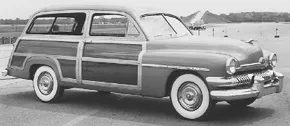
Mercury’s 1952 Pivot: Hardtops and the Limits of the Korean War
By 1952, Mercury had ditched the “suicide door” rear handles that characterized its early post-war identity. The line-up got tighter. You can buy a Sport Coupe hardtop or a more upscale Monterey hardtop. The Monterey dropped its predecessor’s fabric roof in favor of fixed glass panels and joined the ranks of the convertible and four-door sedan. The wagons also received a treatment: full steel frames with decorative wood panelling, in line with the industry’s cheap but effective aesthetic trend.
Under the skin, Mercury was still wearing Ford clothes. The bodies were shared, but the Mercury retained a three-inch longer wheelbase, sitting entirely in front of the hood. The styling was clean, tight and had a passing resemblance to Lincoln’s 1952 new look. It didn’t hurt.
Power came from a flathead V-8. The compression was increased and the power increased to 125 hp without changing the displacement. It was reliable. It was familiar.
But the Korean War cast a long shadow. Material shortages and production restrictions hit Detroit hard. Mercury managed 172,087 units. Eighth place wasn’t bad, but it wasn’t dominant either. They built cars, but the country built tanks.
1953: The two-series structure returns
The war ended. Production skyrocketed.
Mercury formalized their hierarchy for 1953. Two different series. The Custom series offered a hardtop, two-door sedan and a four-door sedan. The Monterey series was a premium class: convertible, hardtop, station wagon or four-door sedan.
Inside, the cabin remained a time capsule. The dashboard had large airplane-style levers flanking a crescent-shaped instrument cluster. It was trendy then. It looked outdated now.
Sales rose again to almost 305,000 cars. Still eighth place. Prices ranged from $2,000 for a regular two-door to nearly $2,600 for a Monterey station wagon. Money was moving again.
1954: Y-block and plastic roof failure
In 1954, there was a drastic change in technology. Mercury introduced its first overhead valve V-8. It was based on Ford’s new “Y-block” design. At 256 cubic inches it was not significantly larger than the old L-head flathead, but the architecture was modern. Short stroke. Five main bearings.
With a standard four-barrel carburetor, the power increased to 61 hp. Couple that with a low rear axle ratio of 3.90 and the car launched aggressively. The front suspension was also changed to ball joints, another Ford heritage.
Design has kept pace with technology. Wraparound taillights. A cleaner, more aggressive grille. Larger bullet guards in the front fender.
Then came the Monterey Sun Valley.
It was the result of Ford’s Skyliner tests. Hard roof with plastic surface. The theory was good: convertible airiness and hardtop comfort. The front half-ceiling was made of tinted plexiglass. Includes snap-on sun visor for sunny days.
The reality was a sauna.
Customers complained. The interior was baked. Sales were weak. In 1954, only 9,761 units were moved. The 1955 Montclair version fared less well, with just 1,787 units. The concept was interesting. The implementation was incorrect.
Total production in 1954 was about 260,000 units. Not a record. But the mood was optimistic.
1955: Record Highs and new dimensions
Mercury bet big on 1955.
They kept the basic 1952-54 shell, but wrapped it in a colorful new design. They lengthened the wheelbase. It was the first increase since 1941. 119 inches on sedans and coupes. Wagons stayed at 118.
They paired it with a more powerful V8.
The risk was worth it. Production broke records. More than 329,000 units rolled off the assembly line. Mercury eventually climbed the ladder, leaving behind the disasters of the Flathead era and plastic roofs. The stage was set for the brave tailfin years.
1955, 1956, 1957 Mercury cars
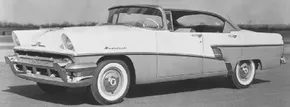
The 1955 Mercury lineup was dominated by the new Montclair series, which topped the list. Buyers can choose from a four-door sedan, hardtop sedan, convertible, or Sun Valley model. Below the side windows of each vehicle is a unique thin contrast panel outlined in bright metallic. This is the visual feature that makes your brand stand out.
The Monterey sits below the Montclair class and is available as a sedan, hardtop or wagon. The Custom series completes the lower part and offers the same body model as the two-door sedan. Regardless of trim level, all 1955 Mercurys shared several important upgrades. It featured Mercury’s first fully wraparound windshield, a revised version of the 1954 grille, hooded headlights, and a finish that couldn’t be ignored.
Under the hood, the Y-block V-8 grew to 292 cubic inches. Two versions were available: Custom and Monterey with 188 horsepower and Montclair with 198 horsepower. If you need more power in a smaller model, you’ll need to pair it with the optional Merc-O-Matic transmission.
By 1956, Mercury had fully implemented its “Big M” strategy and introduced the four-door Phaeton hardtop. This is an ambitious undertaking, but it feels a little unprecedented. The goal is simple. The idea is to stay competitive in the face of rising prices by offering a group of discounted prices called “Medalist”. These are two- and four-door hardtop sedans and sedans at the lower end of the mid-range price range.
But inflation is a cruel mistress. These “cheap” Mercs ended up being more expensive than the 1955 Customs ($2,250-$2,460) and not much cheaper than the better equipped 1956 Customs ($2,350-$2,800). Dealers are trying to push two-door sedans, but the numbers don’t lie. Medalist sales stalled at just 45,812 units. Meanwhile, the Custom, Monterey and Montclair models outsold the price leader by a 2-to-1 ratio. The Medalist was quietly dropped, but made a brief but disappointing comeback in 1958 to fill the space that would have been reserved for the new Edsel.
1956年モデルのスタイリングは前年の外観から一新されました。 メダリストを除くすべてのモデルは、対照的な色の領域を強調したジャジーなZ字型のサイドストリップを着用しました。 ツートンカラーのオプションも用意されており、通常はボディ下部が屋根の色と一致します。
マーキュリーはボディスタイルの数も拡大しました。 モントレーとモントクレアのモデルには、シーズン中期にフェートン ハードトップ セダンが導入され、1955 年中期のロールーフ ピラー スポーツ セダンに取って代わりました。 モントクレアのコンバーチブルで初めてカスタムコンバーチブルが利用可能になりました。 モデル Y V-8 は再び拡大され、排気量は 312 立方インチに増加しました。 出力は210馬力に跳ね上がり、235馬力まで調整可能です。 このより高い出力は、モントレーとモンクレーのトリムで標準となります。
1956 年は自動車業界全体にとって「息抜き」の年でしたが、マーキュリーはその傾向に逆行しました。 販売台数は約 328,000 台に達し、1955 年以来の成長率を維持しました。 プレミアム モントクレアは依然として驚くほど人気があり、1955 年の狂乱にほぼ匹敵します。 しかし、ミッドラインのモントレーは依然として家族を育てるのに真の場所です。
A dream car that isn’t big enough
The 1957 model was completely new and was marketed as “a dramatic expression of dream car design”. The concept was introduced in 1956 with the XM-Turnpike Cruiser show car, which featured new high-end, showroom-ready two- and four-door hardtop turnpike cruisers.
These cars are full of gadgets. The Turnpike Cruiser features a “skylight dual curve windshield,” a drop-down reverse-slant rear window, and dual air intakes with a tiny horizontal antennas over the A-posts. If that’s not enough, there is an optional “Seat-O-Matic”. The system automatically moves the front seats into one of 49 possible positions by turning two knobs.
Mercury also offers pushbutton automatic transmission controls, another nod to the “space age” aesthetic that characterizes the cruiser line. At the end of the season, a Convertible Cruiser arrived to commemorate Mercury’s selection as the 1957 Indy 500 pace car. All cars had Regalia sticker replicas. But despite all the bells and whistles, the cruiser failed miserably. They were not just expensive, $3,760 to $3,850 for a hardtop and $4,100 for a convertible, they were just too far out, even for a dawning space age.
In particular, the 1957 Mercury was equipped with a new 122-inch wheelbase and had a unique body. For the first time, Mercury was neither a “senior Fords” nor a “junior Lincoln.” This separation was also part of a strategic move in preparation for the 1958 Edsel series, which borrowed heavily from both brands.
The Monterey and Montclair lines lost station wagons entirely. Vans are divided into a separate series of six models. At the top of the mountain is the woody-look Colony Park, a four-door, nine-passenger vehicle. Below are metal-sided two- and four-door Voyagers, and three Commuters and various seat and door combinations. All models feature a pillarless hardtop roofline, which is all the rage among the big three automakers.
The styling matches the width of the “big M”, and it looks a little artificial in the box. At the front, there is a huge ツイン円円形发员, placed under a slim concave-shaped vertical slat grill.
Although the weight increased, so did the power. The 255 horsepower 312 V-8 became standard on the entire line, except for the Corvette. These heavy-duty vehicles are equipped with the 290 horsepower and 368 horsepower V-8s available as options on other models.
The market in 1957 was quite good, but there was nothing compared to the previous year. The number of sales units decreased to about 286,000 units, and the production ranking of the same brand dropped from 7 to 8. This is not encouraging considering that a completely new design was released in a year when sales were very good.
1958 年、1959 年水星汽车
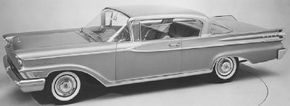
1958 Mercury: Year of declining sales and larger engines
The 1958 Mercury facelift tried to keep things understated. The style becomes quieter. Chrom steps back. But the market doesn’t care. The industry-wide disaster reduced production to 153,000 units.
1957 Mercury Convertible Cruiser is dead. Only 1,265 of them were built. Its sibling, the hardtop cruiser, was relegated to the Montclair sub-model. They moved badly. Fewer than 6,400 between them.
The medal winners’ medals will be returned for the last gasp. 2-door and 4-door sedans. Again, it flopped. Only 18,732 units were sold.
At the top is New Park Lane. Two hardtops. convertible. Some models are also available with Montclair or Monterey badges. Think of it as the spiritual successor to the Cruiser series. There are fewer tricks. It’s more serious.
Under the hood, it shared a huge V8 engine with the 1958 Lincoln. It’s a massive 430-cubic-inch and produces 360 horsepower.
Mercury also introduced Multi-Drive. It’s basically a Ford Cruise-O-Matic transmission. It also has a new 383-cubic-inch V-8. Chrysler introduced wedge-head engines around this time, but Merc’s 383 was a more oversquare. It is good in terms of torque.
This became standard throughout the series in 1958, except for the Medalist (which had a 235 hp 312) and the Parklane. The 383 was available with either 312 or 330 horsepower, depending on your tuning.
Sales in the mid-price category fell significantly. However, Mercury is still in eighth. Only 40% of the 1957 production was built. But there are warning signs. Rambler has overtaken the “Big M”. It closes the gap with Pontiac, Olds and Buick.
Mercury must be compact. Here comes the mediator. Now they just offer more of the same heavy iron.
The 1959 Mercury: Detuned for a Changing Economy
1959 年のマーキュリーズは、この傾向を継続しただけではありません。 彼らはそれを増幅させたのです。 体が成長しました。 ホイールベースは4インチ延長されました。
形状は正方形のままです。 しかし、それはより彫刻的です。 1マイル幅のグリルがフロントを占めています。 バンパーが大きいですね。 フロントガラスもリアガラスも大きいです。 57年から58年にかけてのリアフェンダーのスカラップには、より鋭い折り目がありました。
メダリストとターンパイククルーザーの名前は削除されました。 モントクレアとwagon lineupsは6モデルから4モデルに減りました。
エンジニアはパワープラントを調整しました。 それはfaint nod to an economy-conscious public.
1959 年のエンジン ラインナップは後退したように見えました。
* モントレー: 210 馬力 312 V-8。
* Park Lane: 345 馬力 430 V-8。
* その他: 280 馬力および 322 馬力の 383 V-8。
ボリュームは復元されません。 販売台数は15万台未満にとどまった。 期待されたリバウンドは起こらなかった。
振り返ってみると、1956 年以降の売上高の減少は理にかなっています。 マーキュリーは美しくて扱いやすい車を捨てて、ピカピカのガジェットを積んだ巨大な車を手に入れた。 景気が悪いと戦車は売れない。
同ブランドは1960年代の「ホットカー」に回帰する。 その時までに、必ず新たな成功が達成されるでしょう。
Entering the 1960s: The Comet Effect and Big Car Hangovers
1960 年には売上が大幅に増加し、271,000 台以上が販売されました。
しかし、大きな車を信用してはいけません。 これは、荷物を運ぶ新しいコンパクト マーキュリー コメット です。
4 シリーズの大型車製品ラインは残ります。 Two-ton heavyweights. Compound-curve windshields everywhere. エドセルが成功すれば、彼らはエドセルのように見えるでしょう。
A handsome facelift arrived. クロムが少し少ない。 すっきりとした凹面グリル。 控えめな「ガルウィング」リアフェンダー。
モデルの選択はよく知られています。
* クルーザー 2 ドアおよび 4 ドア ハードトップ。
* モントレー/モントクレアセダン。
※モントレーの2ドアセダン。
* パークレーン コンバーチブル。
※コミューター4ドアステーションワゴン。
* Wood-sided Colony Park hardtop wagon.
相変わらずユニークなシリーズです。 まだとても重いです。 建設コストは依然として高い。
1960 年代: More Mercury Models, Fewer Buyers
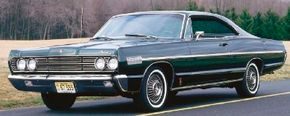
The 1960 Mercury lineup was defined by the paradox of luxury in an engine tuned for frugality. The brand offered three V-8 engines, all of which were carbureted for better fuel economy, though “economical” was a stretch at the time. The power of the familiar 312-cubic-inch engine in the Monterey and Commuter models was reduced to 205 horsepower. The 383 returned as the only 280 horsepower option. Meanwhile, the more powerful Lincoln 430 engine (310 horsepower) became standard on other models. Total production was around 155,000 units. But the real story is not about power. it was the shrinking footprint.
End of Independent Mercury
By 1961, “Big M” had lost both weight and money. It’s actually a luxury Ford with a wheelbase just an inch longer than its sibling. This is no accident. The Ford Motor Company was in dire need of production economies. The result is a car that is lighter, easier to handle and more fuel efficient. But this efficiency comes at a price.
The 1961 model year marked the end of Mercury’s unique chassis and body shell for four years. This marked the downfall of Henry Ford II’s “divisionalization” program in the mid-1950s. The ambitious plan aims to create a GM-style five-brand structure that includes Edsel, Continental, Lincoln and Mercury. Poor sales from 1957 onwards made it financially impossible to maintain the unique Mercury platform. Ford has returned to the brand’s original philosophy of shared bones, different skins.
The changes are part of a broader strategy implemented by Mercury. Since Comet in 1960, the brand followed industry trends and expanded into new size categories. Naming practices confuse buyers more and more. This symbolizes the mixed fortunes of Mercury in the 1960s. While names like Comet and Monterey have been around for decades, newer names like Meteor have appeared on completely different platforms.
Meteor: The Gap Filler That Couldn’t Fill It
In 1961, the first Meteor was introduced at the bottom of the full-size range. These included 2-door and 4-door sedans, as well as hardtops, with the “600” and higher “800” trim levels available. Prices started at a surprisingly affordable $2,535. The Meteor was designed to fill the void left by the previous year of the Edsel. It was cheap and readily available, and aimed squarely at budget-conscious buyers.
Above that, the Monterey continued its role as a premium Mercury. The collection included 4-door sedans and hardtops, 2-door hardtops and convertibles. The station wagon series returned to the traditional pillar design, and the 6- and 9-seat Commuter and Colony Park models returned. The design was more conservative than in 1960. The front grille was concave, the fins were vestigial and the side profile was rounder. The gimmicks of the ’50s were no longer in use.
Mechanically, the Meteor had a standard 223 cid Ford six-cylinder engine producing 135 horsepower. An optional V8 engine was also available with the Monterey and produced 175 horsepower at 292 cid. Overall, buyers could choose from 352 cid 220 horsepower, or the new 390 cid big block in 300 or 330 horsepower versions.
Despite the aggressive pricing, Meteor failed to conquer the market. It did outsold the Monterey, but not significantly. Ford decided to make structural changes. In 1962, the full-size Meteor was replaced by the “Monterey 6” model. The Meteor nameplate was carried over to Mercury’s new mid-level Ford Fairlane.
Intermediate Experiment
The new Meteor shares its chassis with the Fairlane, but looked busier. Although the names are different, the hardware is essentially the same. The Powertrains were shared too. Ford’s new small-block V-8s is the star here. 145 hp 221 cid unit or 164 hp 260 cid version.
Trim levels are getting more detailed. “Custom” means a upmarket midsize Meteor. “S-33” is a sporty model that uses bucket seats. A 2-door sedan from 1962. By 1963, it had evolved into a hardtop coupe. In 1963, station wagons such as the woody-looking Country Cruiser and the regular Villagers (named after the Edsel graveyard) entered the market.
No matter how unique the style or badges were. This Meteor didn’t sell as well as the Fairlane itself. Mercury dropped the name in 1964. They opted for the significantly updated Comet.
Mercury Comet
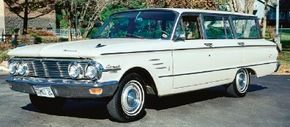
The compact evolution of #MERCURY: from the Falcon-based Comet to the Montego Muscle
Mercury’s first foray into the compact segment was a bit of a rebranding exercise. The original Comet was not built from scratch. It’s basically a Ford Falcon, with a squared-off roofline, double-row concave grille, and an elongated rear end with sloping fins and oval taillights. It was originally planned to use the name Edsel, but it was abandoned. The result is a car that isn’t fun to drive, but is easy to buy.
The dimensions of the wheelbase vary depending on the body style. The two- and four-door sedans ride on 114-inch bodies, while the wagon rides on the Falcon’s shorter 109.5-inch body. Sales data tell the truth. In the abbreviated debut season, sales exceeded 116,000 units. By 1961, sales reached a record 197,000 units. So much so that it cannibalized Mercury’s own new Meteor model. The Meteor struggled because Comet are the same size but much cheaper. Mercury quickly realized this mistake and kept the Comet as its only small car after the 1963 season. The strategy worked. Sales increased by 55,000 units in 1964 and remained at a high level until 1967.
The Budget Sport Compact Era
Early Comets cost less than $100 more than the equivalent Falcon, but offered a higher level of equipment. The market was shifting towards sport compacts and Mercury has introduced the S-22. A $2,300 bucket-seat two-door sedan arrived just as the craze began in 1961. That year, all Comet models were equipped with an optional 101-horsepower inline-six engine.
By 1962, the lineup had expanded to include a custom sedan, station wagon, and Villager. The Villager is a high-end option with imitation wood trim that helped boost sales. The following year, the Custom and S-22 series convertibles and the Sportster hardtop coupe were introduced.
In 1964, the S-22 squarish facelift arrived. The S-22 was renamed the Caliente, and best of all, buyers could finally order the excellent 260-cid small-block V8 in any Comet. Midway through the season, the Mercury added the Cyclone hardtop. This is the performance-oriented version of the Caliente, priced at $2,655. A 210-horsepower, 289-cubic-inch engine was standard, showing that Mercury wanted these compact cars to have power.
Moving Upmarket to the Intermediate Class
1966 年モデルは大きな変化をもたらしました。 コメットが初のオーバーホールを受け、小型車から中型車へと姿を変えた。 新しいフェアレーン プラットフォームに移行し、1969 年のコメットの特徴となる 116 インチのホイールベースを搭載しました。 この動きは、マーキュリーの購入者はフォードの購入者よりもお金を持っているため、ファルコンよりも大きくて頑丈に感じられるコンパクトカーを望んでいるのかもしれないという基本的なマーケティングの仮定を強調している。
新しいプラットフォームにもかかわらず、sales began to wane by the late 60s. 1967 年の製品ラインは、2 つの基本的な「202」セダンから始まりました。 残りのラインナップには、カプリ (「404」バッジの代わりにリンカーンから借りた名前)、カリエンテ、サイクロン、ステーション ワゴンが含まれていました。
The Montego Transition
In 1968, the Montego series based on the same wheelbase was briefly named Comet. Montego comes in three different series.
* Standard: Sedan and Coupe.
* MX: Sedan, coupe, convertible, wagon.
* MX Brougham: High-end sedans and hardtops with high-quality cloth upholstery and other luxury features.
The Comet nameplate was revived for a year as a price-leading two-door hardtop, but was shelved after 1969.
Midsize Muscle and NASCAR Dominance
Mercury didn’t just make family haulers. They jumped into the midsize muscle car market with both feet. The 1966 Cyclone GT hardtop coupe and convertible were powered by Ford’s 335-horsepower 390 cubic-inch V8. Buyers can add various suspension upgrades to handle the power.
The 1967 models were even more terrifying. 427 cubic-inch engines was optional, ranging from 410 to 425 horsepower. Street racers loved these configurations.
The 1968 lineup included a new base model and the GT Cyclone hardtop coupe. They have a curved lower body profile and racy full-fastback rooflines reminiscent of a Ford Mustang or Torino. Also, a one-year-only GT notchback hardtop. The 427 engine was reduced to 390 horsepower in 1968 to meet insurance and market realities, but its performance remained strong.
In 1969, Mercury released the Cyclone CJ. This model was equipped with Ford’s 428-cid big-block Cobra Jet engines. The GT and CJ have unique design features such as a black grille, special badging, body side paint stripes and a unique rear end treatment. When the CJ is equipped with the optional piston air intake system, it comes with a functional hood scoop for feeding the beast.
Horse racing’s pedigree is undeniable. Ford won the 1968-1969 NASCAR championship, and the Cyclones had one of the best performances of the era. A memorable highlight was Cale Yarborough’s victory in the 1968 Daytona 500 with an average speed of 143.25 mph. It turned out to be
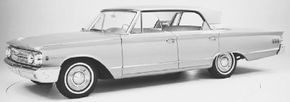
The evolution of #Mercury’s big cars: Monterey to Marquis
Large cars were the engine of Mercury’s business in the 1960s. Although the brands introduce busy compact products, full-size models have become the mainstay of the collection. Annual production had been around 100,000 units, but in 1965 and 1966 it unexpectedly set a record of over 165,000 units per year.
Of all the model names, only Monterey stayed the same for 10 years. The Montclair and Park Lane were revived between 1964 and 1968, but then disappeared again and were eventually replaced by the full Marquis series. With the Meteor now classified as an intermediate, Mercury reorganized its full-size fleet in 1962 around the Monterey, Monterey Custom, and Station Wagon. The only convertible went to the Custom series. The bucket seat craze was joined in the middle of the year by the S-55 coupe and convertible with a hard roof.
The exterior in 1962 was more lively than before. Tunnel-style taillights and an intricate convex grille define the look. All V-8 engines are back, as is the trusty “big six” engine used in the base Monterey and Commuter wagons.
1963 Breezeway and Big Blocks
The 1963 lineup retained the same 120-inch wheelbase, but was significantly redesigned. “Breezeway Styling” appears on closed models other than wagons. The car had a tilt-back rear window for ventilation, a trick borrowed from old turnpike cruisers and 1958-1960 Continentals. The wagon was shortened to two Colony Parks.
Mid-year, the S-55 sub-series was introduced with a handsome “fastback” two-door similar to Ford’s Galaxie Sports hardtop. Power is definitely a V-8. The 390 cubic-inch engine was available in the power range of 250-330 horsepower. Enlarged versions of the new 406-cid were available with 385 or 405 horsepower. At the end of the season, the 410 horsepower 427 was available as an option.
1964 Silver Anniversary
1964 年にシルバー アニバーサリーが祝われ、モントレー、モントクレア、パークレーン、コミューター/コロニアル パーク ツーリングの 4 つのシリーズ製品ラインが復活しました。 最初の 3 つのモデルは、ブリーズウェイの 2 ドアおよび 4 ドア ハードトップと 4 ドア セダンを特徴としていました。 モントレーにはピラー付きの 2 ドアバージョンも含まれていました。 スラントバック「マローダー」ハードトップクーペとセダンも用意された。 1963 年からは、凹面グリルに代わって凸面グリルが使用されるようになりました。
以前の 390 V-8 は継続されましたが、406 は廃止されました。 これらは 427 に置き換えられ、ワゴンを除くすべての馬力が 410 馬力または 425 馬力から選択できるようになりました。 ビッグ・インチ・Maraudersのショーは素晴らしかった。
1965年から1966年: リンカーンの影響
記録を樹立した 1965 年モデルでは、より大型のフルサイズのボディが実現しました。 「リンカーン・コンチネンタルの伝統」に従って、ラインは明確で直線的です。 新しい「トルクボックス」フレームは、騒音、振動、ハーシュネスを最小限に抑えるために、各ボディスタイルに合わせて調整されています。
このバンは現在、119 インチのフォード ホイールベースを搭載しています。 他のモデルは 123 インチまで成長します。 ブリーズウェイは 3 台の 4 ドアセダンにまで削減されました。 ハードトップはすべてファストバックになりました。 車両の安全性向上の要求により、Marauderの名前はあまり重視されなくなりました。
V-8 は 4 つの 390 エンジン (250 ~ 330 馬力) と 425 馬力の 427 エンジンで構成されました。 基本的な 1965 年の外観は、新しいダイキャスト製の「電気シェーバー」グリルとともに 1966 年まで継続されました。 ハードトップ クーペは、凹面バックライトを備えた「スイープ ルーフ」を備えています。
1967-1968: 改良された形状と最終的な S-55
1967年モデルでは、より丸みを帯びたボディサイドが、シャープなエッジのフェンダーとシームレスに融合しました。 このセダンは伝統的なルーフラインを誇っていますが、オプションのドロップダウン バックライトも提供しています。 ハードトップクーペは「より速い」ルーフラインを採用。
3つの新しい限定版最高級製品が到着しました。
* マーキス: 幅広の C ピラーと標準のビニール製ルーフ カバーを備えた 2 ドア ハードトップ。
* パークレーン Brougham クーペ。 **
* パークレーン Brougham ブリーズウェイ sedan。 **
Intermediatesはマーキュリーでスポーツカー戦争を繰り広げている。 したがって、バケットシートの S-55 ragtopとハードトップは、モントレー オプション パッケージの最終年となります。 生産台数は極めて少なく、コンバーチブルは 145 台、ハードトップは 570 台のみ生産されました。
1968 年に小規模なフェイスリフトが行われた後、ビッグ メルクスは 1969 年に完全に改良されました。 ホイールベースはステーション ワゴンでは 121 インチに、他のすべてのモデル (Marauderを除く) では 124 インチに増加しました。 これらのサイズは、1979 年の最初のダウンサイジングまで続きました。
1969 Predator and the decline of the 1970s
The collection has been reorganized around the Monterey base, the Monterey customization has returned and the full Marquis collection has been released. The Marquis lineup includes Colony Park station wagons, convertibles, base and Brougham sedans, hardtop coupes, and hardtop sedans.
The new Marauder has a shorter wheelbase of 121 inches. This powerful “Tunnelback” hardtop sold 14,666 units. Available in standard and X-100 trim, it shares the Marquis’ headlights and non-vented side glass used on most other models. The V-8 included the familiar 390 and a new 429-cid big-block producing 360 horsepower. 429 is standard on the Marauder X-100, but optional elsewhere.
The 1970s were mostly remakes, but minor changes were made to the appearance and equipment. Large sports cars are rarely seen these days. The Marauder followed suit, selling just 6,043 units in its final model year before disappearing.
Mercury Cougar Origins
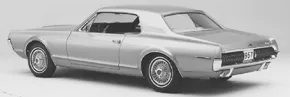
美洲狮:水星的高级小马
美洲狮不仅仅是另一款水星车型。 这是该品牌对野马的回应,但穿着燕尾服。 这款高档小马车于 1967 年首次亮相,提供更豪华的体验和更强的标准动力,价格比其蓝色椭圆形表弟贵约 200 美元。 起价为 2,851 美元。 该平台比野马 108 英寸的轴距长了 3 英寸,总轴距达到 111 英寸。 野马基础车型配备六缸发动机,而美洲狮则配备动力强劲的 200 马力 289 立方英寸 V-8 发动机。 对于那些想要真正肌肉的人来说,335 马力、428 立方英寸的 CJ 发动机于 1969 年作为选装件问世,并一直持续到 1970 年。
1969 年,敞篷车加入了这个行列,但从未流行起来。 那一年的销量跌至不足 10,000 辆,并于 1970 年跌至不足 4,300 辆。大多数买家想要轿跑车。
设计演变与配置等级
The 1967 and 1968 models are still the most visually striking. Clean lines, hidden headlights and an “电动剃须刀式格栅” define the look. The matching rear fascia features sequential turn signals, a trick borrowed directly from the Ford Thunderbird. Improvements made in 1969 made the car wider and longer. It has a 别克风格的侧身腰线, non-vented side windows and a 前脸特征变得模糊. Full-width taillights replace individual taillights. For the 1970 model year, the 前脸换为垂直条幅格栅.
配置等级至关重要. The XR-7 位居顶端, with a luxurious interior with leather upholstery and a 仿胡桃木饰板 full of gauges. The GT package offers a stiffer suspension for improved road holding and a standard 320-horsepower 390 V-8. In 1968, the GTE package added unique styling and a powerful 390 horsepower 427 engine. The 1969 Eliminator hardtop became the 最强劲版本 with the 428 engine and standard rear deck spoiler.
销量与遗产
Cougar sales are 虽不及野马, but they are 但表现尚可. The car 感觉更扎实 and more refined without compromising drivability. Production reached 150,000 cars in the first year, but dropped to about 114,000 in 1968, was around 100,000 in 1969, and dropped to about 72,000 in 1970. Today, each one is a collector’s item.
The Cougar 为这一十年画上句号 in which Mercury pursued Lincoln-level luxury and 重拾性能形象 of the late 40s and early 50s. However, the golden age soon ended.
As the 1970s progressed, Mercury became a clone of its Ford counterpart. Government mandates and 石油政治 force compromises between safety and fuel economy instead of performance. By 1980, Mercury returned to its original role as a more luxurious and expensive Ford. The difference is now in scale. Mercury offered five or six size classes instead of one or two parallel model series. The styling is more Lincoln than Ford.
1970年代的水星小马
ポニーカー戦争は止まらなかったが、状況は変わった。 排ガス規制が強化され、保険料が上昇する中、メーカーは高性能車とは何かを再考する必要に迫られている。 マーキュリーはマスタング II とカマロに注目して、市場がどこへ向かうのかを見極めています。 クーガーは進化するか、絶滅する必要があります。 進化することを選択し、あまりエキサイティングではないものの、より洗練されたパッケージを実現するために、ワイルドなエッジの一部を放棄しました。
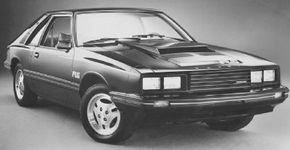
In the era of pony cars, there was a clear break between Ford and Mercury in the 1970s. While the Mustang remained compact, the Mercury Cougar began its slow march toward personal luxury in 1971. That year’s facelift lengthened the Cougar’s wheelbase by 2 inches, compared to the Mustang’s. As a result, the machine becomes larger and heavier. The convertible remained in the lineup until 1973 in both standard and XR-7 models. Production quantities are very small. Fewer than 2,000 of each convertible rolled off the production line, with the exception of 3,165 XR-7 convertibles produced in the final year of this generation.
This scarcity is not intentional. This was a reaction to the market crash. After 1970, the need for pony cars disappeared. Mercury didn’t shrink to match the shrinking Mustang, and in 1974 it became a light coupe based on the Pinto, and the Cougar grew in its place. It’s powered by a two-door chassis with a mid-size Montego wheelbase of 114 inches. Suddenly, the Cougar is no longer a sporty coupe. It’s a little thunderbird.
The irony? The Mustang II was actually designed by the Ford Lincoln Mercury Studio. But instead of badge-engineer a clone, Mercury stuck with the German-made Ford Capri. The company has successfully sold this car since 1970. It was a “mini pony car” like the Mustang II, but with better build and ride quality. But the Cougar continues to take on a new role as a mid-size personal luxury car candidate. Throughout 1976, It battled the Chevrolet Monte Carlo and Pontiac Grand Prix.
By 1977, the name was stretched thin. The Cougar completely replaces the Montego and is the only mid-level model that also included a wagon. The XR-7 name was only used on one model, the top-of-the-range coupe. Things reset in 1980. The Cougar is back as a downsized Thunderbird twin built on a special 108.4-inch version of the Fox platform.
In the intervening chaotic years, Ford redesigned the Mustang and Mercury finally wanted a piece of the action. In 1979, the American Capri was introduced. This is a true spiritual successor to the original Cougar pony car. It’s nearly identical to the new Mustang, except for a slightly more complex three-door hatchback body shape. This is the only body model available.
Engines matched the Mustang lineup across base and luxury Ghia models in the Mustang range. The Ghia trim paid homage to the Italian coachbuilder Ford bought, the Italian coachbuilder acquired in 1970. For those looking for more power, there’s the RS package. This is roughly equivalent to the Mustang’s Cobra option. Mercury avoided the term “Rally Sport”, presumably to avoid conflict with Chevrolet’s naming convention.
Not all Mercury muscle disappeared quietly. The Cyclone was a muscular midsize car with a standard 351 engine and an optional 429-cid V-8 that was discontinued after 1971. Its speed is impressive. Its swooping sheetmetal set it apart from the standard Montegos and Ford Torino GTs, which featured a prominent front end and the “gunsight” grille introduced with the 1970-1971 facelift. However, the muscle car market is in decline. Sales plummeted in that final season. In 1971, only 353 examples of the desirable Spoiler were produced.
Mercury Badge Engineering
The strategy of sharing platforms and changing brands defined Mercury’s identity in this era. After Capri, the brand relied heavily on common architecture. In the 1980s, Cougar returned to its roots with a platform that prioritized comfort over cornering. The Fox-based coupe has a lot in common with the Ford Thunderbird and Lincoln Continental. It’s a far cry from the razor-sharp handling of 1960s models.
In the 1980s, the Cougar XR-7 reappeared, but this time it was more of a luxury cruiser than a track-focused coupe. It had plush seats and the latest technology at the time, including a digital instrument cluster from the late 1980s. Performance versions like the GT offer a modest increase in power, but retain the comfortable long-distance characteristics that have become synonymous with the name.
By the early 1990s, the Cougar had carved out a niche as a personal luxury coupe. It competes with the likes of the Ford Thunderbird and Chevrolet Monte Carlo, but maintains Mercury’s unique identity through styling cues and interior materials. Introduced in 1989, the fourth-generation Cougar featured a sleek, aerodynamic design that departed from the boxy shape of the previous decade. Improved suspension and handling provide a more refined driving experience.
The fifth generation Cougar was launched in the late 1990s and shared its platform with the Ford Taurus. The move drew criticism from enthusiasts who felt the Cougars had lost their way. Currently, there are mid-size sedans and coupes and many more.
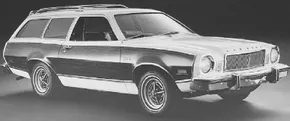
Badge Shuffle Era
For Mercury in the 1970s, “new model” was a loose term. Outside of the pony car industry, the industry’s growth strategy is based on badge engineering. The name Mercury Comet was given to Mercury in 1971. This is not a design from scratch. It was a redesigned Ford Maverick with a nose mainly borrowed from the Montego. Sold until 1974, the Comet was Mercury’s only entry into the compact segment after the 1973 oil embargo turned fuel economy from a convenience to a necessity.
Help was launched in 1975 and it came in two different flavors. The first is Mercury Monarch, the Granada-based replacement for the Comet. It was slightly larger and had a vertical grille that tried too hard to look premium. Another was the Mercury Bobcat. This is the Mercury version of the Ford Pinto. It’s so small and cute and totally derivative. In 1978, Ford replaced the Maverick with the Fairmont. Mercury followed suit with another similar offspring, Zephyr. None of these are original. But Mercury is becoming more competitive in a market that has been fundamentally altered by rising gas prices and changing consumer priorities.
Medium and full size: Heavy Lifters
While compact cars are catching up, midsize and full-size cars are still Mercury’s lifeblood. The most significant changes have been made in these cars. The mid-size car’s competitor from 1972 to 1976 was the Mercury Montego, which was almost a carbon copy of the Ford Torino and LTD II. From 1977 to 1979 the Montego was renamed the Cougar and used the same chassis construction.
Are these cars praiseworthy? Not much. It’s clunky, slow, and contains a lot of unnecessary chrome. But it looks better than the Ford counterpart. It’s a selling point.
In the “standard” cabin sat giants named Mercury Marquis and Monterey. By 1978, not much had changed in these cars. After 1974, the Monterey name disappeared and Marquis was solely responsible. The styling looks more and more like a Lincoln Continental, especially around the front fascia.
These are mammoths. Smooth. Reliable. Powerful V-8s ranged from the 400 cubic inch to the 429 and finally the Lincoln-derived 460. Although the interior is well equipped, choosing the interior is often a tasteful nightmares. Pillarless hardtop roofs disappeared after 1974 and were replaced by safer pillar frames.
Reduction and vision in 1979
In 1979, the marquis experienced his own “big shrink”. Ford shortened the wheelbase by 10 inches and reduced the vehicle’s weight by about 700 pounds. This is a groundbreaking move for a car that defines luxury with sheer mass. At the time, no one recognized the long-term value. Ford certainly wasn’t.
They were wrong. It turns out that the new miniature Marquis was surprisingly long-lived outliving the era that tried to bury it.
Looking back, the 1970s were a difficult time for Mercury. While the industry has given up on its performance by blaming the US government and OPEC, internal options are also important. Heavy and clumsy cougar. Confusing model name. Move into the compact and it feels like an expensive copy of a Ford product. The traditional foundations of large cars are being challenged by an energy-conscious world that no longer cares about gas-guzzling luxury.
But by 1980, the tide had turned. Capri is exciting. Zephyr is very useful. Cougar and Marquis have been given a new life, they have become lighter and sharper. The last 10 years haven’t been great, but things are finally starting to fall into place.
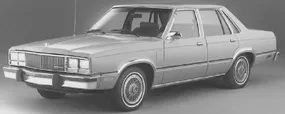
1980s Mercury Brand Analysis: Market Position and Model Performance
ブランド アイデンティティと販売の軌跡
1980 年代のフォード モーター カンパニーの社内戦略では、独自のブランド差別化が優先され、この変化はマーキュリーにとって利益となりました。 1986 年までに、フォードは主に洞察力のある経営とタイムリーな製品導入により、業界の収益リーダーとしての地位を取り戻しました。 この回復においてマーキュリーが重要な役割を果たしました。 生産量は、1980 年の 347,700 ユニットから、1984 年のピークの 500,000 ユニット近くまで着実に増加しました。 これは力強い回復でしたが、1979 年の 669,000 ユニット以上のブランド記録にはまだ及んでいません。
マーキュリーはデトロイトの主要な単一車名の中で上位にランクされたことはありませんでしたが、1983 年にはブランド史上最高の業績を達成し、総売上高で 5 位にランクされました。 この 10 年間の大部分において、このブランドは 6 位から 9 位の間で推移しており、1950 年代以来この範囲を占めていました。 このブランドの位置付けはフォードの製品ラインを反映していますが、価格帯は高く、装備の組み合わせも多様です。 1982 年になっても、そのスタイルはフォードと密接な関係を保っていました。 1983 年にマーキュリーがより特徴的なビジュアル アイデンティティを採用し、モデルを過剰に複製すると販売力が弱まるとゼネラル モーターズよりも早く認識して状況が変わりました。 マーキュリーを親会社やゼネラルモーターズのライバルと視覚的に差別化する取り組みは、売上の安定化に貢献した。
CapriとLN7の失敗
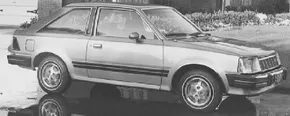
マーキュリーの販売台数はフォードのモデルごとの成功には及ばなかった, and the difference was evident in the performance of certain subcompact models. The Mercury Capri, フォード・マスタングに対抗するポニーカーとして位置づけられた, この苦闘を象徴しています。 While the Mustang gets more power and styling updates every year, キャプリの開発は停滞していました。 The 1982 model featured a “high-performance” 302-cid V-8 engine that produced 157 horsepower, but それがパフォーマンス面での唯一の進化でした。 While the Mustang received a facelift and reverted to a convertible body style, the Capri remained a basic hatchback coupe with a look for 1979. Its only significant update was a large “bubble-style” rear window, but the design choice failed to attract buyers.
キャプリのプロモーションも同様に不十分でした。 Production dropped from about 80,000 cars in 1980 to just 18,500 cars in 1985. By comparison, the Mustang sold over 156,000 units that year. The Capri was discontinued after the 1986 model year because it was too expensive to produce in such a small series.
The Mercury LN7, a two-seat sports coupe launched alongside the Ford EXP in early 1982, 同様の課題に直面しました。 Both cars were derived from the front-wheel-drive Ford Escort and Mercury Lynx platforms, which were replaced in 1981 by the older Pinto and Bobcat models. While the Escort and Lynx were commercially successful, その2座席版はそうではありませんでした。 The LN7 lacks refinement, performance and build quality compared to its Japanese rivals. 購入者の関心は薄く, and only around 40,000 LN7s were sold in the two years before it was retired in 1983. The Ford EXP did slightly better with the similar ‘bubbleback’ model in facelifted form.
小型车产品和市场背景
Challenges of a very small market segment
The core of Mercury’s small car strategy is based on the Lynx. The Lynx was introduced in 1981, replacing the Pinto and Bobcat, which struggled for quality and market acceptance. The Lynx is built on the Escort platform, offering improved reliability and fuel efficiency in line with consumer demands in the post-oil crisis era. However, Mercury struggled to capitalize on this platform to improve the brand’s reputation. The LN7’s attempt to create a niche sports coupe failed because it didn’t offer a compelling alternative to the established Japanese two-seater or the more popular Ford EXP.
デザイン言語の進化
1983 年までに、マーキュリーのデザイナーはフォードから独立してビジュアル アイデンティティを作成する任務を負うことになりました。 これには、マーキュリー モデルを差別化するためにグリル、ヘッドライト、トリムを変更することが含まれていました。 目標は、フォードのエンジニアリングを望んでいるが、より高級またはユニークな外観を望んでいるバイヤーにアピールすることです。 この戦略は、顧客がブランド アイデンティティに対してますます敏感になっていることを自動車メーカーが認識している、より広範な業界トレンドの一部です。 フォード マスタングが繁栄した時代
Fox Platform and Cougar Name
When Mercury changed gears in the early ’80s, the Cougar nameplate didn’t disappear. Instead, it entered a new era using the Fox platform, which shares a mechanical underpinning with the Ford Granada. The result is a sedan that looks more like a formal, upright executive cruiser than a muscle car successor. It weighs about 350-400 pounds less than the Monarch it replaces. The shape leans toward squared-off lines. It looked serious. Looks expensive.
Does the Cougar Badge still have a soul at this point? Maybe not in the traditional sense. But the market disagrees. Between the Cougar sedan and the Zephyr, Mercury sold over 80,000 units per year in 1981-1982. This is an impressive figure. This is survival. The market was in the toilet, but Mercury kept the lights on.
Marquis: Midsize Compromise
By 1983, Fox-platform Cougar were history. Mercury replaced it with the Marquis. Think of it like a Fairmont or Zephyr. However, it has better paint and a slightly less confusing identity. The shape is cleaner. This is a significant improvement, even if it looks eerily similar to a scaled-down 1983 Ford LTD.
Did anyone care? They didn’t. This name carries a lot of weight. By 1984, Marquis sales had reached 108,000 units. This is a 50% increase over the previous Cougar series. The big Mercurys is still known as Marquis. To prevent buyers from asking the same questions about two different cars, Mercury renamed its full-size model the Grand Marquis starting in 1982. This is one of the few major changes made to these cars in the last decade.
Big M: Profit Machine
The Grand Marquis is essentially a time capsule. Spacious. Quiet. V-8 American Family Cruiser. The tooling was old. Economics is new. When Ford amortized the original 1979 tooling in 1979, the Grand Marquis became the most profitable car in the entire lineup. Each unit sold puts more money in the bank than any other Mercury.
Why do people keep buying cars that barely changed?
The economy stabilized. Gas prices rose sharply in the late 1970s and early 1980s, but fell when a glut of oil hit the market. Suddenly, buying a thirsty V-8 sedan made financial sense again. Chrysler has killed off large rear-wheel drive vehicles. By 1985, General Motors’ Buick, Oldsmobile, and Pontiac divisions did the same. The mid-priced full-size car segment is quiet.
The Grand Marquis was the last man standing.
Updates in a Stagnant Market
The 80s were kind to the Grand Marquis because they required very little. The two-door coupe was discontinued after 1985. Maybe it didn’t sell. Maybe Ford just didn’t want to update the mold. In 1988, sedans and wagons had smoother front and rear edges. Fuel injection replaced carburetors on the 302-cubic-inch V-8. That was it.
Sales data speaks louder than any marketing brochure.
- 1983: About 96,000 units
- 1984: Over 148,000 units
*1985-1989: A steady run 110,000-160,000 units per year
“Big M” still offered the people what they want. A big, quiet V-8 cruiser doesn’t require an aerodynamics degree to buy.
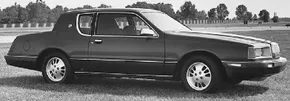
The 1980s were not kind to the old guard, but Mercury’s Cougar managed to claw their way back from the brink. What saved the nameplate wasn’t its boxy sedan lineage from the ’70s. The story ends with a downsized version of the XR-7, a blocky, ornate machine based on the Fox platform. By 1982, sales had fallen below 20,000 units. This was a massive miss.
Then came 1983.
Mercury took the skeleton from the Ford Thunderbird, shaved off some weight and applied a sleek, aerodynamic skin. As a result, overnight sales of this beautiful coupe tripled to almost 76,000 units. The momentum didn’t stop there. The following year, sales increased by another 55,000 units. For the rest of the decade, Cougar moved more than 100,000 cars a year. This was Mercury’s most significant success of the era, proving that a redesign could save a flagship model.
The Fox-Body Redemption
The third generation Cougar is basically an premium Thunderbird, but with a slightly more conservative bent. Mercury is aimed at buyers looking for a style without the ostentatious flair style. They achieved this with a near-vertical rear roofline and a suite of powertrains to suit everyone.
Underneath the metal, it still rode on the 1980-82 Fox platform, but Mercury didn’t just slap it together and ship it. The suspension has been carefully tuned to balance ride comfort and handling precision. Even a few options can make the interior surprisingly luxurious.
Powertrain choices were straightforward. The base engine is a 232 cubic-inch V6 cylinder. If you need more power, you can opt for the 302 cubic-inch V-8. This is a sensible package.
The XR-7 was made a comeback in 1984 and directly countering the Thunderbird Turbo Coupe. This model featured a supercharged 145-cubic-inch four-cylinder engine. It has beefed-up suspension to handle the torque and a 5-speed manual transmission as standard. That gearbox is rare for Cougar and has not been seen since the 1960s. Enthusiasts are appreciated the return of a true driver’s car.
Evolving the Package
クーガーは走行中ずっと美しい外観を維持しました。 1987 年、マーキュリーはモデルの 20 周年を記念し、新鮮さを保つために一時的なフェイスリフトを施しました。 変更はわずかですが効果的です。 大きな窓により視認性が向上します。 ノーズはフラッシュヘッドライトとよりアグレッシブでスタイリッシュなグリルを備え、より形が良くなりました。
機構的には、XR-7 はターボ 4 気筒エンジンを廃止し、新しい燃料噴射式 302 V-8 エンジンを採用しました。 155馬力を発揮しました。 ターボラグが依然として一般的な問題である時代において、これは歓迎すべきアップグレードです。
1988 年までに、このシリーズはよりスポーティになりました。 XR-7 は、単色の外装処理とデュアルエキゾーストチップを備えています。 ベースの V-6 エンジンも 20 馬力強化され、合計 140 馬力になります。 これはウォームアップ動作です。
Changes in 1989
All of this was just preparation for the big 1989 Cougar.
Built on an all-new platform shared with the T-Bird, the fourth-generation Cougar is lower, wider and more premium. The wheelbase has been extended from 104.2 inches to 113 inches. The design is softer and more aerodynamic, but retains its visual character with a vertical backlight and a vertical grille.
Mercury made a bold move with the engine. After the 1989 Thunderbird, the V-8 engine and the old turbo four-cylinder engine were discontinued. In its place were a pair of fuel-injected 232 V-6s.
The base LS model has a naturally aspirated version that makes 140 horsepower. However, the high-performance XR-7 is also available in supercharged versions with an intercooler. This unit produces 210 horsepower. It was the first supercharged six-cylinder engine in the United States since the Caesar Manhattan of 1954-1955.
The chassis matches the engine’s goals. It has fully independent suspension, adjustable dampers and other technical improvements. The result is a road car that rivals European premium coupes.
完美的代价
美洲狮已经完全变了。 驾驶体验很满意。 工程是健全的。 但销售却讲述了不同的故事。
1989 年销量下降至约 97,000 辆,次年进一步下降至 81,500 辆。 为什么? 价格。
新美洲狮很贵
Topaz: The predictable cousin of early technology
Introduced in 1984, the Mercury Topaz was the Zephyr’s front-wheel drive successor. This is essentially a redesigned Ford Tempo that shares the same platform with its Ford cousin and develops side by side. But Mercury is more than just copy and paste. They fine tune the details.
Dearborn designers worked hard to differentiate the Topaz from the Tempo. In the sedan version, the rear side windows were removed. Redesigned front and rear end. This isn’t a major overhaul, but it does show that Mercury is reshaping its identity.
Under the hood of the Topaz is a high-performance 2.3-liter four-cylinder engine. By 1987, four-wheel drive was also available. Even more impressively, beginning in 1986, Mercury offered an optional driver’s side airbag. This made the Topaz one of the first domestic cars to include this safety feature years before it became standard.
Sales follow a predictable pattern. 80,000–128,000 topaz pieces are sold annually. This is about half the amount moved by Tempo. That’s not a bad thing for a car that isn’t a high-end car, but it’s useful for Lincoln-Mercury dealers who want to fill showrooms with affordable compacts.
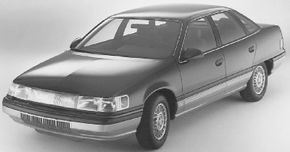
The Sable: Stepping Out of the Taurus Shadow
トパーズがフォロワーなら、セーブルは挑戦者です。 1986 年に発売されたセーブルは、基本価格 11,000 ドルから 13,000 ドルの中型マーキスに代わって登場しました。 すぐに運用が開始されました。 初動販売台数は96,000台近くとなった。 1987 年までに、その数は 121,000 件以上に急増しました。 1989 年、セーブルの販売台数は 130,000 台を突破しました。
トパーズと同様に、セーブルはフォードの定評ある前輪駆動のトーラス プラットフォームに基づいて構築されています。 ご好評いただいているベーシックデザインを踏襲しています。 しかし、Mercury stripped away the generic feel.
フォードはトーラスに 3 つのトリム レベルを提供していますが、セーブルには GS と高級な LS の 2 つしかありません。 マーキュリーも 1986 年以降、小型の 2.5 リッター 4 気筒エンジンを段階的に廃止しました。 これは賢明な措置です。 ほとんどのトーラス購入者はとにかく最小のエンジンを望んでいません。
代わりに、セーブルの購入者は 3.0 リッター エンジンと、1988 年に導入された 3.8 リッター「バルカン」V-6 を選択しました。 どちらも140馬力を発揮しました。 しかし、日常の運転では3.8リッターエンジンが断然勝者です。 3.0リッターエンジンのトルク160ポンドフィートと比較して、その大きな排気量は215ポンドフィートのトルクを実現します。 That extra grunt made a noticeable difference.
中はセーブルの方が高級感があります。 ダッシュボードとドアパネルには、より模造された木材が装飾されています。 しかし、本当の違いは外側にあります。
重要な設計の詳細
トーラスセダンは、「6 ライト」ルーフ処理を特徴としています。 セーブルは、より洗練された隠れた柱の外観を目指しました。 リアウィンドウはリアドアの後端まで完全に覆われています。 後輪のホイールアーチはフォードの丸いアーチとは異なり、上部が平らになっています。
それからフロントです。 セーブルにはユニークな「ライトバー」があります。 ランニングライトは中央の幅広の白いレンズの後ろにあります。 レンズがヘッドライトを照らし、夜間でもセーブル セダンと 5 ドア ステーション ワゴンをすぐに認識できるようにします。
これらは重大なエンジニアリング上の変更ではありません。 それらは巧妙で表面的な調整です。 しかし、彼らはうまくいきました。 最近の記憶の中で初めて、マーキュリーは自分の車のように感じられます。 とてもハンサムです。 It stood apart.
Improvements and golden anniversary
Sable never got his hands on a 1989 Taurus SHO. This is a carefully considered choice. Mercury buyers are drawn to luxury, not speed. Instead, a reasonable update was made.
In 1990, Sable sedans were equipped with anti-lock brakes. A driver’s side airbag is now standard on all models. The dashboard has been ergonomically redesigned. New options include a compact-disc player. A tilting steering wheel is standard equipment.
In 1989, Mercury celebrated its Golden Anniversary. The lineup is very strong. The stunning new Cougar flies the performance flag. Topaz has been updated. The Grand Marquis remains evergreen. Sable sells well.
Total domestic sales are approaching 500,000 units. This number does not include “outsourced” products such as Tracer. This is a smashing figure.
Mercury has a history of mistakes. There are times when it is difficult. But in its first 50 years, it produced some of America’s most popular cars. On the eve of the second half-century, it happened again.
Then the music stopped.
Domestic sales in the calendar year 1991 fell to around 309,000 units. The reason was the country’s severe recession. It lasts for 3 years. The easy money was gone.
Villager: Late to the party, but willing to stay
Mercury didn’t exactly take off in the early 1990s, but it held true. Despite the general market downturn, Mercury managed to take sixth place from Dodge in 1993. By 1994, this spot was secured with nearly 387,000 units sold. That’s a respectable return for a brand running on fumes and shared spare parts bins. At the time, Mercury had only two models that were not directly adopted by Ford. One was a disaster. The other was the Villager.
The Villager was released in 1993 as Mercury’s first minivan. It looked familiar. It should have. It was essentially a rebadged Nissan Quest, built on the same platform and assembly lines. Chrysler had dominated the segment for ten years with the Caravan and Voyager. The villager was late to the fight. With a wheelbase of 112.2 inches and an overall length of 189.9 inches, it sits between the Dodge Caravan and the extended Grand Caravan. Front wheel drive. Standard geometry for family hauler.
But it wasn’t just a clone. The design was tighter. Cleaner. Some said it was more fashionable than the boxy Chrysler models. It had four-wheel antilock brakes as standard, a Chrysler feature that was optional or part of expensive packages. Mercury didn’t mess around with cheap entry-level models. There were no four-cylinder manual transmission entries to four-cylinder manual transmissions, diluting the brand. You can choose from GS or luxury LS trim, both powered by a 3.0-liter single-overhead-cam V-6 engine that produces 150 horsepower and is mated to a four-speed overdrive automatic transmission.
The chassis was the real differentiator. The all-coil suspension gave it a ride that resembled a sedan more than a van. The handling was sharper. And then there was the third row. It had a sliding three-seater bench that could be track along built-in floor rails. Move it up and it replaces the removable two-seat center bench. Slide it halfway and you have the cargo volume behind it. Clever engineering.
catch? The Nissan Quest was identical underneath. The only visual differences were an illuminated “light bar” reminiscent of the Mercury Sable and minor trim changes. Both were built in Ohio, a joint venture that allowed Ford to influence switchgear and interior materials while Nissan did the heavy lifting.
Buyers didn’t care about Japanese origin. Value was important to them. Base prices ranged from $16,500 to $22,000. A conscious production focus favored the Mercury, pushing Villager sales past the Quest by a 2-to-1 margin in 1993. Nearly 109,000 units moved off lots. It was certainly only a quarter of Chrysler’s total. But for a newcomer it was solid. And it was pure profit for L-M dealers.
In 1994, Mercury added the Nautica trim. Leather interior. Captain’s chairs in the front and middle. A blue and cream color scheme that screamed “sports car lifestyle” despite being a minivan. Nissan got more Quests this year, reducing Villager sales to just under 62,000. Driver’s airbags came as standard. Passenger-side airbags were a no-show, leaving Mercury behind Chrysler in safety technology. In 1995, production fell again as competition intensified and prices fell.
Capri: The convertible that couldn’t change anyone
If the Villager was a late entry, but the second unique Mercury of the era was a mistake from the start. Capri. It was released in mid-1990. It was built in Australia. It was a two-seater convertible. And it was only sold in North America.
It ran on Mazda’s small 323 platform. Front wheel drive. Four-wheel disc brakes. Independent rear suspension. Airbag on the driver’s side. optional liftoff hardtop. The mechanicals were proven. The marketing was not.
The base model had a 1.6-liter four-cylinder with 100 hp. Or step up to the XR2 with its 132 horsepower turbocharged engine. The price was attractive. $13,000 to $15,000. Affordable fun.
It didn’t work.
The styling was dumpy. The build quality was indifferent. And it had a competitor that beat it in every important way: the Mazda Miata. The Miata was prettier. It felt more authentic. It featured premium Japanese craftsmanship. And it hardly costs more.
In 1991, Capri sales peaked at around 21,200 units. Then they disappeared. Mercury kept it alive until 1994, adding a bit of a facelift and finally adding a standard passenger side airbag. Too little, too late. The name was cursed. The product was flawed. And the market had already decided it didn’t exist.
Mercury strategy in the early 90s: development of Tracer and sables
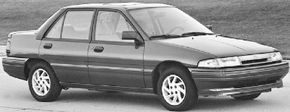
The early 1990s was a time when Ford and Mercury lived closely side by side. The brand typically reflects the design cycle of the parent company, but with significant changes. Introduced in 1991, the subcompact Tracer was completely redesigned to reflect the Escort’s new shape. Two years later, the Grand Marquis received a facelift to match the Crown Victoria, and the Sable was redesigned to match the Taurus.
However, Mercury didn’t just clone Ford. They made a special call that deviated from Dearborn’s strategy.
The 1991 Tracer is a good example. There is no hatchback version, which is a hallmark of the Escort. Instead, buyers got a five-door station wagon and a four-door notchback sedan. This sedan preceded Ford’s own sedan by a full year. This body style became the basis for the sporty Mercury Tracer LTS model.
Under the hood, the Tracer LTS uses Mazda’s twin-cam engine, just like the Escort GT. However, the appearance tells a different story. The “light bar” pattern on its front became the Mercury signature. In the affordable Tracer LTS, this light bar is purely decorative and does not emit light. By 1993, these cosmetic cues trickled down to the base model. That same year, Mercury adopted Ford’s “one price” marketing strategy. The base model with air conditioning and an automatic transmission costs $11,665.
Safety soon followed. A driver’s airbag was added to the 1994 model. ABS is optional on the LTS trim, which is rare in this class. In 1995, passenger airbags became standard equipment. The same year also saw the introduction of a cheaper “Trio” package for the base sedan, which included a rear spoiler and aluminum wheels.
Sales figures tell a grim story. Tracer never challenged the superiority of the Escort. Sales are still a fraction of Ford’s equivalents. In a market full of small cars, many buyers may not even realize that Lincoln-Mercury dealers have small cars for sale.
Sable played better. Sales remained stable both in absolute terms and as a share of Taurus production. In fact, Mercury was the first to offer a passenger airbag. It was introduced as an option in the 1992 facelift and later became standard equipment.
There is no direct equivalent to the powerful Taurus SHO. Mercury doesn’t mean maximum performance. However, in 1993, front seats and a center console became available as new options for the LS sedan. It became standard equipment from the 1994 model year. At the end of that season, Mercury introduced a sportier LTS version. It has a leather interior and a more “European” look.
Production statistics reflect the stable position of midsize presence. Sable sells between 116,000 and 137,000 vehicles annually. The only exception was the recession-stricken Model Year 1991, when production was just over 96,000 units.
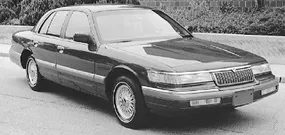
The great marquis and the end of an era
The full-size Grand Marquis proves it still has legs. The 1992 redesign brought more than just a new look. In the mid-1990s, it revitalized the entire Mercury brand’s volume. In fact, the aerodynamic “Big M” outsold its sibling the Ford Crown Victoria in the 1992 model year, selling more than 163,000 units, nearly 10,000 more. After this peak, sales stabilized at around 100,000 units per year and then fell slightly in 1993 to just over 90,000 units.
Mercury didn’t pretend the Grand Marquis was a sports car, but the 1992 update was serious engineering. It shares the same bones as the Crown Victoria, but with unique styling cues such as a simpler grille, traditional four-light roofline and sable-inspired taillights. Under the hood is Ford’s new 4.6-liter “modular” V-8 engine. The chassis has been completely redesigned for rear-wheel drive dynamics. Standard equipment included all-disc brakes, with ABS available. If you need more power, add dual exhausts to the Handling and Performance package, which increases output from 190 horsepower to 210 horsepower.
Mercury had abandoned big wagons, leaving the GS and LS sedans to carve out a conservative niche. For a mass-market car that values reliability over excitement, the Grand Marquis had a surprisingly long and profitable life until the early 1990s.
Mercury Cougar: Slow fade
While other Mercury models gained attention, the Cougar lost its soul. After 1990, interest value plummeted. The buyer profile had shifted. Like Thunderbird owners, potential Cougar customers are less interested in sporty performance and more interested in getting the most luxury per dollar.
Mercury responded to this reality in 1991. The uplevel XR7 dropped the supercharged V-6 and five-speed manual transmission. It was replaced by a naturally aspirated 5.0-liter (302) V-8 engine that produced 200 horsepower and was mated only to an automatic transmission. This V-8 also debuted as an option on the base LS model, replacing the unchanged 3.8-liter V-6. The bonnet, headlights, grille and rear panel have undergone minor changes.
1992 was a disappointing year, especially since it was the Cougar’s 25th anniversary. Sales fell by more than 13,000 units to less than 50,000 units, half of the 1989 redesign. The anniversary special was a disappointment, sticking to the base LS trim, offering only a single-tone paint job and BBS alloy wheels as a differentiator. Mercury did not heavily promote the car, perhaps because the $16,000 to $22,000 segment was crowded with more desirable coupes.
Then came a bizarre spike. In 1993, sales nearly doubled to 81,500, but the car remained largely unchanged, and the XR7 lacked a driver’s airbag.
1994-1995 Cougar Refresh
A major update in 1994 gave the XR7 a slightly different look front and rear, but not a huge improvement. The real improvements lie even deeper. A redesigned dashboard with dual airbags as standard and a new optional traction control system (ABS is now mandatory). There were significant changes to the engine lineup, with the pushrod 5.0L V-8 replaced by a new single-cam 4.6L “modular” V-8.
Despite these upgrades, the base price remains as low as $16,260. This pricing strategy may frustrate early buyers, but it can keep costs down. result? The sales volume fell to approximately 76,000 units. By 1995, the product range was reduced to just the XR7, and sales continued to decline. A far cry from the exciting pony cars of the 1960s, the Cougar is simply a traveler in the jungle of personal luxury.
The Topaz: Fleet Favorite, Retail Afterthought
The Mercury Topaz was never the definition of excitement, and the Compact was boring until its end in 1994. Its popularity peaked in 1992, when the entire range featured a sable-style “light bar”. The sporty LTS sedan and XR5 coupe come standard with the Sable’s 3.0-liter, 135-horsepower V-6 engine.
The increase in performance was minimal, and the all-wheel-drive option was discontinued that year due to buyer apathy. For the 1993 model year, the Topaz was further diluted by offering only two- and four-door versions of the GS at “value” prices and minimal standard equipment. A driver’s side airbag also costs extra and is only available on base four-cylinder models with the optional automatic transmission.
The appeal of the Topaz is similar to that of the Ford Tempo, with rental fleets preferred it over retail buyers. This explains the steady sales of 80,000 to 100,000 units per year from 1990 to 1993. It was vanilla ice cream. Not memorable, but good enough for many.
By the mid-1990s, Mercury was bleeding relevance. The Topaz has become obsolete, leaving a gap in the compact segment that Ford’s new Contour looks to fill. Enter the Mercury Mystique. This isn’t just a rebranded Contour. This is a carefully designed attempt to add a touch of luxury to the economy sedan class.
Introduced in 1995, the Mystique had the distinct advantage of standard equipment. Ford offers core features on higher trims, while Mercury offers a full center console, tachometer and power mirrors on GS models. Prices for the GS start at $13,855, making it $545 more expensive than the comparable Ford Contour GL. The LS trim raises the price to $15,230 and adds luxury.
Basically, it’s a pure European platform from Ford. Mystique is built on the Mondeo architecture and drives better than most domestic compact cars. The steering is precise, the body control is tight and the ride is downright comfortable. It feels very solid. The fit and finish of the interior is a step above the typical mass market interior.
But there’s a problem. The base 2.0-liter inline-four engine produces a mediocre 125 horsepower. Good for commuting, but not for driving. The real magic happens when you choose the new 2.5L Duratec V-6 engine. The 170 horsepower engine makes this sedan a true fast sedan, and its smooth power delivery makes the Mystique feel larger and more refined than its footprint suggests.
However, the rear seats are a compromise. Adults complain about legroom and headroom, especially in the V-6 models, as the transmission tunnel is a bit intrusive. It is very narrow. But for a car in this price range, the sacrifice of a smooth, sloping roofline is understandable.
So why did it fail?
Buyers weren’t biting. The Contour sold okay, but not enough to keep the Mercury name. Ford tried to restore the Mystique in later years. They redesigned the seat back. They adjusted the back seat cushions. They tuned the suspension to better emulate the European Mondeo. The exterior has also been renewed. Nothing stuck. The Mystique was withdrawn from the market after the 2000 model year, but this was due to a loss of brand identity.
The End of the Line for Tracer
「ザ・シェイプ」が残念なら、「マーキュリー・トレーサー」は幽霊だ。 トレーサーは 1997 年に再設計され、本質的にはフォード エスコートに異なるバッジと若干高級なトリムが施されたものでした。 これは非常に効率的です。 信頼できます。 強力な110馬力の直列4気筒エンジンを搭載し、5速マニュアルトランスミッションまたは4速オートマチックトランスミッションと組み合わせられます。
トレーサーは、高性能で実用的な小型車を求める購入者にアピールします。 多くのライバルよりも優れた道路マナーと高いインテリア品質を提供します。 しかし1999年までにフォードはエスコートをフォーカスに置き換える準備を進めていた。 マーキュリーはトレーサーの代替品をわざわざ作成しませんでした。 ブランドの売上は減少しており、エントリーレベルのセグメントは利益率が低すぎて気にすることができないと考えられていました。
So the Tracer vanished. No successor. Just silence.
The Ghost of the Cougar
マーキュリー「カブ」クーガー に触れずに、1990 年代後半のマーキュリーの衰退について語ることはできません。 初代クーガーはポニーカーで、マスタングやファイアバードに匹敵するスタイリッシュなクーペでした。 1990 年代半ばまでに、クーガーは小型化され、フォード トーラス プラットフォームをベースとした前輪駆動の高級クーペとして生まれ変わりました。 とても快適です。 洗練されてきましたね。 しかし、それには魂が欠けている。
愛好家たちはそれを「カブ」と呼んでいます。なぜなら、その祖先を小さくして水で薄めたバージョンのように感じるからです。 これはスポーツカーではなく、豪華クルーザーです。 V-6 エンジンはスムーズですが、精彩に欠けます。 その扱い方は痺れました。 派手になりすぎず、クーガーの「イメージ」を求める人のための車です。
フォードは、より攻撃的なスタイルとわずかに強力なエンジンを備えたクーガーの後期モデルに華やかさを注入しようとしましたが、根本的な問題は残りました。 これは
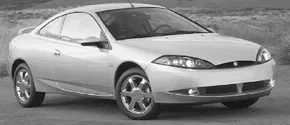
By 1997, sales of the last generation Cougar had dropped to just over 35,000 units. This is less than half of the sales four years ago. The market has clearly given up on the big coupe segment. The base package still features the aging Thunderbird chassis, which looks tired after nine model years.
In 1994, Ford replaced the old 5.0-liter V-8 with a modern 4.6-liter “mod” unit. This is bittersweet. The new engine only offers 10 more horsepower, but significantly less low-end torque. The base V-6, on the other hand, was a 1980s pushrod model that failed to excite buyers who still expected something special from the XR7 badge.
Ford was focused on the new Thunderbird, but Mercury had other plans. Although they built the Cougar, no direct Ford counterpart. This is a 1999 model.
A Front-Wheel-Drive Departure
The new Cougar is a hatchback coupe. It sat on the Contour and Mystique platform. So it’s front wheel drive. It was the smallest Cougar ever built.
Mercury’s style is adventurous. Reviews were mixed. Timing, however, was fortuitous. The demand for compact high-performance coupes is growing. The wheelbase is relatively long for a car of this class. This provided a decent ride quality. Suspension calibrations were adept. The handling is sharp.
The standard engine is the Mystique’s 125-horsepower 2.0-liter four-cylinder twin-cam. Most buyers opted for the optional 170-horsepower Duratec V-6. Only $500 more. Provides excellent performance. This configuration makes the little Cougar a budget-friendly competitor to its Japanese rivals.
Consumer Guide was not impressed. They had a lot to criticize. Other critics responded more positively.
End of line
A Cougar S with a 195 horsepower V6 engine was originally planned for 2000 but never materialized. The reason is simple. Sales peaked early. Nearly 57,000 units moved in calendar year 1999, but the number has since decreased.
The model was discontinued after 2002. There were no major changes during that time. In 2001, only minor changes were made.
Throughout its run, the V-6 Sport package was a standout. It was sold as an accessory in 2001, but became a stand-alone model in 2002. The package included:
- Wide tires with 16 inch rims (from 15 inch)
-4-wheel disc brakes (standard on all 2002 models)
-fog light - Grippier seats
- Rear spoiler
Antilock brakes, traction control and front side airbags are available. Only the V-6 was included.
Later in the game, Mercury offered cosmetic packages. The C2 and Zn packages became available in 2001. The XR and 35th Anniversary packages became available in 2002.
The XR package costs $950. This includes 17-inch wheels, high-speed tires, and special interior trim and body add-ons. Jack Roush, Ford’s veteran racing specialist, is recognized for his work.
The 35th Anniversary package is available for $1,195. It featured a specific rear spoiler and a dummy hood scoop. There are also chrome wheels and a stiffer sports suspension. Not a great birthday present. But the Cougar stayed on long enough to celebrate the occasion.
Mercury lost interest in the small Cougar soon after it was its press introduction. Late night TV host and car enthusiast Jay Leno was used to promote the car. This is understandable if you look at the early collapse in sales. The competition is fierce. The Honda-built Acura RSX is a big threat.
The main reason for Cougar’s demise was the cancellation of the parent Contour and Mystique after 2000. The Cougar became a platform orphan. Sales volumes were too low to cover manufacturing costs.
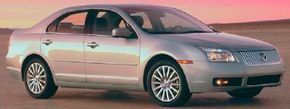
The slow death of #Mercury: Villager, Mountaineer and the end of an era
The Mercury Villager didn’t just disappear. Abandoned.
By 2003, the brand had lost its identity and became the badge-engineered afterthought for Ford. But the bad news started early in the lineup.
Take the 1999 Villager redesign for example. This is the van’s first major update since its introduction in 1993. Nissan and Ford tried to shake things up. Length added 4.5 inches. They added 140 pounds of dead weight. Finally, a left-hand sliding rear door was added as standard equipment.
It should work.
To combat inertia, we installed a new 170 horsepower V6 engine. This doesn’t help. The improved Villager is heavier than the newer, longer Ford Windstar. It also lags behind the Chrysler minivans that buyers actually buy.
Buyers want electric sliding doors. They want front airbags. The villagers had neither. It never would.
So it sits there. An also-ran.
When Ford and Nissan decided to end the joint venture in late 2001, the Villager was already dead in the water. It just didn’t know it yet.
Mercury Meltdown
By 2001, Mercury itself looked like a corpse.
Sales dropped significantly. 1999 was a strong year, with 438,000 units sold. Then in 2000, sales fell by 60,000 units. By 2001, the number was less than 311,000.
Analysts blamed the economy. They were referring to 9/11. They pointed to a boom cycle ending.
But many in the industry are looking on the dark side. Mercury lost focus. It joins the likes of Plymouth (discontinued in 2001) and Oldsmobile (discontinued in 2004) on their way to the celestial junkyard.
Dearborn denied this. they fought back.
They moved Lincoln-Mercury’s sales and marketing staff to Southern California. Why? To soak up “creative sunshine”. This is a PR stunt, pure and simple.
Next up is Premier Automotive Group.
Lincoln and Mercury belong to the same group as Aston Martin, Jaguar, Volvo and Land Rover. These are Ford’s recent acquisitions. This symbolizes prestige. A new level of luxury.
In 2002, Mercury appointed a design chief. It’s been a while. He reports to Elena Ford. She was the cousin of CEO William Clay Ford Jr and the new group leader.
This shows signs of improvement.
This is a distraction.
The Mountaineer Compromise
The mission to define a new image for Mercury failed almost immediately. Ford’s problems are numerous. The company’s survival was at risk.
By 2003, Mercury was “colocated” with the Ford division in Michigan. Also.
They started selling modified Fords again. Budgets were lean. Mercury followed the same dangerous path that killed Plymouth. It was becoming a feeder line. This is a low-end option for those who can’t afford the Ford brand but want something a little more upmarket.
But even shared products were reluctantly accepted.
Look at the Mountaineer.
It debuted in early 1997. A gussied-up Ford Explorer. A 4-door SUV based on the model from 8 years ago. With mid-size SUVs in high demand at the time, it’s a wonder Ford didn’t release the Mercury version sooner.
The Mountaineer cost more. That’s why they have nicer furnishings. More standard equipment.
The power source is a 5.0-liter 302 V8 engine with 215 horsepower. This is an option in Explorer. It is equipped with a 4-speed automatic transmission.
Two years later, both brothers received new basic transmissions. 4.0 liter V6 with 205 horsepower. Together with a 5-speed automatic transmission. First-in-class at the time.
Things changed a bit with the 2002 redesign.
Both cars have anti-lock brakes as standard. Standard independent rear suspension – first class. New options, such as side airbags. It is powered by a 240 horsepower 4.6-liter V8 engine mated to a 5-speed automatic transmission.
The Mountaineer finally got some visual distinction. Mostly from the front. Standard seats in three rows can accommodate seven people. Ford made it optional.
Four-wheel drive is available as an option for dual-zone four-wheel drive. Later, an anti-skid system with a rollover sensor was added. Share it with Explorer, of course.
Are these differences significant? No
Sales oozed along. 40,000 to 50,000 units per year.
It’s a welcome “extra” for Lincoln-Mercury dealers. However, its size is only one-tenth the size of the Explorer. In a market obsessed with SUVs, Unimpressive in a market that was crazy for SUVs.
The Final Entries
Mercury waited too long for new products. However, the waiting time for the replacement was longer.
The Monterey name returned in 2004. It replaced the Villager.
This is an exact replica of the 2004 Ford Freestar. This is basically just an update to the old Windstar.
Then came 2005.
Mariner is coming. A luxury version of the Ford Escape. Escape was already 4 years old at that time.
Dealers cheered. They are excited about new products. Even if they were late.
Mariner sales were modest. Monterey’s sales did not exceed four figures in the first 12 months.
Mercury’s overall sales continue to decline.
By 2005, the number had dropped to less than 194,000.
The brand has become hollow. The product is a ghost. Marketing is noise.
What happened to the car itself? Sable? Grand Marquis? They linger. Fade into the background. Waiting for the end that was already written.
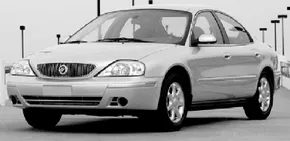
Sable slow fade
Mercury’s automotive division experienced difficult times in the early 2000s. By 2002, the lineup had been reduced to two hopeless cars: the Sable and the Grand Marquis. Just a year after the 1996 redesign, the Sable had already lost its spot as Mercury’s best-selling product, but its decline was rapid.
A Ford Taurus is disguised under the metal. Same frame. It’s the same job. It shares a new, more powerful V-6 and an advanced optional Duratec 200, 200-horsepower twin-cam V-6. Stylistically, the sable remains conservative, in contrast to the sharper, oval-themed Taurus. This conservatism is unpopular. Mercury tried to fix its image with a Y2K edition facelift and a more standard dashboard, but its appeal faded.
After the facelift, Sable fell into stagnation. While import competitors update their models every year, Mercury makes only minor changes. Sales, which typically exceeded 100,000 units, collapsed in the late 1990s. By 2004, the number had dropped below 43,000. The Sable was in service for a short time in 2005 before being retired as Mercury already had a replacement.
Panther Platform Burden
The Grand Marquis also struggled, but held the title of Mercury’s best-selling car longer than the Sable. It is as important to Mercury’s survival as the Lincoln Town Car is to Lincoln’s survival. That dependency became the poison pill.
The Grand Marquis rides on the Panther platform, the same 1979 architecture as the Ford Crown Victoria. It’s a relic. A large, rear-wheel-drive V-8 sedan in an era of crossovers and efficiency. Updates keep the technology current, but the key attraction remains the aging population.
Why do old cars last so long? Profitability. The tooling was paid off. Between 1996 and 2005, there was no competition for full-size RWD V-8s in the country. These are money printing machines for businesses that need cash flow.
But this creates a brand trap. The “geezer” personality of the Grand Marquis prevents Mercury from developing a younger, more dynamic identity. Lincoln has the same Town Car dilemma. By 2005, neither brand was able to resolve the dispute. Time is running out.
Declining Sales, Incremental Gains
マーキュリーの危機は深刻でした。 2001 年から 2005 年にかけて、販売台数が 198,000 台以上から 65,000 台未満に激減したにもかかわらず、グランド マーキスが占める割合は増加しました。
The car itself improved, quietly. 1998 年モデルでは、received styling tweaks and a power bump. パワーは、ベースの V 8 エンジンで 200 馬力、デュアルエキゾーストオプションを使用すると 215 馬力に跳ね上がります。 2001 年までに、another tune-up added 20 horsepower to each configuration.
The real change came in 2003. An extensive under-the-skin overhaul introduced a stiffer new frame. Suspension geometry was revised for better handling. 何よりも、the outdated recirculating-ball steering was replaced by a precise rack-and-pinion system.
Safety tech finally caught up. Optional front side airbags were added to the standard antilock brakes and traction control. パワーは再び上昇し、ベースの V8 エンジンでは 224 馬力、デュアルエキゾーストバージョンでは 239 馬力に達します。
After that, the Grand Marquis lived on through minor annual shuffles. Trim levels changed. Model names shifted. Prices tweaked. ビジネスケースが最終的にそれを強制的に廃止するまで、死を拒否した車の長くて遅いプロセスでした。
2003 Mercury Marauder: The muscle car that wasn’t scaled.
In the early 2000s, the Mercury Grand Marquis was essentially a land yacht for retirees. Reliable, comfortable and utterly boring. But Mercury has one more card left. They dug the Mercury Marauder name out of the archives and attached it to the frame of the Grand Marquis. target? Give adrenaline to a brand under the age of fifty and slowly disappearing.
The car debuted as a concept at the 2001 Chicago Auto Show. It was introduced as a 2003 model on the newly updated Grand Marquis platform. Mechanically, it’s still a Panther body car. But visually and internally, it tries hard to wear a muscle car mask. 4 doors. Twin exhaust tips. Bucket seats. This seems like a compromise.
Under the Hood: Jack Roush’s Touch
At the heart of the Marauder is Ford’s 4.6 liter modular V8 engine. However, this is not the stock engine of the Crown Victoria. Mercury worked with performance tuner Jack Roush to create this version. They installed a new cylinder head with four valves per cylinder (standard is two). A unique intake manifold was added. The result is 302 horsepower.
I think it has enough performance for a full size sedan. When actually using it, it felt underwhelming. The engine must push the frame of the heavy vehicle. There’s plenty of torque, but the power delivery lacks the visceral explosiveness of true American muscle.
The Look: Aggressive Styling on a Conservative Frame
从视觉上看,Marauder比发动机更努力地工作。 水星提供了黑色的汽车。 仅有的。 营销口号基本上是“要么黑,要么什么都没有”,尽管有传言未来会使用深蓝色和其他颜色,但从未发生过。
造型线索很具体:
* 抛光五辐 18 英寸合金轮毂。 这些取代了库存的 16 英寸钢制轮毂。
* 脂肪橡胶。 Z-rated tires的前轮尺寸为 235/50,后轮尺寸为 245/55。
* 排气管。 双三英寸尖端从后保险杠伸出。
* 内饰。 常见的人造木装饰不见了。 取而代之的是银面仪表、转速表以及安装在控制台上的油压和电流表刻度盘。 座椅采用皮革制成,带有“点阵”贴花和金属外观装饰。
看起来很快。 它坐得很低。 它承诺了性能。
The Sales Disaster
Mercury has a plan. It is expected to sell 18,000 units per year. The target audience is clear: people who remember the original Marauder from 1969-1970. These people might buy a hot rod or a vintage Mustang. They are also older by definition.
Sales figures tell a grim story. Mercury moved just 2,910 units in the first six months. They panicked and lowered their annual goal to 12,000. They didn’t come close.
Why did it fail? Several factors play a role.
1. The target audience is wrong. The Marauder’s original buyers were young. The current Mercury buyers were old. The 2003 Marauder looks like a grandpa trying on a leather motorcycle jacket.
2. Wrong Performance. ** The car is heavy. The suspension is stiffer, which gives better handling, but a less comfortable ride. This is not a true performance sedan. This is a grand touring car with a loud exhaust.
3. Wrong Price. **Base price is just under $34,000. With that money you could buy a BMW 5 series or a Cadillac CTS-V (coming soon). The Marauder cannot compete with imported luxury sedans or true high-performance domestic sedans.
Critical Reception: Disappointment
The road test was polite but damning. Critics praised the balance of the platform. The Grand Marquis platform is known for its stability. The Marauder inherit this trait. However, acceleration is slow.
Car and Driver records a 0-60 mph time of 7.5 seconds. The quarter-mile takes 15.5 seconds at 91 mph. In the muscle car world, that’s slow. The paper concluded that the car was more of a “disciplined sedan” than a “delinquent hot rod.” It lacks the soul of the car it tries to emulate.
Industry insiders are not so subtle. Jim Wangers, known for his work on the Pontiac GTO, told Automotive News that while the concept was good, the execution “woefully short” the quality expected from an enthusiast car. Another analyst called it a “half-hearted attempt at nostalgia.”
The End of the Line
マローダーの2004年モデルは不振だった。 総販売台数は約8,000台。 商業的には失敗でした。 マーキュリーはひっそりとモデルを廃止した。 ディアボーンはこれ以上恥ずかしい思いをする必要はありません。
しかし、希望の光もあります。 2002 年初頭、マーキュリーは 2 ドア マローダー コンバーチブル コンセプト カーを披露しました。