We assume every modern vehicle is a study in aerodynamic efficiency. Streamlined bodies cutting through air like knives. It feels natural. It wasn’t always this way. Look back at the early Ford Model T. Those things were boxy. Clunky. More like horse-drawn buggies than cars. They fought the air rather than working with it.
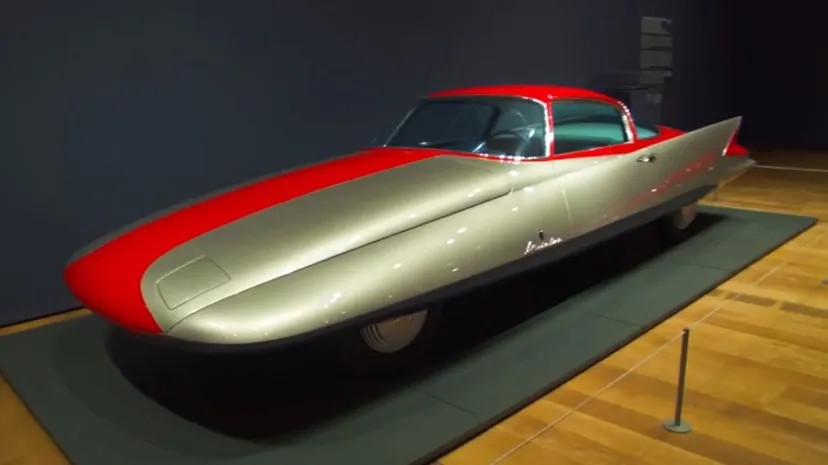
The shift happened in the late 1920s and early 1930s. We have wind tunnel testing to thank for that evolution. Scott Benjamin and Ben Bowlin from CarStuff highlight this transition in a recent tour of the High Museum of Art in Atlanta. They walk through classic concept cars to show how forced-air testing reshaped automotive design for decades.
Aerodynamics wasn’t born in an auto factory. It started with aircraft. Designers needed to go faster. Drag became a serious enemy. Engineers looked to the skies for answers. Scale-model wind tunnel testing allowed them to measure drag coefficients with precision. This data-driven approach moved from blueprints to production lines.
The Wright brothers knew this. Orville and Wilbur applied these principles to the Wright Flyer. Their 1903 flight succeeded partly because they understood airflow. They didn’t just build a machine. They engineered it to slice through the atmosphere. That same logic eventually landed on four wheels.
The Aero Dreamers
By the late 1920s, the industry realized that wind tunnels weren’t just for airplanes. Designers started using them to sculpt car bodies, too. This shift birthed the concept car era. We got prototypes that looked less like transportation and more like science experiments.
Take the 1943 Edsel Ford 40 Special Speedster. It was a radical break from the boxy norms of the time. Engineers ran it through a wind tunnel to find the most efficient lines possible. The result? Sleek curves that defied the era’s aesthetic. It proved that airflow could dictate shape.
Then there was the 1941 Chrysler Thunderbolt. Chrysler called it “The Car of the Future.” Its job was to educate the public on streamlining. It wasn’t just a pretty face. The car underwent rigorous wind tunnel testing. Engineers collected data for scientific studies on how the body handled continuous airflow. They wanted to know exactly how air moved over metal.
The 1955 Chrysler Streamline X took it further. Nicknamed “Gilda,” it was hailed as “shaped by the wind.” The body looked like a postwar rocket ship. It caused a sensation. The design was futuristic, sure. But it was actually more practical than the wedge-shaped monsters that arrived decades later.
The Wedge Wars
In 1970, two cars hit the road that prioritized aerodynamics over almost everything else. The Lancia Stratos HF Zero and the Ferrari 512S Modulo. These were the result of a manufacturer battle to create the ultimate wedge. They cut through the air with ease. The drag coefficients were impressive.
But the real world doesn’t care about drag coefficients. The extreme wedge shape meant terrible ground clearance. You’d bottom out on a speed bump. Visibility was also poor. The windshield was tiny. The rear window was a sliver. You couldn’t see where you were going.
These cars were different, yet they shared a goal. They tried to outfox the wind. They demonstrated that fine-tuning a car’s aerodynamics requires wind tunnel testing. Not just for speed. But for survival.
Enzo Ferrari had a reputation for believing that raw mechanical power could solve any problem. He famously dismissed the importance of airflow, declaring that aerodynamics are for people who can’t build engines. It was a declaration of war against the engineers who thought shape mattered more than displacement.
“Aerodynamics are for people who can’t build engines.”
Today, that philosophy would look laughable. The modern Ferrari model car development process tells a different story. The company recently dedicated over 1,000 hours in a wind tunnel to refine the aerodynamic profile of a new vehicle. They didn’t just tweak the spoilers; they obsessed over how air moves across every curve.
This isn’t a rejection of Enzo’s legacy. It’s an evolution.
The V-12s are still there. They are louder, more efficient, and packed with technology Enzo couldn’t have imagined. But the air around them is now treated with the same reverence as the fuel inside them. You can’t just bolt a powerful engine into a box and expect it to fly.
Why does this matter for the enthusiast? Because how aerodynamic efficiency improves engine performance is now a core engineering challenge. It’s not about choosing between power and airflow. It’s about making them work together.
The wind tunnel tests aren’t just about top speed. They’re about downforce, stability, and reducing drag so the engine doesn’t have to work as hard. It’s a far cry from the days when you could simply add more cylinders and call it a day.
Irony aside, the result is a car that moves through the air as precisely as it moves on the road.