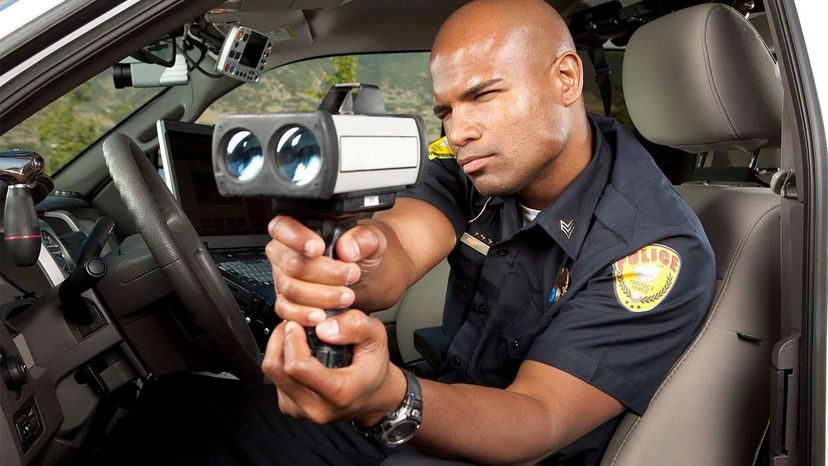
You’re cruising down an unfamiliar highway. The scenery is blurring past. You aren’t watching the speedometer. The second you pass a billboard, you spot the unmarked sedan parked in the shadows behind it. Officer’s radar gun is already up. Next thing you know, lights are flashing. You’re handed a ticket that will cost you hundreds, maybe thousands, depending on where you live. It’s a chilling moment. One that makes every driver’s stomach drop.
This scenario is what people call a speed trap. Loosely defined, it’s a spot where law enforcement lies in wait to catch violators. The frustration is real. The cost is real. According to a 2013 survey by the National Highway Traffic Safety Administration (NHTSA), nearly one in ten motorists gets pulled over for speeding each year. Of those stopped, 68 percent receive a ticket. Twenty-seven percent walk away with a warning. The rest get lucky. But in places like New York, that citation can easily exceed $1,000. That’s not just an inconvenience. It’s a financial hit.
Why Speed Traps Are Not Entrapment
You might feel cheated. You might even think it’s illegal. How can police conceal themselves? Isn’t that entrapment? The terms sound similar. They trigger similar feelings of injustice. But don’t try that argument in traffic court. It won’t work.
William Long Whitesell, an attorney based in Valdosta, Georgia, is clear on the distinction. A speed trap is not entrapment. Why? Because the officer isn’t inviting you to break the law. They aren’t enticing you. They aren’t encouraging you to speed. Entrapment requires something outrageous. It requires the police to induce the crime. Maybe they pull up in an unmarked car, ask how fast your sports car goes, and challenge you to a race. That’s hypothetical, but it illustrates the point. To commit entrapment, the state must do more than just wait.
Pennsylvania judge Jessica Brewbaker agrees. She outlines the same standard in a 2014 column for PennLive.com. Police have no legal obligation to announce their presence. Hiding to catch violators is perfectly legal. It’s not a trap in the criminal sense. It’s enforcement. And enforcement matters.
Speeding is a major killer. NHTSA data from 2016 shows it was a factor in 27 percent of all fatal crashes. Over 10,000 people died in those accidents. The stakes are high. The laws reflect that reality.
When Speed Limits Become Revenue Tools
Not everyone sees speed traps as life-saving measures. Some see them as cash cows. Small towns have faced scrutiny for relying on tickets to balance budgets. Garry Biller, president of the National Motorists Association (NMA) in Waunakee, Wisconsin, points out a historical tension. Traffic engineers used to follow the 85th percentile rule. This rule sets the speed limit a few miles per hour over the average speed of free-flowing traffic. Research shows this is the safest speed for most drivers.
But traffic flows change. Studies age. If a town hasn’t updated its speed limit in years, the posted number might be slower than what people actually drive. That creates a gap. A gap that looks like an opportunity for enforcement.
“When we find those in locations where there seems to be heavier law enforcement, that leads us to believe that the enforcement is more revenue-based,” Biller says.
The NMA has tried to map these spots. They run the National Speed Trap Exchange. It’s a database of over 80,000 user-submitted locations across the U.S. and Canada. Drivers report where they think traps are set. Some places have notorious histories. Lawtey and Waldo, Florida, were once infamous. Police here wrote so many tickets that AAA designated them as “Traffic Traps” in 1995. AAA even put up signs warning drivers to slow down. The towns eventually changed their ways. AAA removed the designation in 2018.
State Laws Curb Ticket Revenue
States are starting to push back against towns that treat traffic stops like ATMs. The National Conference of State Legislatures reported on this trend in 2017. Several states have passed laws limiting the percentage of revenue a town can earn from traffic tickets.
Florida passed legislation in 2015. It requires municipalities to report to a legislative auditing committee if citation revenue exceeds one-third of the local law enforcement agency’s annual expenses. Georgia has a similar rule. If fines cover 40 percent or more of the agency’s budget, the law presumes the speed detection devices are being used improperly.
Other states are taking action too. New York, Oklahoma, and Texas have passed similar laws. Missouri went further in 2015. It requires any citation revenue exceeding 10 percent of operating expenses to be turned over to the state. That money now funds schools. It’s a direct attempt to remove the profit motive from ticketing.
The Cost of Speeding
The financial impact varies wildly by location. In New York, a single ticket can cost over $1,000. That includes base fines, surcharges, and potentially higher insurance premiums. The Governor’s Traffic Safety Committee highlights this steep cost. For many drivers, the penalty feels disproportionate to the infraction. Especially if they weren’t speeding by much.
But the danger is undeniable. Speeding increases stopping distances. It reduces reaction time. It amplifies impact force. The 85th percentile rule exists because people tend to drive at speeds that feel safe for the conditions. When the posted limit diverges significantly from that flow, you get two groups. Those who respect the law. Those who ignore it. Enforcement targets the latter. But when the limit is arbitrary, enforcement targets everyone.
The debate continues. Is it about safety or revenue? The data suggests both play a role. Speeding kills. But so does cynical enforcement. Drivers need to stay aware. Not just of their speed. But of the context. Where you’re driving matters. Who’s watching matters. And whether that officer is hiding behind a billboard or sitting in plain sight changes nothing about the outcome. You get the ticket.
A speed trap is not entrapment because an officer is not inviting, enticing nor encouraging a driver to commit the offense of speeding.
History offers some perspective. Connecticut passed the first speed limit for motor vehicles in 1901. It was set at 12 miles per hour. Drivers had to slow down for horses. Stop if the animal got scared. We’ve come a long way since then. But the core tension remains. How fast is too fast? And who gets to decide?
The answer often depends on which side of the highway you’re on.