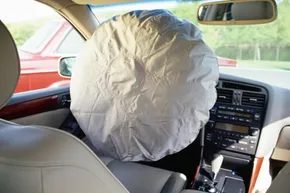
Airbags sound like a modest idea on paper. When you crash, you don’t hit the steering wheel or the door panel, you hit the cushion. It’s a calming image. The reality is not a “bear in a toilet paper commercial”, but a “controlled explosion”. Airbag deployment is of course not pretty. But crashing into a steel dashboard is even worse. Since 1998, all cars sold in the United States have been required to have driver and front passenger airbags. Between 1987 and 2008, front airbags saved an estimated 25,000 lives. This statistic cements its place as one of the greatest achievements in the history of car safety.
Our vehicles currently have up to 10 airbags. Some manufacturers have integrated airbag technology into their seat belts. But here’s a uncomfortable question. Is this device designed to save you hurting or killing you?
Explosion physics
Anyone who has been involved in an airbag deployment accident knows the answer is yes. The incident was very violent. It’s cruel. It should be. The airbag must inflate and deploy in front of the passenger before it hits something more dangerous than the fabric itself.
On average, the driver’s side airbag deploys in just 20-30 milliseconds. It explodes from its shell at a speed of 200 miles per hour (322 kilometers per hour). This speed is comparable to the propulsion systems used in some rocket boosters. Its power is immense.
This force can cause airbag injuries. If you are sitting too close to the steering wheel or dashboard, the airbag deployment could cause burns or bodily injury. Using airbags without seat belts increases this risk. The same applies if there is an obstacle between you and the bag. A pet. A glass bottle. A cell phone. All of these can turn a safety feature into a projectile hazard.
Who is most at risk?
Children and small adults are most likely to be injured by an airbag deployment. Their bodies cannot absorb shocks. Most child seats are not designed for use with airbags. The type and location of the seat are very important.
Never place a rear-facing child seat in the front seat. When an airbag deploys, it can apply devastating forces to the backrest. This could result in serious injury or death. The risk is not just about size. This is all about physics. There is no way a small body could be in the path of a gas explosion traveling 200 miles per hour.
Can I disable the airbag?
Correct use of airbags can save lives. There is little danger in the driver’s seat of an average-sized adult. But what if you have no choice but to put your child in the front seat?
If your car allows it, you can disable the passenger airbag. The process is usually simple. Check your owner’s manual. It tells you if your car has a manual switch. In some cases, you may need to take your vehicle to a mechanic to disable the passenger side airbag. This is a specific procedure. Don’t try it yourself.
If you are concerned about rear side airbags, you can reduce the risk by placing your child in the middle seat. Stay away from side impact areas.
Technology is constantly developing. Inflatable seat belts are one example. New sensors and algorithms are tested to optimize deployment. But the core physics remains the same. speed. strength. Mass. Understanding how airbags work is the first step in ensuring your safety. The rest is up to you.