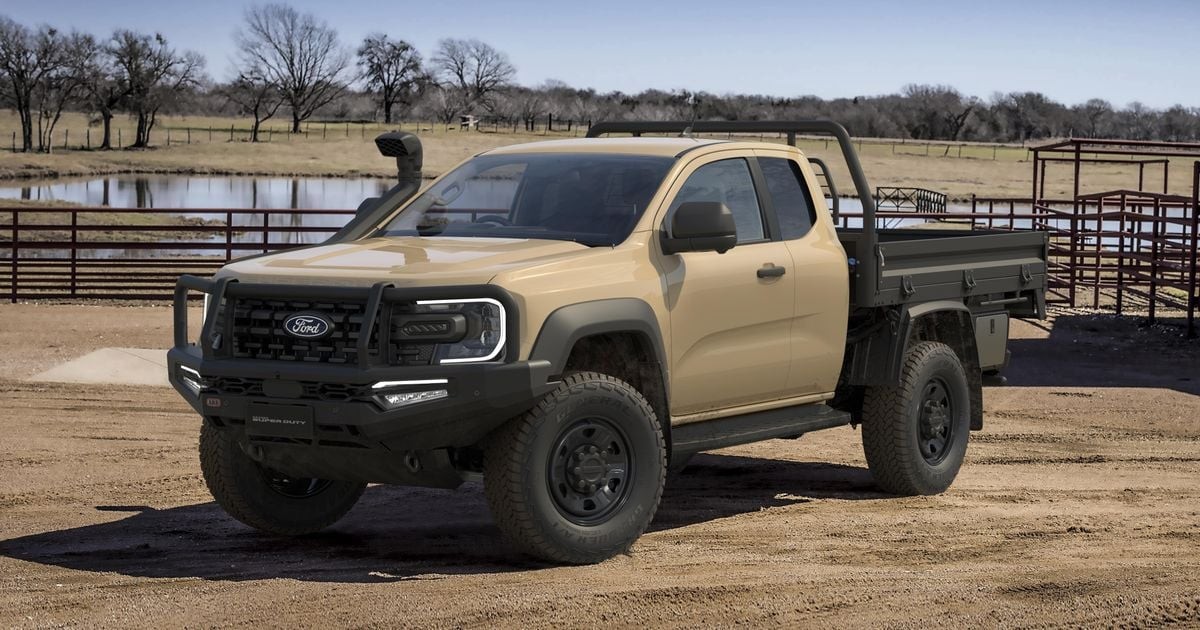
Ford Motor Company has significantly raised its financial forecast for 2026, following a substantial windfall from tariff refunds. This move follows a similar trend by rival General Motors (GM), signaling a broader recovery for the “Big Three” American automakers after a period of intense regulatory and economic volatility.
The Tariff Windfall and Financial Recovery
The primary driver behind Ford’s improved outlook is a one-off $1.3 billion tariff refund. This figure is notably higher than the $500 million expected by GM, providing Ford with a significant liquidity boost.
This unexpected influx of capital comes at a critical time. In 2025, Ford suffered an $8.2 billion loss—its most severe since the 2008 Global Financial Crisis—largely due to a wave of tariffs implemented between 2025 and early 2026. These costs were driven by:
– Initial automotive import tariffs introduced in April 2025.
– Additional component tariffs implemented shortly thereafter.
– “Reciprocal tariffs” applied across various industries under the Trump administration.
The recent refund stems from a U.S. Supreme Court ruling which determined that a 10% tariff implemented in February 2026 had not been lawfully established. The court has ordered the U.S. government to refund an estimated $166 billion across various industries, a decision that has fundamentally altered the financial landscape for importers.
Resilience Amidst Supply Chain Disruptions
Despite the boost from refunds, Ford is navigating significant operational hurdles. The company reported a shortage of its most profitable model, the F-150, following fires at an aluminum supplier factory.
However, Ford’s financial performance demonstrates remarkable efficiency:
– Earnings Growth: While total sales fell by 8.8%, Ford’s Earnings Before Interest and Tax (EBIT) more than tripled to $3.5 billion.
– Net Income: Net income saw a massive surge, increasing more than five-fold year-on-year to approximately $2.5 billion.
– Strategic Localization: Ford has successfully mitigated future risks by reducing its reliance on imports. The company now manufactures 83% of its North American lineup within the U.S., allowing it to halve its projected tariff costs for 2026 to $1 billion.
Market Performance and Segment Leaders
The F-150 remains the cornerstone of Ford’s success, maintaining its position as the best-selling vehicle in the U.S. during the first quarter of 2026. Other key performers include:
– Transit: The leader in the commercial van segment.
– Maverick: A highly popular hybrid option in the dual-cab ute segment.
Industry Context: A Shifting Regulatory Landscape
The volatility seen in the automotive sector is part of a larger legal and political tug-of-war. Major players, including Chinese manufacturer BYD, have challenged tariff implementations through legal channels. These challenges highlight the growing tension between protectionist trade policies and the globalized nature of automotive supply chains.
As other manufacturers, such as Stellantis, prepare to report their results, the industry is watching closely to see if the “tariff windfall” becomes a trend across the entire sector.
Conclusion: Ford’s upgraded forecast reflects a successful pivot toward domestic manufacturing and a massive legal victory regarding tariff legality. While supply chain issues persist, the company has leveraged unexpected refunds to pivot from record losses toward significant profitability.