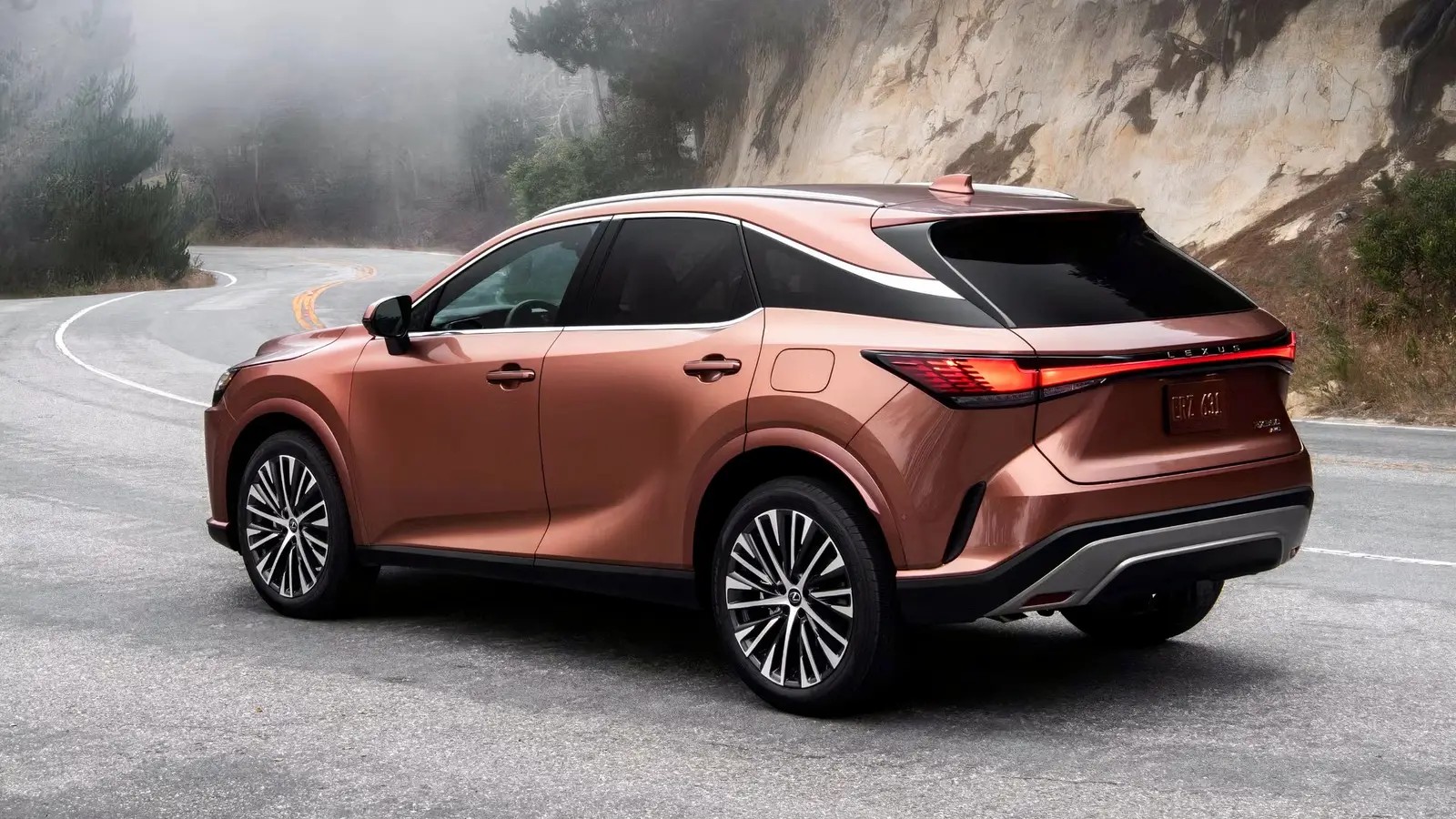
The hybrid vehicle market has reached a historic peak in 2026, with the U.S. sector valued at $778 billion and capturing 42% of the global hybrid market. This surge is driven by consumers seeking fuel efficiency and lower emissions without the range anxiety or infrastructure dependencies of fully electric vehicles.
Among the leaders in this space is the Lexus RX Hybrid. Built on Toyota’s proven hybrid-electric vehicle (HEV) technology, the RX has evolved from a niche commuter car into a sophisticated, high-performance luxury SUV. However, long-term ownership inevitably raises one critical question: What happens when the hybrid battery fails?
This breakdown examines the true costs of maintaining a 2026 Lexus RX Hybrid, focusing on battery replacement, overall ownership expenses, and the vehicle’s competitive standing in the luxury market.
The Hybrid Battery: The Biggest Expense
For any hybrid owner, the high-voltage battery pack is the most significant potential repair cost. In the 2026 Lexus RX, this component utilizes advanced lithium-ion technology.
- Dealership Replacement: If you opt for an official Lexus dealership replacement, costs typically range between $5,000 and $6,000. This premium price reflects the brand markup and specialized labor required for authorized service.
- Third-Party Alternatives: As the used market matures, third-party suppliers are offering compatible replacement packs for under $2,000. This emerging market provides a more affordable long-term outlook for owners whose vehicles have aged out of warranty coverage.
Why This Matters: While the upfront cost is high, Lexus mitigates this risk for most original owners through comprehensive warranty coverage. The 2026 RX Hybrid comes with a 10-year or 150,000-mile warranty specifically for the hybrid battery. This safety net ensures that the vast majority of primary owners will never face this expense out-of-pocket. However, for second-hand buyers or high-mileage drivers, understanding the post-warranty cost structure is essential for budgeting.
Signs of Battery Degradation:
When a hybrid battery nears the end of its lifespan, performance issues become apparent:
* Reduced Fuel Economy: The primary indicator is a noticeable drop in MPG, as the system can no longer effectively alleviate strain on the internal combustion engine (ICE).
* Diminished Acceleration: Power output drops, leading to inconsistent or sluggish acceleration during electric-assist phases.
Total Cost of Ownership: Competitive in the Luxury Segment
Despite the potential cost of battery replacement, the Lexus RX Hybrid remains one of the most cost-effective luxury SUVs to own over time. Data from industry analysts highlights its financial advantages.
Five-Year Cost Breakdown (60,000 Miles):
* Edmunds True Cost to Own: Estimates total ownership at $63,119, including $22,120 in depreciation, $9,377 in maintenance, and $1,127 in repairs.
* CarEdge Analysis: Projects costs at $57,867, broken down into $25,704 for depreciation, $12,910 for insurance, $6,415 for fuel, $10,246 for financing, and $2,592 for maintenance.
Long-Term Maintenance Advantage:
Over ten years, maintenance costs for the RX Hybrid are projected to reach $7,842. This figure beats the industry average for luxury SUVs by $4,611, underscoring the vehicle’s reliability and lower long-term upkeep requirements.
Reliability and Resale Value
The Lexus RX 350h consistently ranks at the top of reliability and value retention charts, outperforming rivals like the BMW X5, Mercedes-Benz GLE, and Volvo XC90.
- J.D. Power Score: 85/100 overall, with high marks for quality/reliability (85/100) and dealership experience (87/100).
- iSeeCars Rating: 8.3/10 overall, with an 8.6/10 for reliability and 8.2/10 for retained value.
- Longevity: The RX 350h is expected to last 14.7 years or 170,975 miles before major mechanical issues arise, with a 31.7% probability of reaching 200,000 miles.
Value Retention:
After five years (or 60,000 miles), the RX 350h loses approximately 43.8% of its value ($22,409). This depreciation rate is more than 10% better than its main competitors, making it a financially sound choice for buyers concerned with resale value.
Performance and Efficiency: Two Distinct Powertrains
The 2026 RX Hybrid lineup offers two primary configurations, catering to different driving needs.
1. RX 350h: The Efficiency Leader
- Powertrain: Naturally aspirated 2.5-liter four-cylinder engine paired with three permanent-magnet motors.
- Output: 246 horsepower and 233 lb-ft of torque, sent to all wheels via an eCVT.
- Performance: 0–60 mph in 7.4 seconds; top speed of 124 mph.
- Fuel Economy: 37 MPG city / 34 MPG highway / 36 MPG combined.
- Range: Approximately 619 miles on a full tank (17.2 gallons).
2. RX 500h F-Sport Performance: The Powerhouse
- Powertrain: Turbocharged 2.4-liter four-cylinder engine with one electric motor.
- Output: 366 horsepower and 406 lb-ft of torque, managed by a six-speed automatic transmission.
- Performance: 0–60 mph in 5.9 seconds; top speed of 130 mph.
- Fuel Economy: 27 MPG city / 28 MPG highway / 27 MPG combined.
- Range: Approximately 465 miles on a full tank.
Both models offer a towing capacity of 3,500 pounds, bridging the gap between luxury comfort and practical utility.
Interior and Technology: Refined Simplicity
The RX’s interior design philosophy prioritizes experience over flash. The cabin features high-quality materials such as bamboo, open-pore wood, and supple leather, avoiding the gimmicky aesthetics found in some competitor models.
Key Tech Features:
* Standard 12.3-inch digital gauge cluster.
* Wireless Apple CarPlay and Android Auto connectivity.
* Standard 9.8-inch touchscreen (upgradable to a 14-inch display on higher trims).
* Wireless phone charging.
While not class-leading in raw space, the RX offers a practical balance of comfort and functionality, avoiding the unnecessary bulk seen in some modern SUVs.
Warranty and Maintenance Schedule
Lexus supports the RX Hybrid with a robust warranty package, designed to protect owners during the vehicle’s most critical years.
- Basic Warranty: 4 years / 50,000 miles.
- Powertrain Warranty: 6 years / 70,000 miles.
- Hybrid Battery Warranty: 10 years / 150,000 miles.
- Hybrid Component Warranty: 8 years / 100,000 miles (covers control module, inverter, etc.).
Maintenance Requirements:
To maintain warranty coverage, Lexus recommends service every 6 months or 5,000 miles. Key maintenance intervals include:
* Every 12 months/10,000 miles: Synthetic oil change and cabin air filter replacement.
* Every 3 years/30,000 miles: Brake fluid and engine air filter replacement.
Pricing and Trim Levels
The 2026 Lexus RX Hybrid lineup offers a wide range of trims, starting at a base MSRP of $54,575. A flat $1,450 delivery fee applies to all variants.
- RX 350h AWD: $54,575
- RX 350h Premium: $56,750
- RX 350h F Sport Design: $59,080
- RX 350h Premium+: $60,240
- RX 350h Luxury: $65,295
- RX 450h+ Premium (Plug-in): $66,680
- RX 500h F Sport Performance: $67,950
- RX 450h+ Luxury (Plug-in): $73,310
Conclusion
The 2026 Lexus RX Hybrid continues to define the standard for luxury hybrid SUVs, balancing opulence with frugality. While the potential cost of a hybrid battery replacement is significant, the 10-year/150,000-mile warranty largely neutralizes this risk for primary owners. Coupled with superior reliability, strong resale value, and lower-than-average maintenance costs, the RX Hybrid remains a financially prudent and mechanically robust choice in the competitive luxury segment.