Nissan has unveiled a comprehensive global strategy aimed at streamlining its product lineup and revitalizing its presence in Europe. Despite labeling the continent one of the world’s “most difficult markets,” the automaker is committing to a significant growth target: increasing European sales by one-third to reach 500,000 units by 2030.
A Leaner, More Efficient Global Portfolio
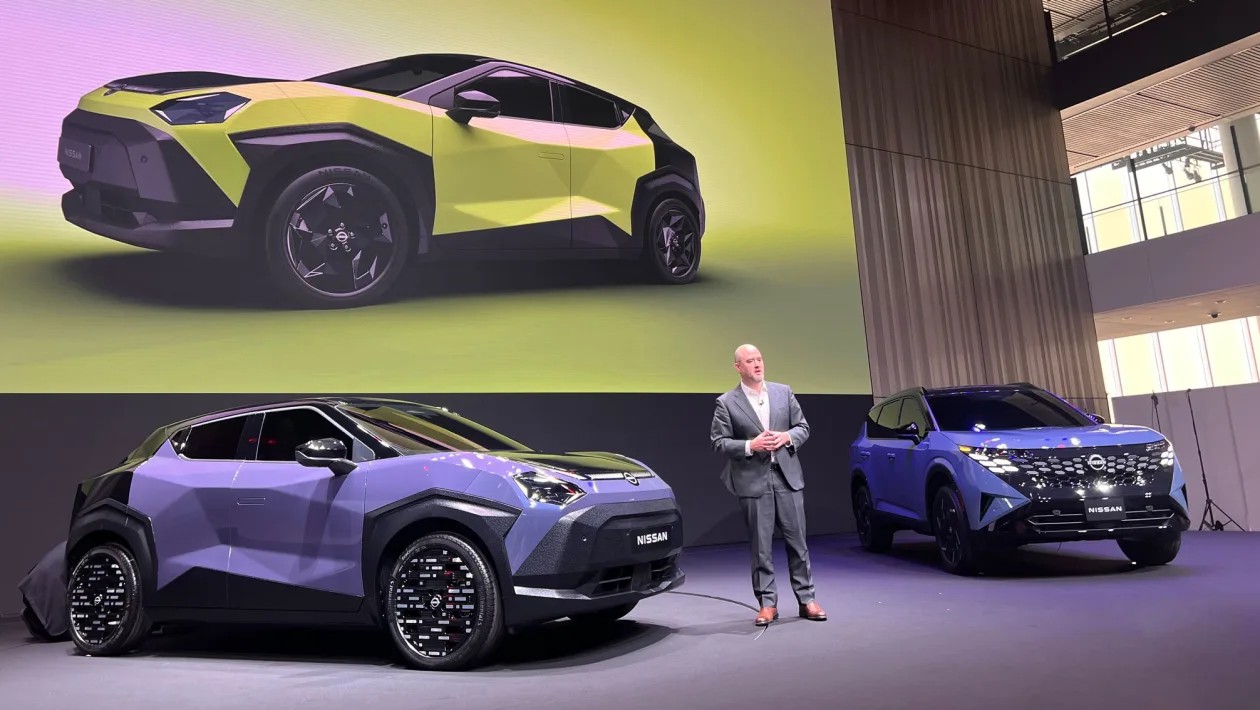
At a recent “Nissan Vision” event at its Yokohama headquarters, executives detailed a fundamental shift in how the company develops vehicles. Nissan is moving away from a fragmented lineup toward a more consolidated approach:
- Streamlined Model Count: The company will reduce its global model count from 56 to 45.
- Shared Architectures: By focusing on fewer, high-volume “family” architectures, Nissan aims to improve manufacturing flexibility, speed to market, and cost efficiency.
- Cross-Market Synergy: While the US, China, and Japan remain Nissan’s primary “core” markets due to their sheer volume and technological influence, these regions will serve as engines for the rest of the world. Products developed for these giants—such as the Chinese-built NX8 electric SUV —will be exported to satisfy European demand.
The European Challenge: Regulation and Competition
The push for 500,000 units is not merely an ambition but a financial necessity. Chief Performance Officer Guillaume Cartier noted that reaching this volume is essential to ensure earnings can outpace the high fixed costs of operating in the region.
Nissan faces a “perfect storm” of challenges in Europe:
1. Market Contraction: Total market volumes have yet to return to pre-pandemic levels.
2. Intense Competition: New entrants, particularly from Chinese manufacturers, are rapidly capturing market share.
3. Regulatory Volatility: Executives expressed frustration over “unstable” regulations. While the EU has shown signs of loosening strict emissions (CAFE) obligations and the 2035 combustion engine ban, the UK maintains a more aggressive timeline for electric vehicle adoption.
“Sometimes politicians move faster than we can follow,” Cartier remarked, highlighting the difficulty of long-term industrial planning in a shifting political landscape.
Securing the Future of UK Manufacturing
Despite the global shift in focus, Nissan has moved to reassure stakeholders regarding its Nissan Manufacturing UK (NMUK) plant in Sunderland. Rather than being sidelined, the plant is being integrated into the new efficient engineering philosophy.
The Sunderland facility will continue to produce key models, including the Leaf and the Juke. Notably, the all-electric Juke will share its architecture, battery, and motors with the Leaf, demonstrating how Nissan is applying its new “shared architecture” strategy to maintain local production viability.
Conclusion
Nissan’s strategy relies on a “trickle-down” effect, where high-volume development in Asia and America fuels its European expansion. To succeed, the company must navigate a volatile regulatory environment while leveraging shared technology to offset the high costs of a competitive, fragmented market.